Cooling · open 24/7
Central air conditioning installation in Philadelphia, PA
Ready to replace an old AC or add central air? We size the system to the house, check that the ducts can carry the air, and plan where the condenser and line set go.
- Phones answered 24/7
- Split systems and attic air handlers
Updated October 2026
- What we install
- Split central air: outdoor condenser plus indoor coil or air handler
- Starts with
- A load calculation and a duct check
- Planned around
- Condenser placement, line set route and the condensate drain
Short answer
Central AC installation in Philadelphia, PA begins with a load calculation and a look at the ductwork. We size the condenser and coil to the house, plan the refrigerant line route and condenser location, and set up the drain. A new system on undersized ducts will run loud and cool unevenly, so we check that first.
A new AC is only as good as the ducts behind it
Most comfort complaints about new central air come from the install, not the equipment. An oversized condenser cools quickly but shuts off before it pulls humidity out, leaving the house cold and clammy. Undersized returns starve the coil. We run a load calculation and measure static pressure before choosing a size.
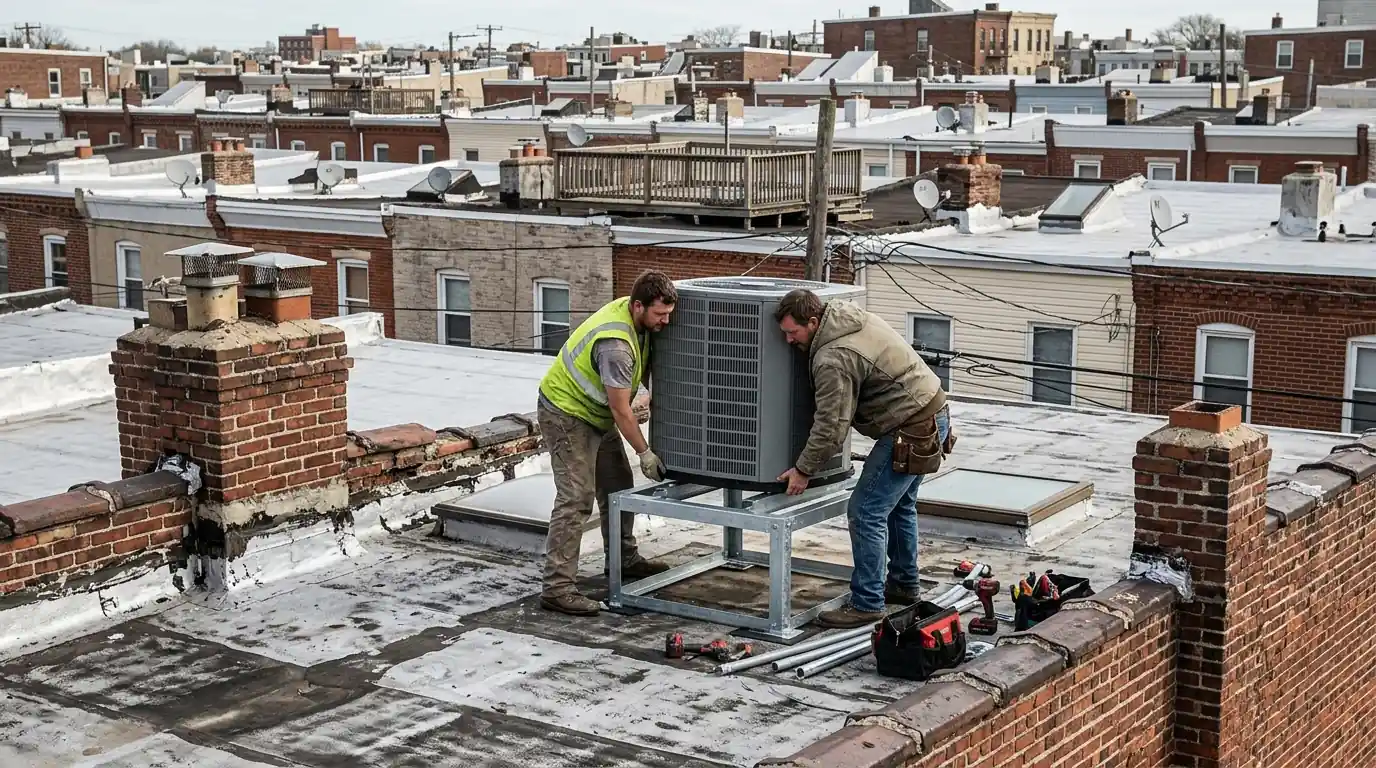
Placement is the other big decision. In a rowhome the condenser often goes on the roof or in a rear yard, and we plan the line set route, the power and the drain before anything is ordered.
What sets the price of a new central air system
You see the price before we start. What moves it:
- System size and efficiency level
- Duct changes, especially added return air
- Condenser location, yard, roof stand or wall bracket, and line set length
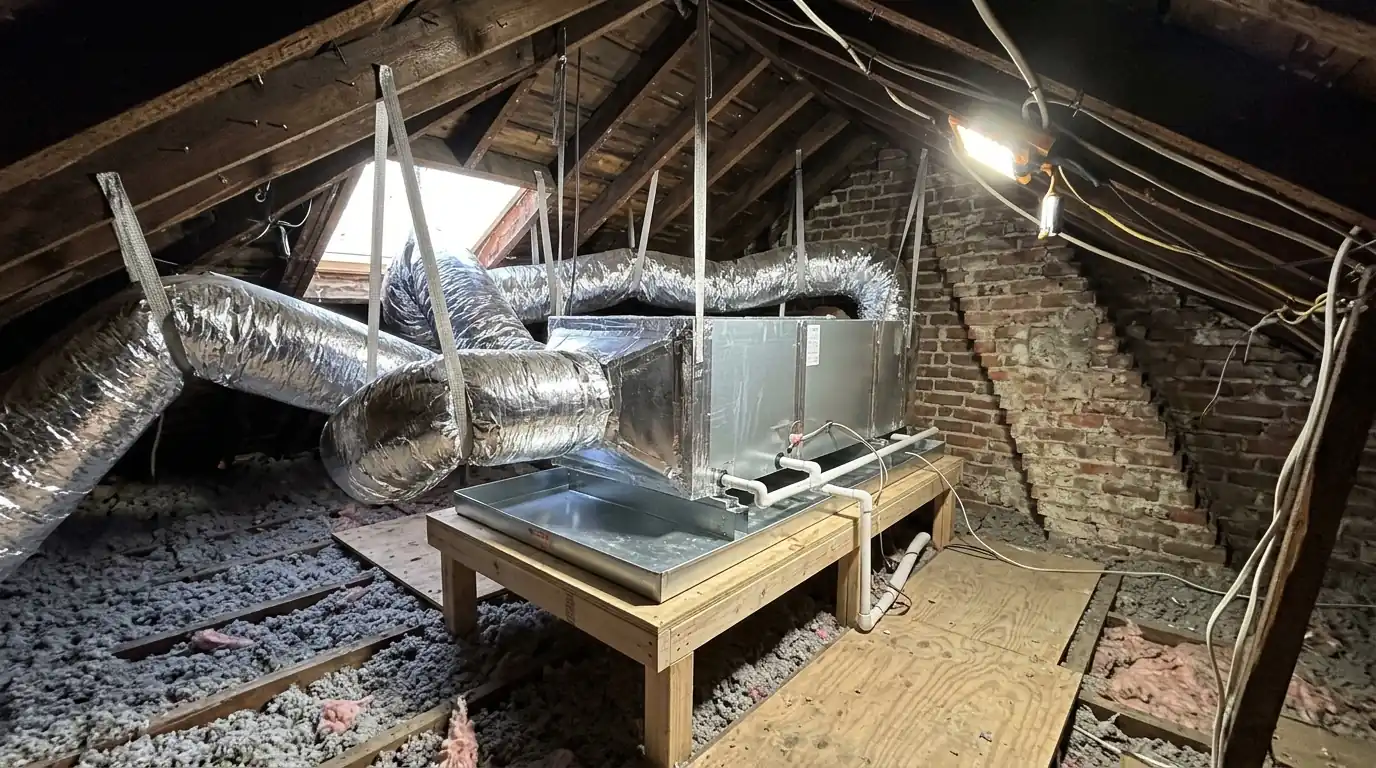
- Attic air handler work, platforms and drain pans
Three common AC install jobs
Replacing an older R-22 system
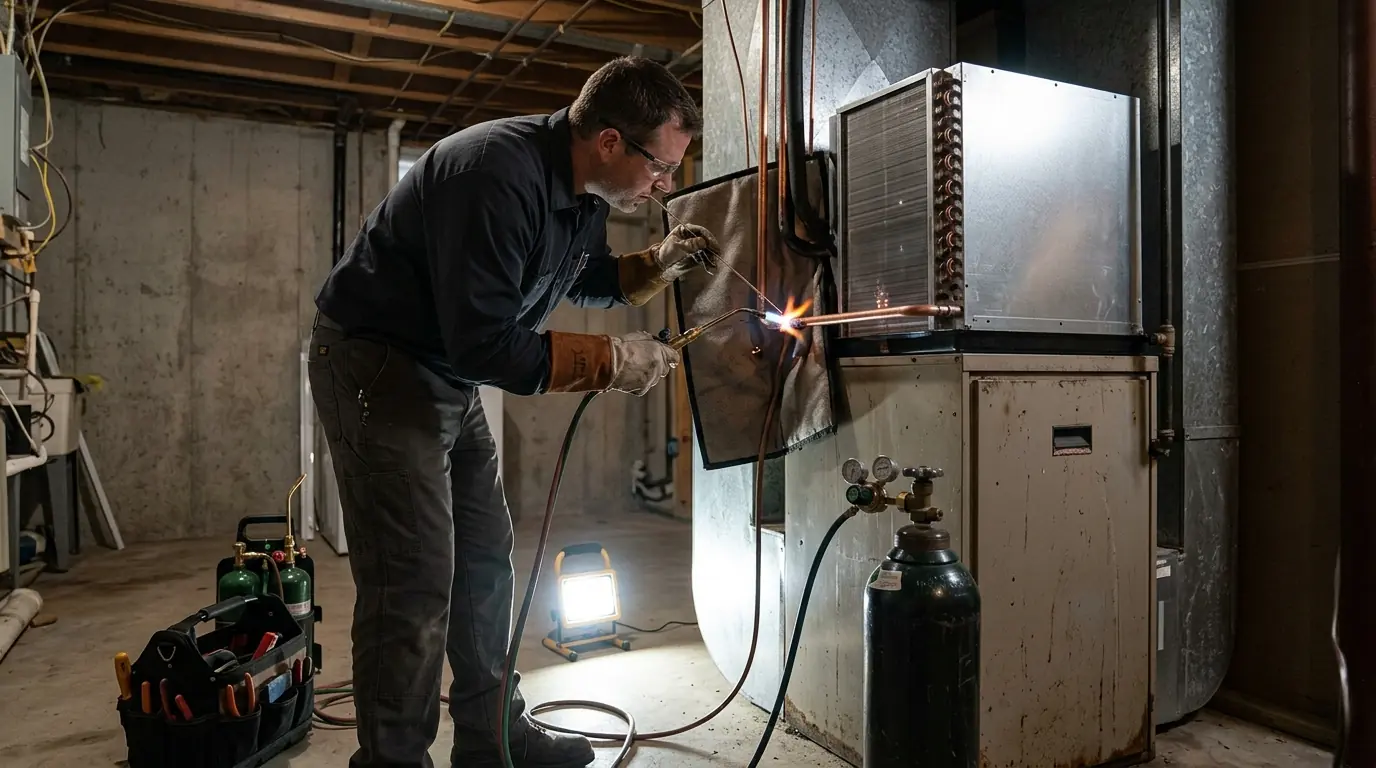
Systems built for R-22 are getting hard to keep running, because that refrigerant is no longer produced and what remains is limited. A new outdoor unit cannot simply be paired with the old indoor coil, since current refrigerants run at different pressures and the coil and metering device have to match. A proper replacement includes a matched coil, a flushed or new line set, a new filter drier, a nitrogen pressure test and a deep vacuum before the charge goes in. Keeping an R-22 system alive a bit longer is covered under refrigerant leak repair.
Adding central air to a home with ducts
If the house has a forced-air furnace, the ducts are already there, but they were sized to move heat, which takes less air than cooling does. We measure supply and return sizes and the static pressure, then decide whether the ducts can carry the airflow a new AC needs or need an added return or a larger trunk. The new coil sits on the furnace, the line set runs out to the condenser, and the condensate gets a drain or a pump. Upper floors in a rowhome often need extra help, which is where zoning comes in.
Attic air handler installs
Homes with radiator heat and no ducts often get central air through an air handler in the attic or a top-floor closet, with ducts dropped to the rooms below. Under a flat roof the attic is often just a crawl space, so we plan the platform, the service access and the duct routes before anything is ordered. An attic air handler needs a secondary drain pan with a float switch, because an overflow up there lands on the ceiling below. We seal and insulate every duct in that hot space. For tight layouts, compare high-velocity AC.
Which cooling setup suits your house
The house you have, ducts or radiators, mostly decides the setup.
| Option | Fits when | Trade-off |
|---|---|---|
| Condenser plus a coil on the furnace | The house already has forced-air ductwork | Lowest install cost, depends on ducts sized for cooling |
| Condenser plus an attic air handler | Radiator heat, with attic or top-closet space for ducts | Cools the whole house, needs attic work and a drain pan |
| Heat pump in place of the AC | You want cooling plus efficient heat in mild weather | Costs more than an AC, adds a second heat source |
How a central AC install is planned and done
Measure the house
Load calculation, duct sizes, static pressure and possible condenser spots.
Choose the system
Size, efficiency, and a coil or air handler matched to the condenser.
Install the equipment
Set the condenser and coil, run the line set, power, drain and controls.
Pressure test and evacuate
A nitrogen pressure test, then a deep vacuum measured with a micron gauge.
Charge and verify
Charge to the maker's spec, then check airflow, temperatures and the drain on a full cycle.
What a central AC install includes
A standard install with us covers the following:
- A room-by-room load calculation and a static pressure test on the ducts
- Removing the old condenser and coil, with the old refrigerant recovered, never vented
- Setting the condenser on a pad, roof stand or wall bracket
- A matched indoor coil or air handler, with a new filter drier
- New or flushed refrigerant lines, brazed under nitrogen and pressure tested
- A deep vacuum before charging, then the charge set by superheat or subcooling
- Condensate drain, float switch, electrical disconnect and thermostat hookup
Refrigerant changes and historic blocks in Philadelphia
An EPA refrigerant mandate took effect in 2025 and changed what homeowners need to know about new air conditioners, so we explain which refrigerant a new system uses and what that means for service later. Placement matters here too. Girard Estate is a designated City of Philadelphia historic district, and in Girard Estates, or on any block where the front of the house matters, we plan the condenser and line set for the rear or the roof, out of street view where the house allows it.
- Carrier
- Trane
- Lennox
- Rheem
- Goodman
- York
- Bryant
- American Standard
- Mitsubishi Electric
- Daikin
- Fujitsu
- Weil-McLain
- Burnham
We install central air from Carrier, Trane, Lennox, Goodman, Rheem and American Standard, with the coil matched to the condenser.
Usually not. Current refrigerants run at different pressures, and the coil and metering device should match the condenser. A mismatched pair loses efficiency and can fail early.
A load calculation decides it, not square footage alone. Windows, insulation, sun exposure and a flat roof overhead all change the answer.
Yes. An attic or closet air handler with new ducts, a high-velocity system or ductless heads can all work. The layout decides which one fits.
Usually a rear yard, a roof stand or a wall bracket, picked for airflow, service room and a short line set route.
If the furnace is old or its blower cannot move enough air for cooling, doing both often makes sense. If it is sound, we match the AC to it.