Water Heaters & Home Repairs · open 24/7
Attic and roof cavity insulation in Philadelphia, PA
Top floor baking in July and drafty in January? We seal the gaps that leak air into the attic, then blow insulation to an even depth, including the shallow cavities under flat roofs.
- Phones answered 24/7
- Blown fiberglass and cellulose
Updated October 2026
- Common jobs
- Top-ups over thin insulation, air sealing, flat-roof cavities, hatch insulation
- Checked first
- Wiring, bath fan ducts, flue clearances and roof leaks
- Answers
- 24 hours, 7 days a week
Short answer
Attic insulation in Philadelphia, PA works far better when the air leaks are sealed first, because warm air carrying moisture slips past loose insulation. We seal top plates, pipe chases and the hatch, keep baffles at the vents, then blow insulation to a measured depth, or dense-pack it where a flat roof leaves only a shallow cavity.
Why insulation alone does not fix a hot top floor
Loose insulation slows heat moving through it, but it does little to stop air. In many older houses a bigger loss is air rising through gaps around chimneys, plumbing stacks, light fixtures and wall tops into the attic, pulling cold air in downstairs. Seal those first and the insulation can do its job.
Depth matters too. Blown insulation can settle and gets pushed aside by every trip into the attic, so a layer that looked fine years ago may be thin now. We measure what is there, note wet spots or old roof leaks, and plan the added depth around the space you actually have.
What decides the price of attic insulation
You see the price before we start. What moves it:
- Square footage and the depth you are adding
- How much air sealing the attic needs first
- Access: walk-up attic, ceiling hatch or a shallow flat-roof cavity
- Removing wet, damaged or pest-fouled old insulation
Three ways we insulate attics
Blown-in insulation
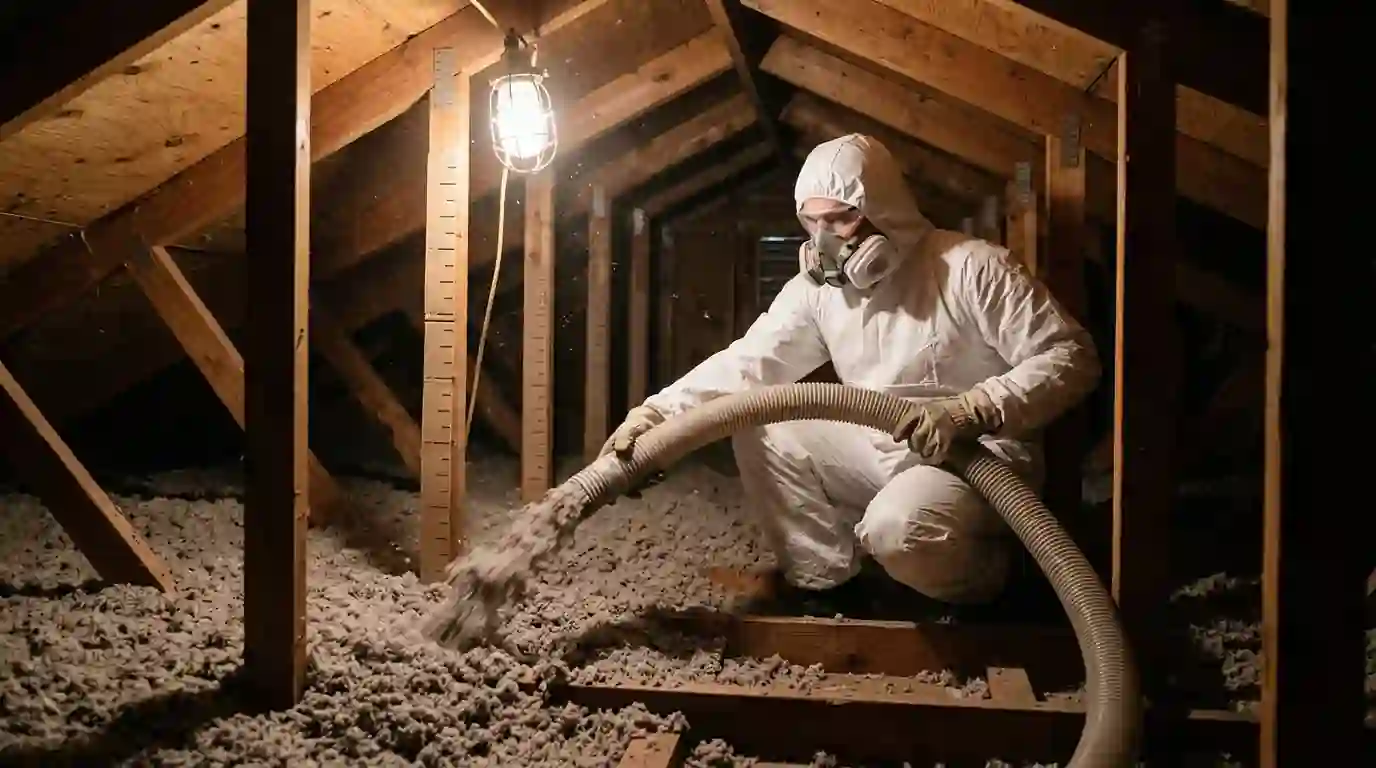
If the tops of the ceiling joists are showing, the attic needs more. Blown fiberglass or cellulose fills around joists, wires and blocking far better than batts, which leave gaps wherever they are cut. Before blowing, we fit baffles at the eaves so soffit vents stay open, build a dam around the hatch, and staple depth rulers to the framing so the finished level can be checked. Recessed lights not rated for contact get covers. Live knob-and-tube wiring is never buried; an electrician evaluates it first. Bath fans dumping into the attic get ducted outside, see bathroom exhaust fans.
Air sealing before insulating
Drafts on the top floor and dark dust streaks on the attic insulation show where air is moving. We seal the tops of interior walls, gaps around plumbing vents and wiring holes with foam or caulk, and close larger chases with rigid board. Around chimneys and metal flues, combustible material has to keep its clearance, so those gaps get sheet metal and fire-rated sealant instead of foam. The hatch gets weatherstripping and a latch that pulls it tight. Sealing makes a house tighter, so we also confirm gas appliances still vent properly afterward.
Low roof cavities
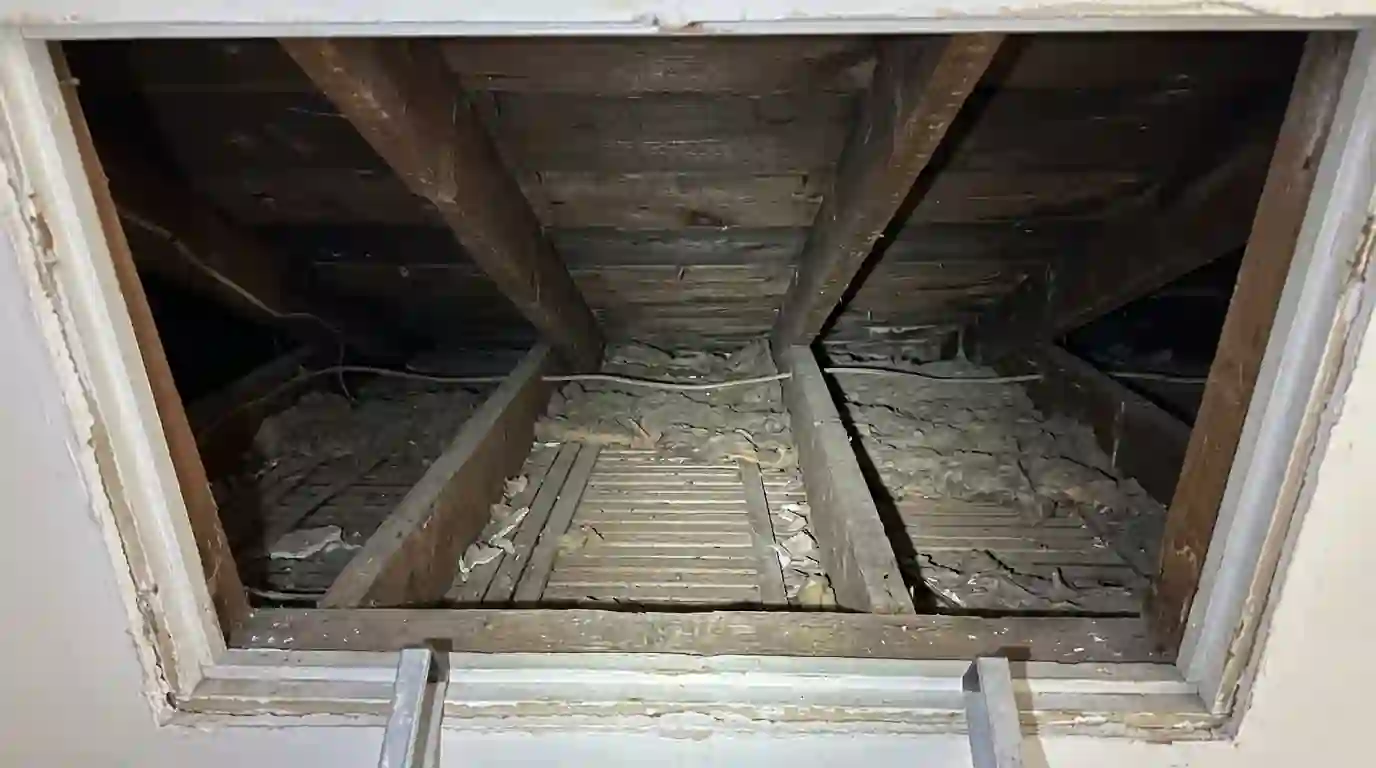
Many flat-roof rowhomes have no attic you can stand in, only a shallow cavity between the roof deck and the top-floor ceiling, so the top floor tracks the weather outside. We check for roof leaks first, because insulation packed into a wet cavity holds the water. Then we reach the space through a hatch or small ceiling holes we patch afterward, and dense-pack cellulose so it fills the cavity without settling. if the roof is due for replacement in the next few years, rigid insulation above the deck may serve better.
Fiberglass, cellulose or foam above the deck?
Each material suits a different attic. We match it to your space and roof.
| Option | Fits when | Trade-off |
|---|---|---|
| Blown fiberglass | Walk-up or crawl attics with room to build depth | Light and does not absorb water, but needs more depth for the same result |
| Dense-packed cellulose | Shallow flat-roof cavities and closed spaces that have to be filled tight | Heavier, and it holds moisture if the roof leaks |
| Rigid foam above the roof deck | The flat roof is being replaced anyway | Only practical during a reroof, and it raises the roof edge |
How an attic insulation job runs
Inspect the space
Existing depth, wiring, roof leaks, bath fan ducts and clearances around flues and chimneys.
Protect the house
Drop cloths on the path, the hatch area covered, and the hose routed from outside.
Seal and prep
Air seal top plates and penetrations, fit baffles, dam the hatch and set depth rulers.
Blow or dense-pack
Insulation goes in to the planned depth, checked against the rulers across the whole attic.
Check and clean up
Hatch weatherstripped and insulated, gas appliances checked for venting, work area vacuumed.
What gets done in the attic besides insulation
The prep work is most of what makes insulation perform.
- Measuring existing depth and noting damp spots, mold or old roof leaks
- Sealing top plates, plumbing stacks and wiring holes with foam or caulk
- Sheet metal and fire-rated sealant around chimneys and metal flues
- Baffles at the eaves so roof vents keep moving air
- Covers or clearance for recessed lights not rated for insulation contact
- Bath fan ducts checked so moist air leaves the house, not the attic
- Hatch dammed, insulated and weatherstripped
Insulating under a flat Philadelphia rowhome roof
In Philadelphia rowhomes, the top floor usually sits right under a flat roof, with side walls shared with the neighbors and the front and back walls taking the weather. That leaves the roof cavity as the main surface worth improving. A flat roof in July soaks up sun all day, and the room below holds that heat long after dark. Insulating and sealing that cavity is often what lets a central air or ductless system keep up on the top floor without running all night.
It depends on the space. Walk-up attics can take a deep layer; shallow flat-roof cavities hold what fits. We measure what is there and show you the planned depth on rulers.
Only when it is wet, moldy or fouled by pests. Dry insulation in decent shape stays, and new material goes on top after air sealing.
That may be vermiculite, which can contain asbestos. Do not disturb it. It needs testing before anyone works in that attic, and removal, if needed, is specialist abatement work.
Usually, yes, on the top floor. Less heat soaks down through the ceiling, so the system can hold the setpoint on hot afternoons instead of running nonstop.
Not usually in an older house, but we check. Gas water heaters and boilers that use room air are tested for proper venting after the attic is sealed.