Water Heaters & Home Repairs · open 24/7
Replacing gas, electric and power-vent water heaters in Philadelphia, PA
Tank rusting at the seams or running out fast? We size the new heater to how your household uses hot water, then install it with the venting, gas and safety parts done properly.
- Phones answered 24/7
- Gas, electric and power-vent tanks
Updated October 2026
- What we install
- Atmospheric gas, power-vent gas and electric tank heaters
- Includes
- Removal, connections, relief line, expansion tank check, startup
- Covers
- Philadelphia and South Jersey
Short answer
Replacing a water heater in Philadelphia, PA means sizing it to your household, then checking what the old one depended on: the chimney or vent, the gas line or circuit, and the water pressure. We remove the old tank, install the new one with a proper relief line and an expansion tank where needed, and test it before leaving.
What a new water heater has to fit in an older house
Most tank swaps look simple, and the heater usually is. The work is in what surrounds it. An older basement may have a masonry chimney shared with the boiler, galvanized pipe, a relief valve with no discharge line, and no expansion tank on a closed system.
We look at all of that before choosing the heater. The venting decides between an atmospheric and a power-vent model, the household decides the capacity, and the stairs decide how a tank gets in and out.
What decides the price of a new water heater
You see the price before we start. What moves it:
- Tank type and capacity: atmospheric, power-vent or electric
- Venting changes, such as a chimney liner or a new sidewall vent
- Code updates: expansion tank, relief line, gas shutoff or sediment trap
- Access: stairs, headroom and closet installs
Tank heaters we put in
Gas tank water heaters
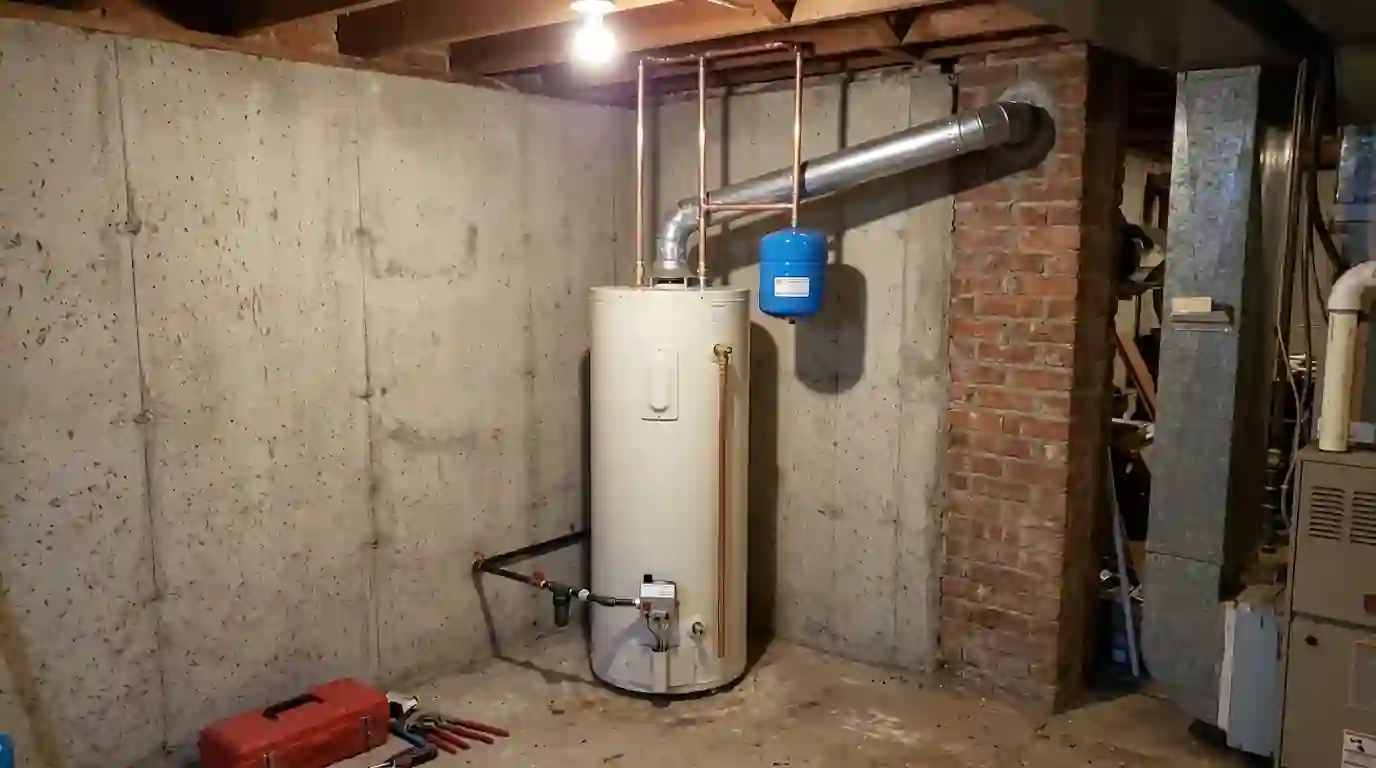
An atmospheric gas heater vents by natural draft, so it needs a sound flue. In many older houses that is a masonry chimney once shared with a boiler or furnace. When that appliance was replaced with a high-efficiency unit vented in plastic, the water heater was left alone in a chimney sized for far more exhaust, where it can condense and spill. We check draft, connector pitch and chimney condition, and recommend a chimney liner when the flue cannot vent the heater safely.
Electric tank water heaters
Electric tanks need no flue or gas line, which suits houses without gas service or a closet with no vent route. They heat with two elements, usually on a dedicated 240-volt circuit, and recover more slowly than gas, so tank size matters more. We check the breaker and wire size against the new heater's rating, fit the relief line, and set both thermostats. Where the basement has room and stays mild, a heat pump water heater is another electric option, since it pulls heat from the surrounding air.
Power-vent water heaters
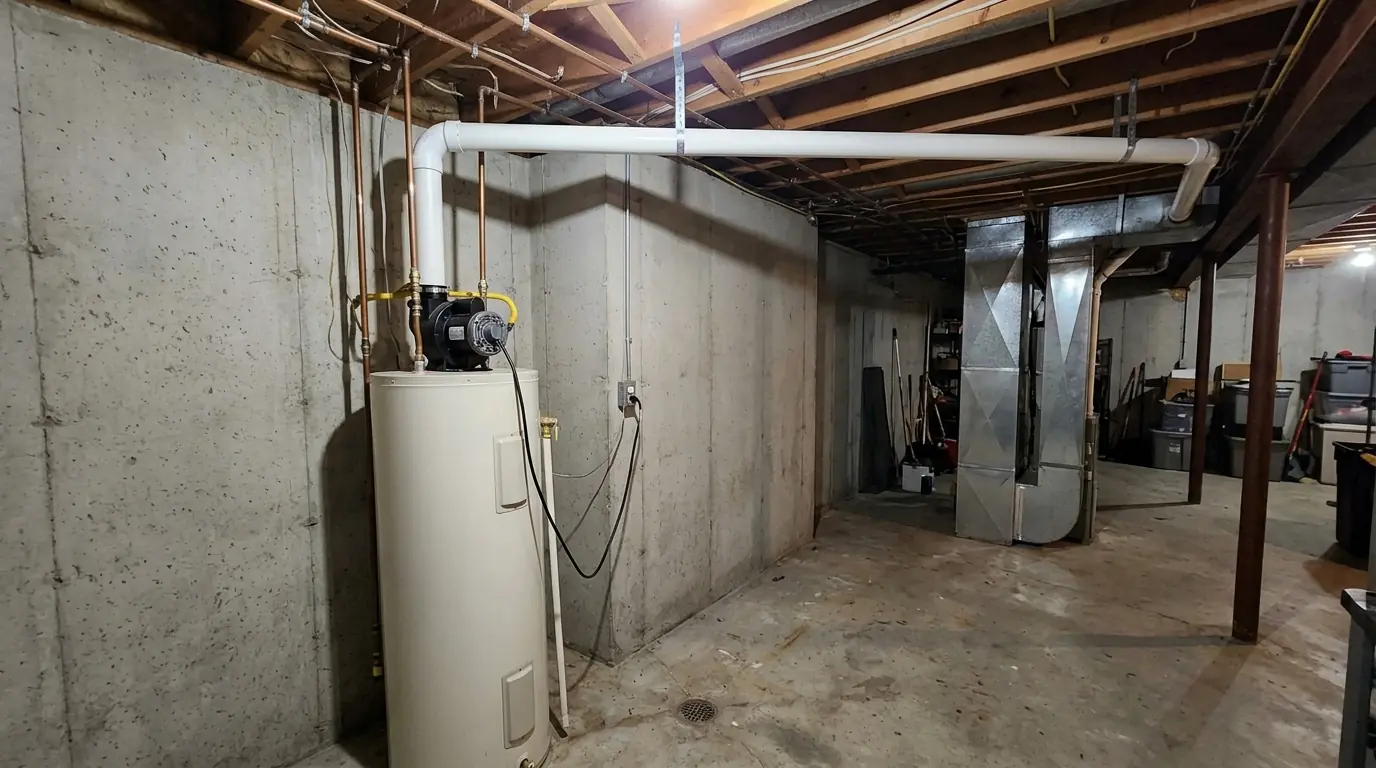
A power-vent heater uses a blower on top of the tank to push exhaust through plastic pipe out a side wall. It fits when there is no usable chimney, or when the chimney would need a liner the household would rather skip. The blower needs an outlet and makes some noise. The vent run has length and elbow limits, and the cap must clear windows, doors and air intakes by set distances. We plan that route before ordering and confirm the existing gas line can carry the load.
Which tank water heater fits your basement
The venting and the hot water you use matter more than the brand name.
| Option | Fits when | Trade-off |
|---|---|---|
| Atmospheric gas tank | A sound, properly sized chimney or flue is already in place | Lowest upfront cost and no electricity needed, but it depends on good draft |
| Power-vent gas tank | No usable chimney, or the flue was orphaned by a furnace upgrade | Needs an outlet and a sidewall vent, and the blower adds noise |
| Electric tank | No gas service, or a closet with no vent route | No combustion at all, slower recovery, needs a 240-volt circuit |
How a water heater replacement day runs
Look at the setup
Venting, gas or electric supply, water pressure, and the path in and out of the basement.
Choose and size
Tank type and capacity matched to the people and fixtures in the house.
Permit and booking
We check which permit the job needs and set an install day.
Swap the tank
Drain and remove the old heater, set the new one, and connect water, gas or power, and venting.
Fill and test
Purge the air, light or power it up, check for leaks and draft, and set the temperature.
What a water heater replacement covers
Each tank swap we do includes these steps:
- Draining and removing the old tank, and hauling it away
- Sizing the new tank to the household, not copying the old label
- New water connections with a shutoff valve and dielectric fittings where steel meets copper
- Gas connection with a sediment trap and a leak test, or a circuit check on electric
- A relief valve discharge line piped down toward the floor as code requires
- An expansion tank on closed systems, charged to the house water pressure
- Venting checked for draft, or new PVC for a power-vent model, then a full startup
Permits, steep stairs and Philadelphia basements
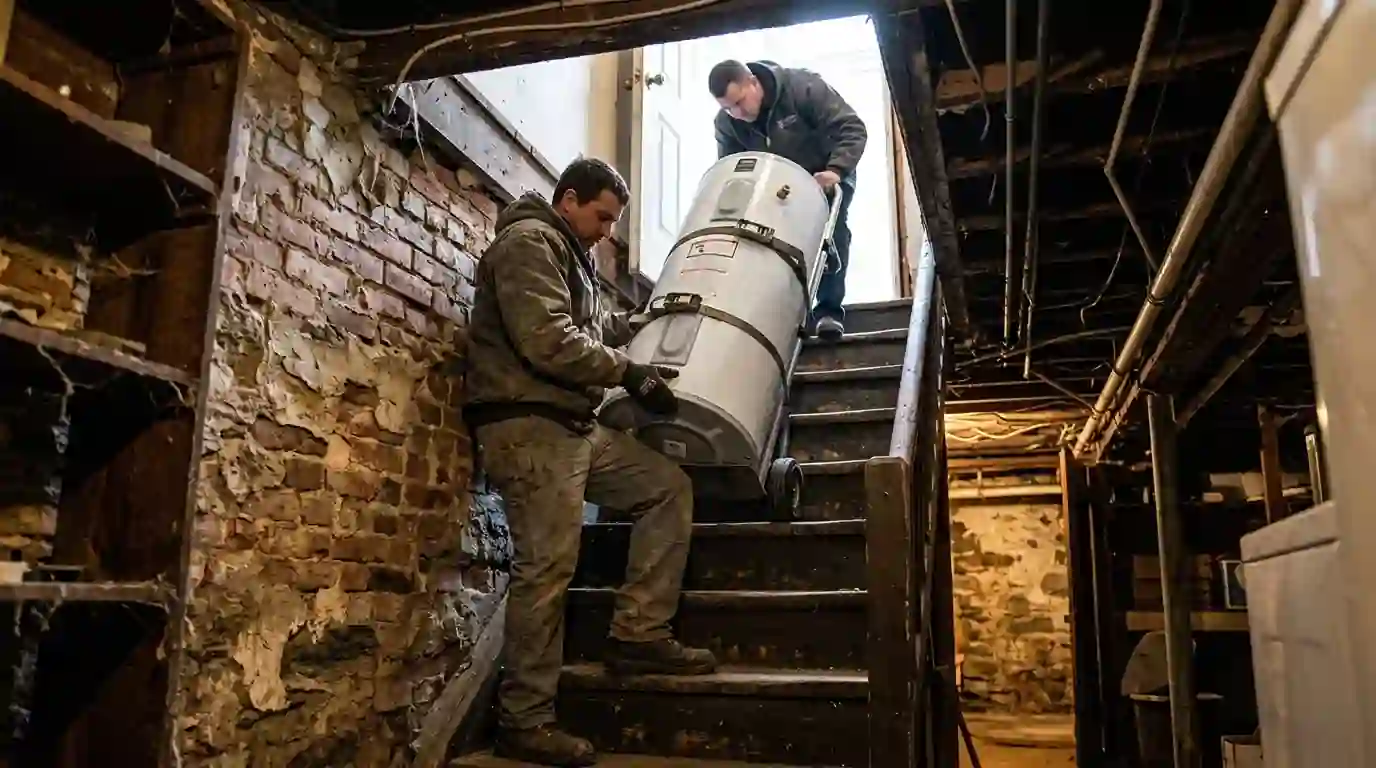
The City of Philadelphia runs a mechanical permit application as one of its building and repair permits, so planning a water heater swap includes confirming which permit applies. Getting the tank through the house is its own question. Rowhome basements often have steep, narrow stairs and low headroom, where a tall tank may not fit but a shorter one will. We measure the stairs before ordering.
- Carrier
- Trane
- Lennox
- Rheem
- Goodman
- York
- Bryant
- American Standard
- Mitsubishi Electric
- Daikin
- Fujitsu
- Weil-McLain
- Burnham
We install tank heaters from A. O. Smith, Bradford White and Rheem, sized and vented for older homes.
A tank leaking from its body, rusty hot water, or repairs piling up on an older unit. Age alone is no reason if the tank is dry and working.
Not automatically. We ask how many people live there, how many showers run at once and whether anyone runs out, then size from that.
When a check valve or pressure reducing valve closes the water system, heated water has nowhere to expand. The expansion tank absorbs it and spares the relief valve.
Sometimes, if it gets enough combustion air and a proper vent. A power-vent or electric model often suits a closet better. We look at the space first.
A like-for-like swap is usually done in a day. Venting changes, a new gas line or a tight basement can stretch it.