Water Heaters & Home Repairs · open 24/7
Gas line installation and repair in Philadelphia, PA
New gas appliance, or a smell near the pipe? We run, size and test gas piping for ranges, dryers, grills and heating equipment, and track down leaks at the joint that is failing.
- Phones answered 24/7
- Black iron and CSST piping
Updated October 2026
- Common jobs
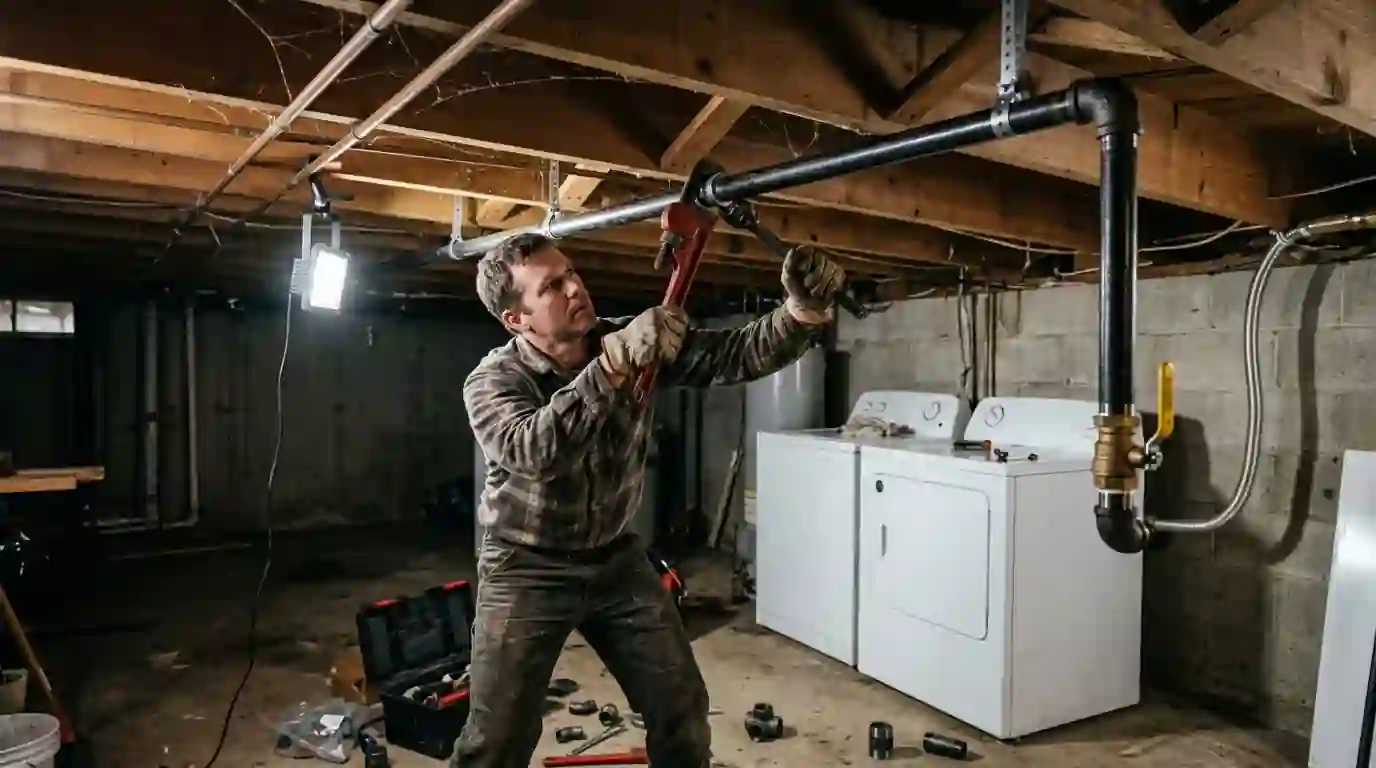
- Range and dryer hookups, grill lines, leaking fittings, new appliance branches
- Every line
- Pressure tested, then each joint leak checked with gas on
- Answers
- 24 hours, 7 days a week
Short answer
Gas line installation in Philadelphia, PA starts with sizing: the pipe has to carry every appliance on the meter at once without starving the furnace or water heater. We run the new branch, pressure test it before any appliance is connected, then leak check each joint with gas on.
What goes into a gas line that is safe to turn on
A gas line is not just pipe from the meter to the new appliance. Every branch shares the supply, so we add up the input of everything on the system, measure the run, and size the pipe so the furnace, water heater and range can all fire at once.
Material depends on the route. Threaded black iron suits exposed basement runs. Corrugated stainless tubing snakes through finished walls with fewer joints, but needs the electrical bonding its maker specifies. Either way, the line is pressure tested first.
What changes the price of a gas line
You see the price before we start. What moves it:
- Length of the run and how many walls or floors it crosses
- Black iron versus corrugated stainless tubing for the route
- Whether the existing main has to be upsized for the new load
- Finished walls or ceilings that have to be opened and closed
Gas work we do most
Gas range and dryer hookups
Swapping an electric range or dryer for gas means running a new branch that ends at a shutoff valve you can reach behind the appliance. The appliance goes on a new flexible connector sized for it, never the old one, and we leak check the fittings with the burners lit. For a dryer we also look at the exhaust run, since a gas dryer pushes combustion products out with the lint; see dryer vent cleaning. Ranges get the anti-tip bracket reinstalled and each burner checked for a clean blue flame.
Outdoor grill lines
A natural gas grill line runs from an existing branch, through the rim joist or wall, to a shutoff valve outside and a quick-disconnect hose at the grill. Before any pipe goes in, we check that the meter and the main line can carry the grill on top of everything else. A propane grill cannot simply be hooked to utility gas; it needs the maker's conversion kit, or a grill built for natural gas. Outdoor pipe is coated or painted against rust, strapped to the wall, and leak tested before the first cookout.
Gas leak repair
If the smell is strong or you hear hissing, leave and call the gas utility or 911 from outside before anything else. Once the area is safe, we test the piping with an electronic detector and soap solution until we find the joint, valve or connector that is leaking. The fix is usually remaking that joint or replacing the fitting, not patching it. Afterward the section is retested, pilots on the water heater and boiler are relit, and burners are checked. Smell near the heater? Read about water heater repair.
How a new gas line goes in
Count the load
We list every gas appliance and its input, then measure the route back to the meter.
Plan the route
Pick the material and path with the fewest joints and the least wall or ceiling opening.
Install and support
Pipe is run, strapped, and capped at each new outlet with a shutoff valve.
Pressure test
The new section holds test pressure on a gauge before gas is turned into it.
Hook up and leak check
Appliances go on, pilots are relit, and every joint is checked with gas flowing.
What a gas line job includes from meter to burner
Every new line or repair goes through the same checks.
- Load count of every gas appliance, with pipe sized to match
- Route planned for the fewest joints, with pipe strapped and supported along joists
- An accessible shutoff valve at each appliance the line feeds
- Bonding for corrugated stainless tubing, per the manufacturer's instructions
- Pressure test of the new piping before it is put into service
- Leak check of every joint and connector with gas on and burners lit
- Permit and inspection arranged when the job calls for them
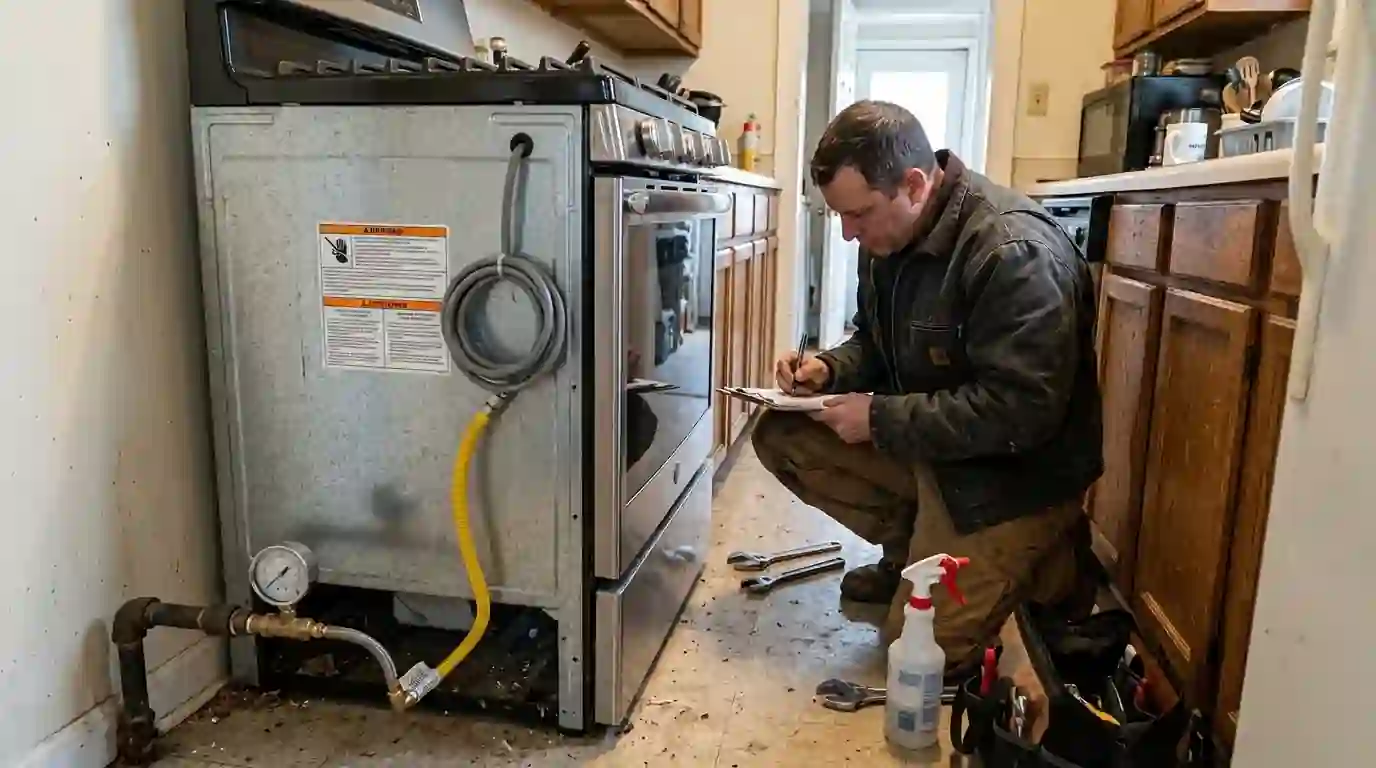
Old gas piping in a city with a long gas history
Philadelphia Gas Works has marked its 185th year of service, and a city with that long a gas history has plenty of old piping inside its homes. In older Philadelphia rowhomes we often find threaded black iron extended again and again, a branch added for each new appliance, sometimes without anyone checking whether the main run can carry the total. Before we add a range or grill line, we trace the existing pipe back to the meter and size from there.
Warning signs
Signs a gas pipe or connection needs attention
A faint rotten-egg smell near an appliance
Gas carries an added odor. A smell that returns at one spot points to a leaking joint.
Hissing at a pipe or valve
A hiss means a large leak. Leave and call the gas utility or 911 from outside.
Rust and pitting on basement pipe
Damp basements corrode black iron, especially where pipe rests on masonry or near a floor drain.
An old brass appliance connector
Old uncoated brass connectors behind ranges and dryers are a known leak risk. Replace them.
Leave the house without switching lights or appliances on or off, then call the gas utility or 911 from outside. Call us once the utility has made it safe.
No. Connectors are meant for one installation, and old uncoated brass ones can crack at the flare. Every hookup gets a new connector sized to the appliance.
Yes. A gas dryer runs on a standard household outlet for the drum and igniter, not the large dryer receptacle an electric model uses. We check that one is in place.
Yes, when it is installed with the electrical bonding its manufacturer specifies. We use it where it saves opening walls, and black iron for exposed runs.
Sometimes. It depends on the pipe size, the length of the run and what else is on it. We add up the load before promising anything.