Ducts & Indoor Air · open 24/7
Air filtration and UV purification in Philadelphia, PA
Dusting every other day and still sneezing? We add filtration the system can actually breathe through, from deep media cabinets to UV lights on the coil, and check airflow afterward.
- Phones answered 24/7
- Media filters, UV and air cleaners
Updated October 2026
- Common installs
- Media filter cabinets, coil UV lights, electronic air cleaners
- Checked
- Static pressure before and after, so airflow isn't choked
- Covers
- Philadelphia and South Jersey
Short answer
Air purification in Philadelphia, PA is most effective at the furnace or air handler, where all the circulating air passes through. We install deep media filter cabinets, UV lights over the cooling coil and electronic air cleaners, then measure static pressure so better filtration doesn't choke the blower or freeze the coil.
What whole-house air cleaning can and can't do
A central air cleaner only treats air while the blower runs, and only air that reaches the returns. It is good at catching dust, pollen and pet dander moving through the system. It won't fix a damp basement, gas fumes or a source like smoking indoors.
The common mistake is jamming a dense one-inch filter into a slot built for a basic one. Airflow drops, the coil can freeze and the blower works harder. A deeper filter cabinet catches more with less resistance, which is why we usually start there.
What sets the price of air purification
You see the price before we start. What moves it:
- Type: media cabinet, UV light or electronic cleaner
- Room on the return, and any duct changes to fit a cabinet
- Wiring for UV lamps or electronic cleaners
- Whether the return ducts need sealing first
Air cleaning options we install
Media filter cabinets
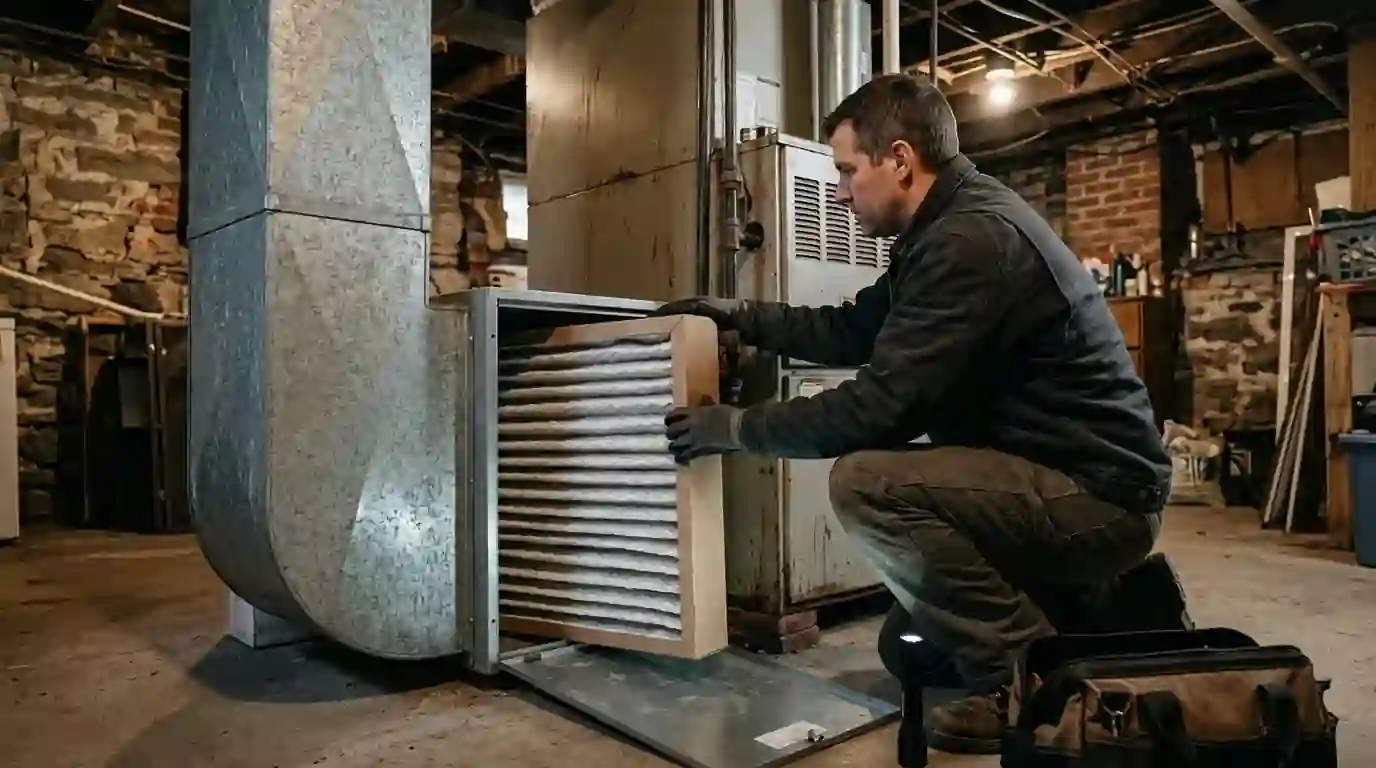
A media cabinet holds a pleated filter four or five inches deep instead of one. That extra surface lets it catch fine dust and allergens while passing air more easily than a dense thin filter. We mount the cabinet on the return at the furnace or air handler, seal it so air can't slip around the filter, and match it to the blower's airflow. Most media filters are changed every six to twelve months, depending on pets, dust and how often the system runs. After renovation work, start with duct cleaning instead.
UV lights
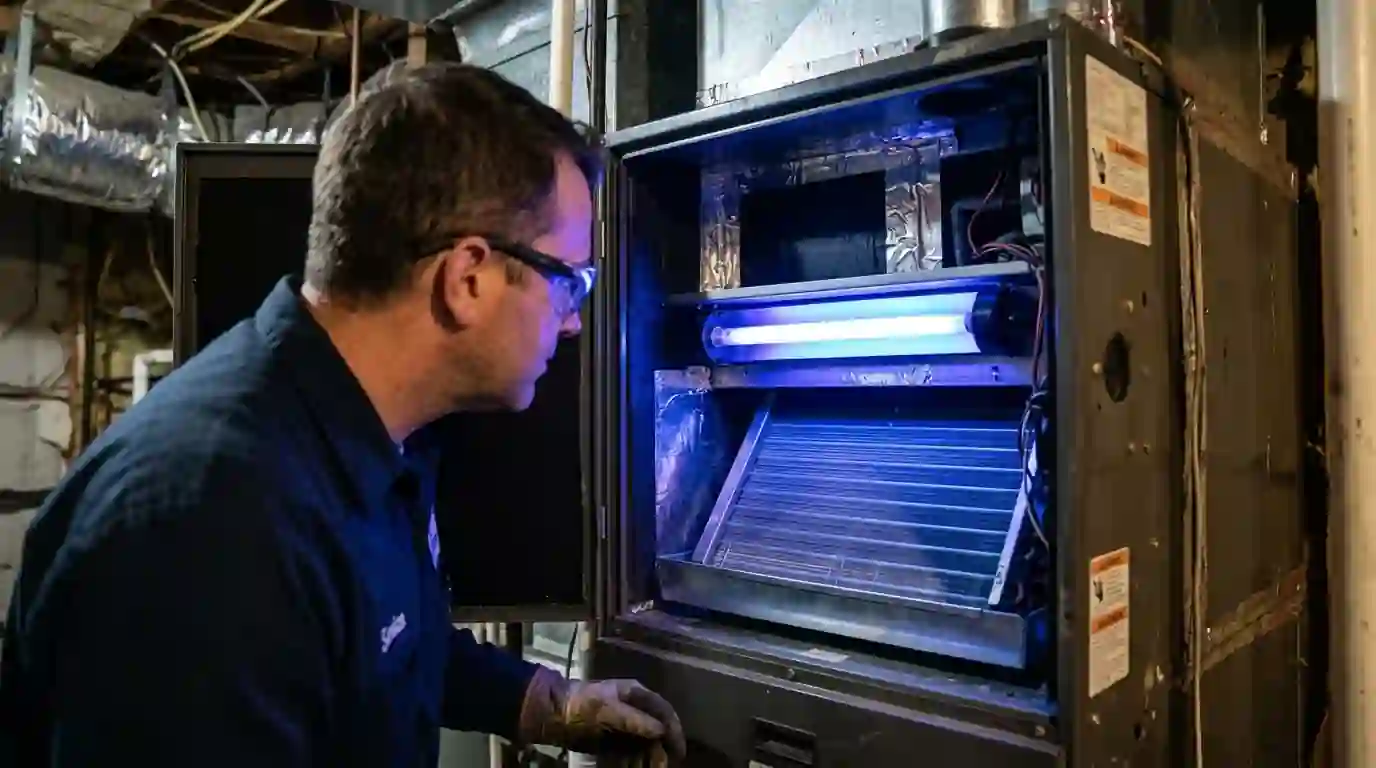
UV lights in an HVAC system do one job well: keeping the cooling coil and drain pan from growing the slime that causes musty smells and slow drains. Mounted over the coil, the lamp shines on it constantly. A lamp in the moving airstream only gets a brief pass at airborne germs, so we're careful about what we claim for that use. Lamps lose strength and are usually replaced yearly. UV also breaks down some plastics and wire jackets nearby, so we mount it with shielding in mind and choose models that don't produce ozone.
Electronic air cleaners
An electronic air cleaner charges particles and collects them on metal plates, so it catches fine particles with little airflow loss. The catch is upkeep: the cells need washing every few months, and a dirty cell collects poorly and can start to snap or tick. Some designs also give off a small amount of ozone, which bothers some people with asthma. We help you decide whether that trade is worth it, install the unit on the return, and show you how to pull and wash the cells. For allergy complaints, a dehumidifier often helps too.
Media, UV or electronic: what each one does
These solve different problems, so many homes end up with two of them.
| Option | Fits when | Trade-off |
|---|---|---|
| Media filter cabinet | Dust, pollen and dander are the main complaint | Low upkeep, filter changed every six to twelve months; needs room on the return |
| UV light at the coil | A musty smell at startup, or a slimy coil and drain pan | Keeps the coil cleaner but does little for dust; lamps need yearly replacement |
| Electronic air cleaner | You want fine-particle capture with washable cells | Catches fine particles; cells need regular washing and some models give off ozone |
How we add air cleaning to a system
Talk through the complaint
Dust, allergies, odors or a musty coil each point to a different solution.
Measure the system
Static pressure, blower size and return layout, to see what the system can handle.
Install and seal
Cabinet, lamp or cleaner mounted and sealed, with wiring tied into the equipment.
Check airflow again
Static pressure retested so the new filtration doesn't choke the blower.
What an air cleaner install covers
Every install includes these steps:
- Static pressure readings on the existing system before a filter is chosen
- A cabinet or cleaner sized to the blower's airflow, not just the opening
- Sealing around the cabinet and filter rack so air can't bypass it
- UV lamps placed to reach the coil and drain pan, shielded from nearby plastics
- Wiring tied to the blower or a switch, with a cutoff on UV access doors
- Static pressure checked again with the new filtration in place
- A walk-through of filter changes, cell washing or lamp replacement
Dust that older Philadelphia houses make on their own
Older Philadelphia homes produce plenty of their own dust: crumbling plaster, old chimneys, and basements with stone walls that shed grit. Leaky return ducts in those basements pull that dust straight into the system, and no filter keeps up with a constant supply. Before adding filtration, we check where the return draws its air. Sealing the returns and adding a media cabinet together usually does more than either one alone, and both fit the tight basement layouts common in rowhomes.
- Carrier
- Trane
- Lennox
- Rheem
- Goodman
- York
- Bryant
- American Standard
- Mitsubishi Electric
- Daikin
- Fujitsu
- Weil-McLain
- Burnham
We install and service air cleaners from Trane, American Standard, Lennox and Carrier on most brands of furnace and air handler.
Many homes do well with MERV 11 to 13 in a deep media cabinet. A thin filter that dense can choke airflow, so the filter has to match the system.
A lamp over the coil keeps the coil clean. Air moves past a lamp too quickly to support strong claims about germs, so we don't sell it on that.
Often, for dust, pollen and pet dander, as long as the blower runs enough to pass the air through it. Running the fan more in allergy season helps.
Some produce a small amount. If anyone in the house is sensitive to it, a media filter cabinet is the safer choice for fine-particle capture.
Typically every six to twelve months. Pets, renovation dust or a fan running all the time shorten that. A pressure check across the filter tells for sure.