Cooling · open 24/7
Central air conditioning repair in Philadelphia, PA
AC running but the house keeps getting hotter? We test the electrical parts, airflow and refrigerant, then fix what actually failed. Answering 24/7, heat waves included.
- Phones answered 24/7
- Central air and attic units
Updated October 2026
- Common fixes
- Capacitors, contactors, fan motors, frozen coils, drain clogs, refrigerant leaks
- Covers
- Philadelphia and South Jersey
- Answers
- 24 hours, 7 days a week
Short answer
A central AC in Philadelphia, PA that runs but blows warm air usually has a failed capacitor or contactor, a dead condenser fan motor, a dirty coil, a clogged drain shutting it down, or low refrigerant from a leak. We test the electrical parts, airflow and pressures in that order and repair what failed.
Warning signs
Signs your AC needs a repair
Warm air from the vents
The indoor blower runs, but the outdoor unit is off, humming, or running with its fan stopped.
Ice on the lines or coil
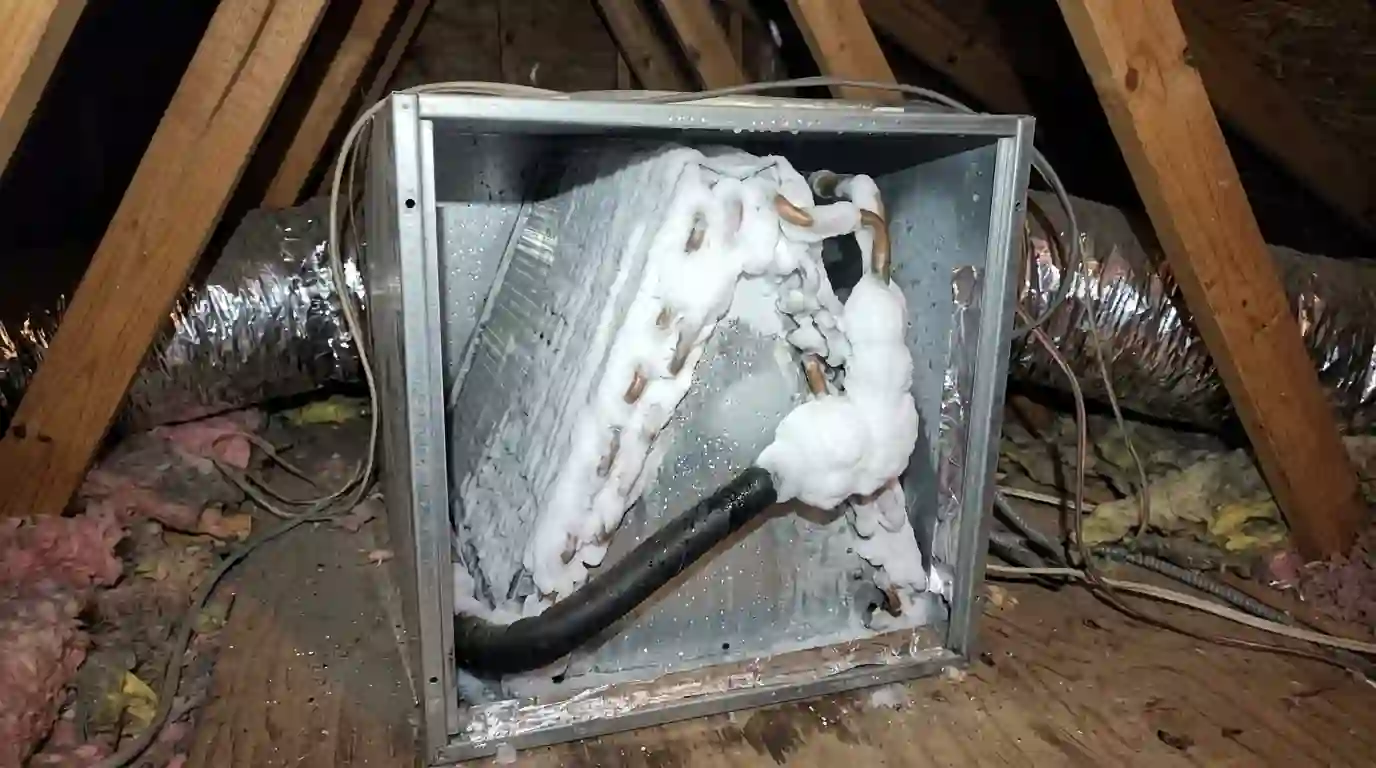
Frost on the copper line or indoor coil means low airflow or low refrigerant.
Outdoor unit hums but won't start
A failed capacitor or a seized motor is the usual cause.
Water near the air handler
A clogged condensate drain overflows the pan and may trip a float switch.
How we track down an AC that will not cool
An air conditioner has two halves: the outdoor condenser, with the compressor and fan, and the indoor coil and blower. A repair starts by finding which half is failing and whether the problem is electrical, airflow or refrigerant.
We work from readings: voltage and amperage outside, the temperature drop across the indoor coil, and pressures. You pay for the part that failed, not the ones easiest to try.
The AC repairs we make most
AC running but not cooling
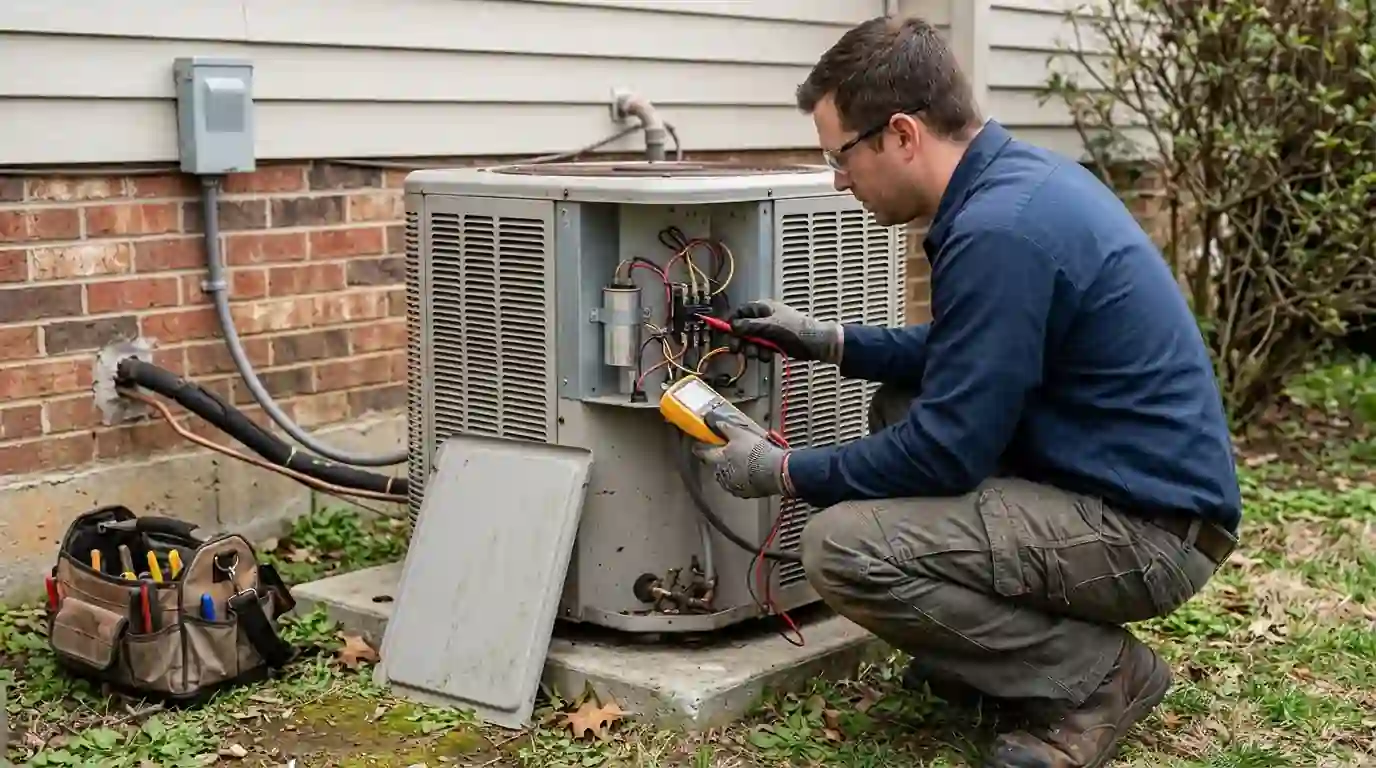
Start outside. If the outdoor fan is not spinning or the unit only hums, the compressor is not running and the problem is electrical. If the outdoor unit runs normally, the cause is usually airflow or refrigerant: a packed filter, a dirty indoor coil, a condenser coil choked with dust and cottonwood, or a slow leak that dropped the charge. We measure supply and return temperatures, pressures, superheat and subcooling, and match the readings to the cause instead of adding refrigerant to see if it helps.
Frozen evaporator coil
Ice on the indoor coil or the large copper line means the coil is running too cold. The two usual causes are not enough air across it, from a dirty filter, a weak blower or closed returns, and not enough refrigerant, from a leak. Running a frozen system can damage the compressor, so switch it off and let it thaw. We work out whether it is airflow or charge, fix it, and check the drain, which often overflows as the ice melts. Leaks have their own page: refrigerant leak repair.
Capacitor and contactor failures
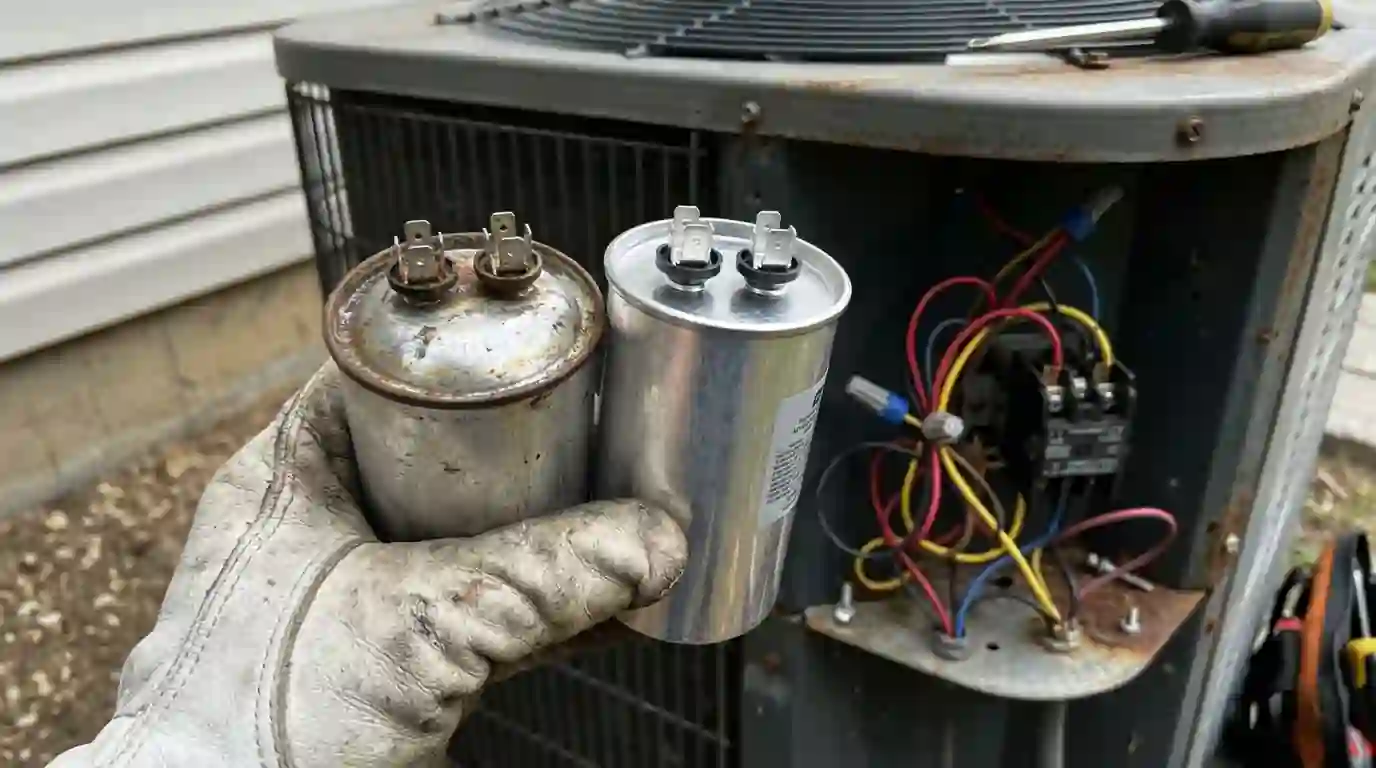
The run capacitor gives the compressor and condenser fan the boost to start and keep running. Heat wears it out, and a weak one shows up as a humming unit that will not start or a fan that turns slowly. The contactor is the switch that powers the outdoor unit; its contacts pit and burn over the years. Both are quick repairs. We test the capacitor under load, inspect the contactor, and check why it failed, since a struggling compressor can kill a new capacitor fast.
Clogged condensate drain
Air conditioners pull water from the air, and it drains from the indoor coil through a pan and a small pipe or pump. In attics and upstairs closets, a clogged line overflows onto ceilings. Many systems have a float switch that shuts the AC off when the pan fills, which looks like a dead system. Algae and dust are the usual clog. We clear the line, clean the trap and pan, test the float switch and any pump, and make sure the line drains where it should.
AC calls during Philadelphia heat emergencies
Philadelphia's Health Department declared its first Heat Health Emergency of 2024 for June 20 through June 22, and another from July 15 to July 17. Stretches like those are when worn capacitors and dirty condenser coils give out, because the outdoor unit is working hardest on the hottest afternoons. If your AC is already struggling in early June, a repair or tune-up then is easier to schedule than one in the middle of an emergency week.
What an AC repair visit looks like
Check the thermostat and filter
We rule out the simple causes first, so you are not paying for an outdoor repair that is not needed.
Test the outdoor unit
Power, capacitor, contactor, fan motor and compressor current.
Check airflow and the coil
Filter, blower, indoor coil and return air, plus the temperature drop across the coil.
Read the refrigerant side
Pressures, superheat and subcooling, so a low charge is confirmed before anything is added.
Repair and verify
We fix what failed and run the system until the supply air and pressures look right.
What to check before you call about the AC
These checks are safe for anyone. The rest needs a tech with gauges and a meter.
| Safe for you to check | Leave for the tech |
|---|---|
| Thermostat set to cool and below room temperature | Anything inside the outdoor unit's electrical panel |
| The indoor filter, since a clogged one starves the coil | Adding or recovering refrigerant |
| The breaker and the outdoor disconnect switch | Replacing capacitors, contactors or motors |
| Switching to off if you see ice, and letting it thaw | Clearing a drain line that has flooded the pan |
What decides the cost of an AC repair
You see the price before we start. What moves it:
- The part: a capacitor or contactor costs less than a fan motor or compressor
- Whether refrigerant is low and the leak has to be found first
- Your refrigerant type, since older R-22 is scarce and costly
- Access to rooftop and attic equipment
- Carrier
- Trane
- Lennox
- Rheem
- Goodman
- York
- Bryant
- American Standard
- Mitsubishi Electric
- Daikin
- Fujitsu
- Weil-McLain
- Burnham
We repair central air from Carrier, Trane, Lennox, Goodman, Rheem, York and Bryant, plus most attic air handlers.
Usually a dirty filter or coil, a failed outdoor fan or capacitor, a clogged drain tripping a float switch, or low refrigerant from a leak. Check the filter and thermostat first.
Some difference is normal in a rowhome. A big one points to duct or airflow problems, or a floor that needs its own ductless unit or zoning.
No. Turn it off, let it thaw, and call. A frozen system can damage the compressor.
We can, but without fixing the leak you pay again next summer. We confirm the charge is low, look for the leak, and give you the options.
Often, but R-22 has been phased out and is costly. A major repair on an older R-22 system is usually where replacement starts to make sense.