Heating · open 24/7
Steam heat repair in Philadelphia, PA
Pipes banging, radiators cold, or the boiler shutting off? Steam systems run on a few simple rules: air out, water back, pressure low. We find which rule is being broken and fix it. Answering 24/7.
- Phones answered 24/7
- One-pipe and two-pipe steam
Updated October 2026
- Common fixes
- Main vents, radiator vents, low-water cutoffs, sight glass, pressure controls, pipe pitch
- Systems
- One-pipe and two-pipe steam
- Answers
- 24 hours, 7 days a week
Short answer
Steam heat problems in Philadelphia, PA almost always come from three things: air that cannot get out of the pipes and radiators, condensate water that cannot drain back to the boiler, or a boiler control that is set wrong or failing. We check vents, pipe pitch, the low-water cutoff and the pressure control, then fix the cause.
Warning signs
Signs your steam system needs attention
Banging or hammering
Water trapped in a pipe that has lost its pitch gets hit by steam and slams.
Cold radiators
A clogged or painted-over air vent keeps steam out of that radiator.
Hissing or spitting vents
A vent that spits water or never closes is worn out, or the pressure is set too high.
Boiler keeps cutting out
The low-water cutoff is tripping, often because water is not returning fast enough.
How steam heat works, and where it goes wrong
A steam boiler boils water, the steam rises through the mains and into the radiators, gives off its heat, condenses back into water and drains to the boiler by gravity. It runs at very low pressure and depends on air vents and on every pipe being pitched so the water can find its way back.
That means most steam problems are not boiler problems. A boiler in good shape can still leave rooms cold, bang every morning or shut off on low water because of vents, pitch, pressure settings or dirty water. We look at the whole loop before suggesting any work on the boiler itself.
The steam repairs we make most
Banging pipes and water hammer
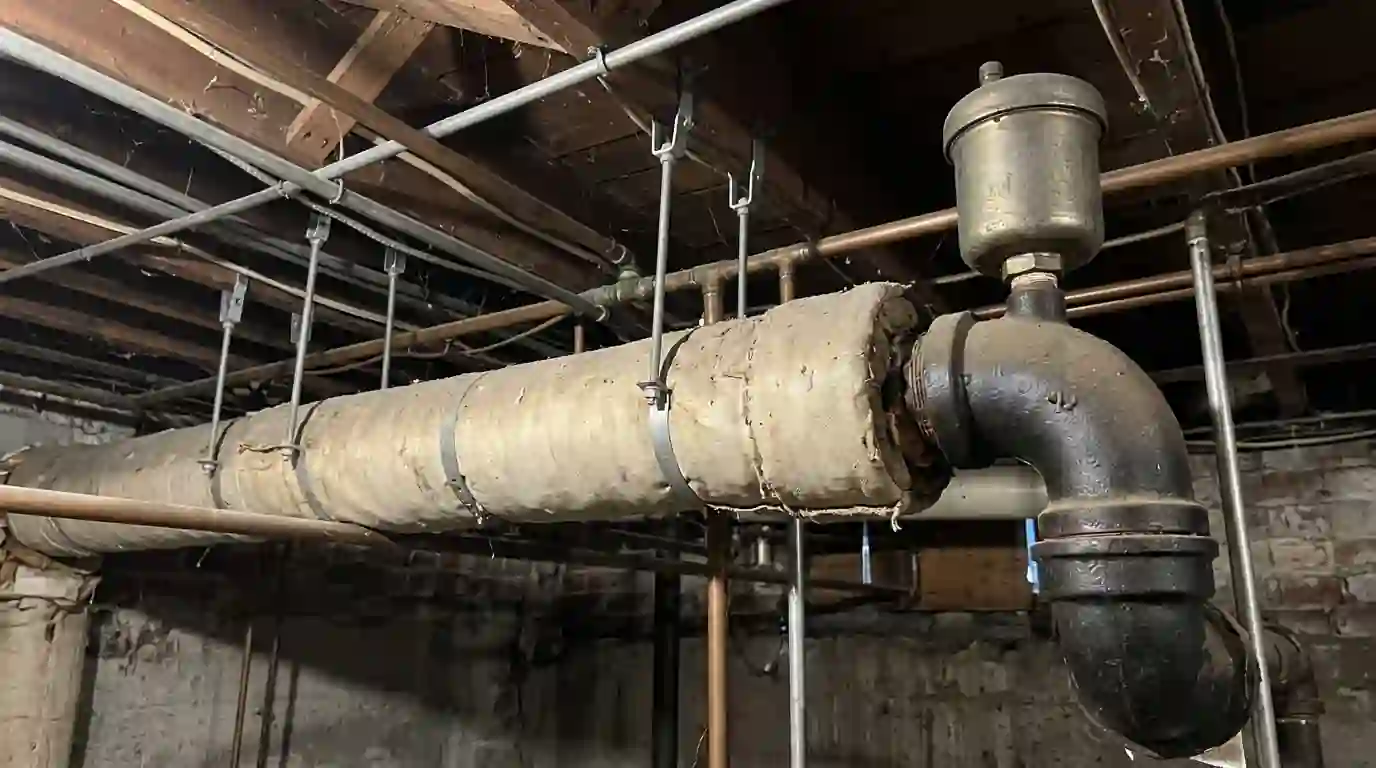
Water hammer is steam meeting water that should not be there. Steam condenses back to water as it heats the house, and that water has to flow back to the boiler. When a main or a radiator loses its pitch, from settling joists or a radiator pushed level during floor work, water pools and steam slams into it. A radiator valve left half open on a one-pipe system does the same thing, because steam coming up blocks the water trying to drain. We find the low spot with a level, re-pitch the pipe or the radiator, and check that the boiler waterline is not set too high.
Low-water cutoff and sight glass
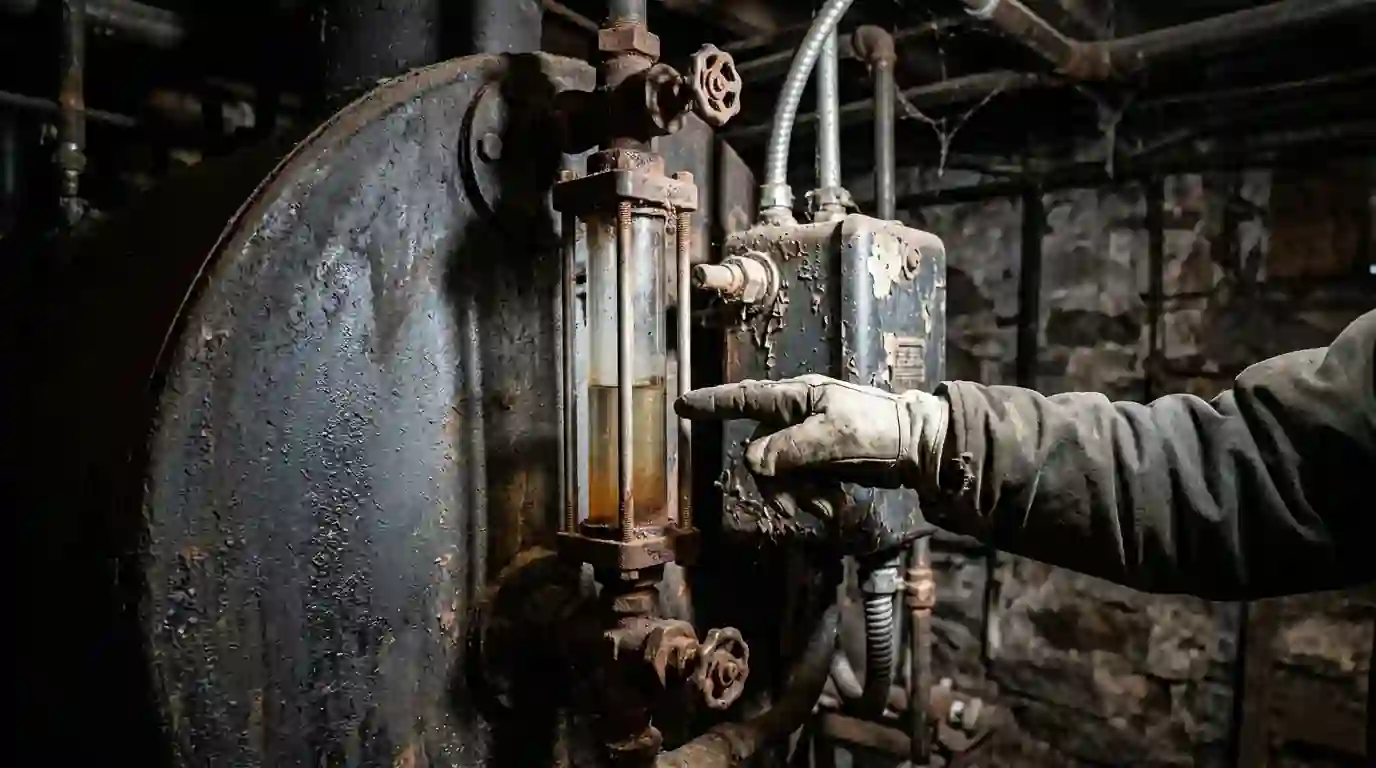
The low-water cutoff shuts the burner off when the water in the boiler drops too low, which protects the boiler from damage. The sight glass shows you that water level. When the glass is dirty or the waterline bounces, the boiler water is usually oily or full of sediment, and the cutoff trips even when there is enough water. Float-type cutoffs need regular flushing; probe types need the probe cleaned. We clean or replace the cutoff, clean the glass, and skim the boiler if the water is dirty enough to cause surging.
Main vents and radiator vents
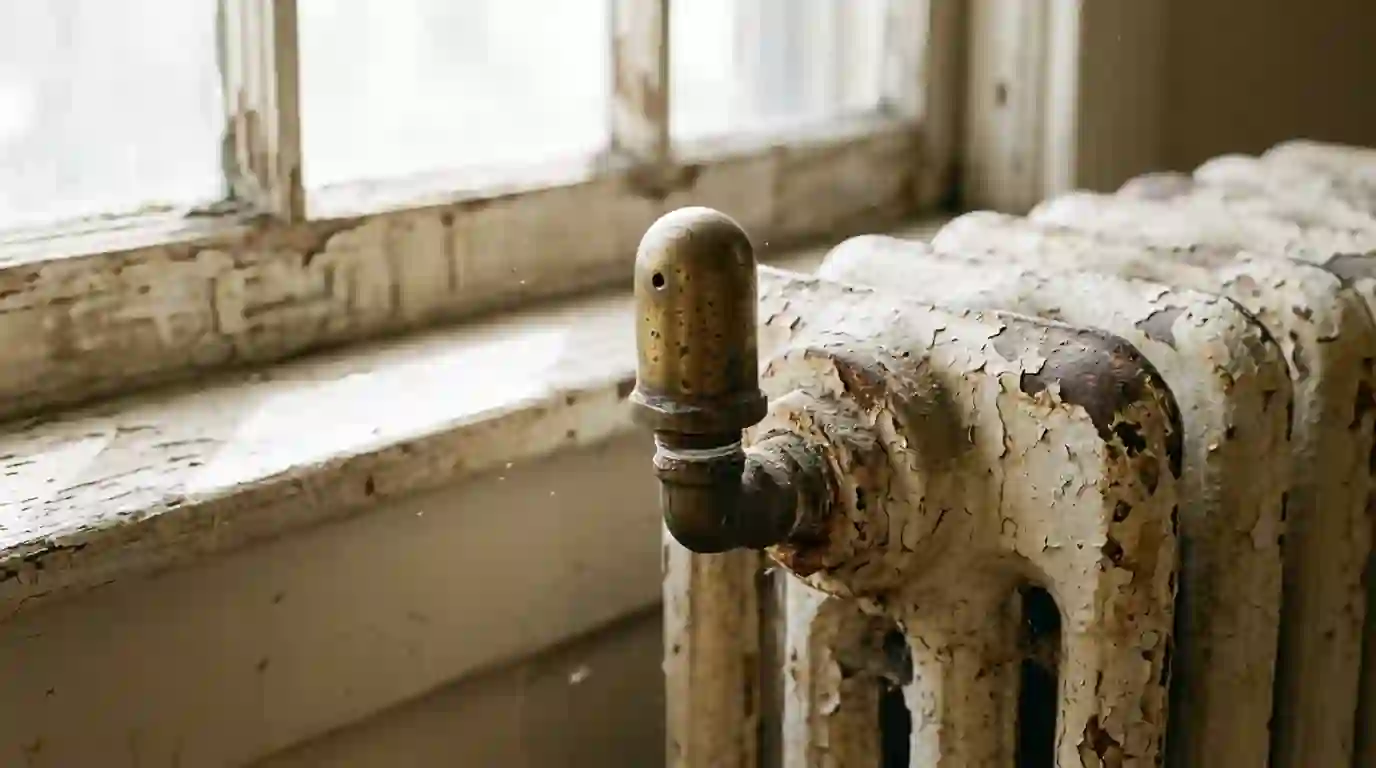
Air has to leave the pipes before steam can fill them. Main vents at the ends of the steam mains let air out of the basement piping quickly; radiator vents let it out of each radiator. A clogged main vent slows heat to the whole house. A painted-over or stuck radiator vent leaves that one radiator cold, and a vent stuck open hisses and spits. We check each main vent, replace failed ones, and size the radiator vents so the far rooms heat about as quickly as the near ones.
Steam heat in older Philadelphia rowhomes
WHYY profiled a Philadelphia rowhouse that went from firewood to solar over more than 250 years, and plenty of older houses passed through a steam era along the way. Where steam is still in use, the piping often predates the boiler by generations, and floors, joists and radiators have shifted since the mains were hung. That is why a steam call here usually starts with a level on the pipes and a look at the vents, not with a new part.
What a steam service call looks like
Check the waterline
The sight glass level and condition, and how the water behaves when the boiler fires.
Walk the system
Main vents, radiator vents, valve positions, and the pitch of mains and radiators.
Test the controls
Pressure control setting, pigtail, low-water cutoff and burner operation.
Fix the cause
Replace vents, re-pitch piping, clean or replace the cutoff, or skim the boiler.
Fire it and listen
A full heating cycle to confirm quiet, even heat and a steady waterline.
What you can check on a steam system
Steam is simple, and a few checks belong to the homeowner. The rest belongs to a tech.
| Safe for you to check | Leave for the tech |
|---|---|
| Is the sight glass about half full when the boiler is off? | Adding water to a hot boiler, or draining and skimming |
| Are radiator valves fully open? Steam valves are all or nothing | Replacing main vents or the pressure control |
| Are radiators tipped slightly back toward the pipe? | Re-pitching steam mains or radiators |
| Is a radiator vent painted over or clogged? | Cleaning or replacing the low-water cutoff |
What decides the cost of a steam repair
Steam repairs are often small: a vent, a cleaned cutoff, a re-pitched radiator. Bigger ones involve piping. You see the price before we start. What moves it:
- How many vents need replacing, and whether the main vents are easy to reach
- Whether piping has to be re-pitched or re-hung, and how much of it
- Whether the low-water cutoff can be cleaned or has to be replaced
- How dirty the boiler water is, and whether skimming is needed
- Whether the pressure control or its pigtail is clogged or set wrong
Water is sitting where steam passes, usually a main or radiator that lost its pitch, or a valve left partly open. The fix is the low spot, not turning the boiler down.
No. On one-pipe steam it should be fully open or fully closed. Use the air vent to control how fast a radiator heats.
Usually its air vent is clogged, painted over or the wrong size, so air cannot get out and steam cannot get in.
Much lower than most people expect. A control set too high causes spitting vents and short cycles, so we check and set it.
Sometimes, but it is a big job. In most houses fixing the steam system is the better value, and we explain the trade-offs.