Heating · open 24/7
Emergency heating and AC repair in Philadelphia, PA, any hour
Heat out on a freezing night, or the AC dead in July? Call and a person picks up, day or night. We tell you what to shut off while you wait, then send a tech to fix it.
- Phones answered 24/7
- Heating, cooling and water heaters
Updated October 2026
- Answers
- 24 hours, 7 days a week
- Covers
- Furnaces, boilers, steam, central air, heat pumps, ductless
- First step
- A diagnosis on site before any part is replaced
Short answer
When the heat or air conditioning quits in Philadelphia, PA, our line is answered 24 hours a day, 7 days a week. We tell you what to shut off or check while you wait, then a technician finds the cause on site and repairs it, on furnaces, boilers, steam systems, central air and heat pumps alike.
Warning signs
When a breakdown can't wait until morning
No heat with a cold snap coming
Pipes on outside walls are the first to freeze once the boiler or furnace stops.
AC out during a heat emergency
Top floors under a flat roof stay hot after dark. Older adults and babies should not wait it out.
Water leaking from the heating system
A discharging relief valve or a burst radiator valve can damage the ceiling below within hours.
A CO alarm or gas smell
Leave first and call 911 or the gas utility from outside. We come once the utility has made the house safe.
What an emergency HVAC visit actually covers
An emergency call gets the same diagnosis as a daytime visit, just sooner. The tech looks at the whole system, because a breakdown is often the second problem in a chain, like a dirty filter that froze a coil.
Sometimes the right move at night is a safe temporary fix, with the full repair booked once parts are in. We tell you which one you are getting.
What we handle after hours
No heat overnight
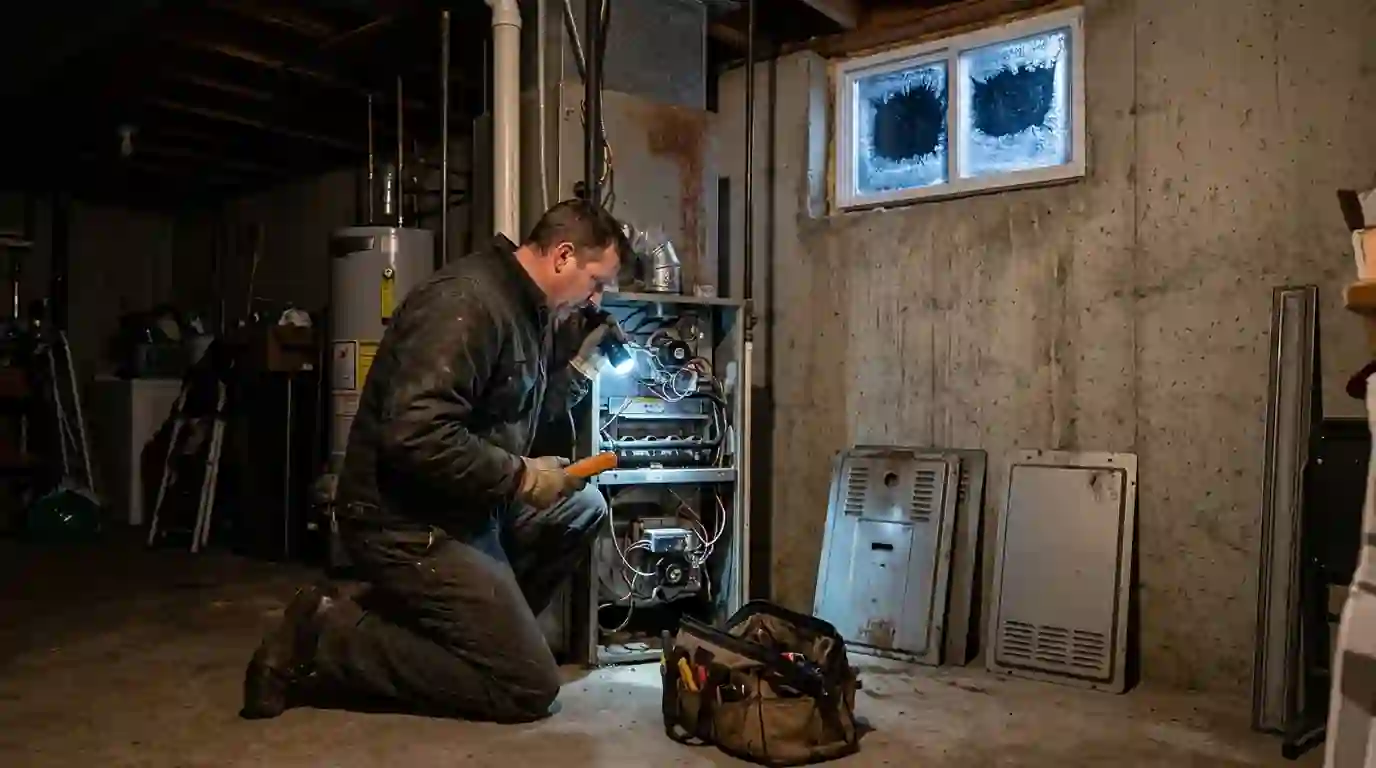
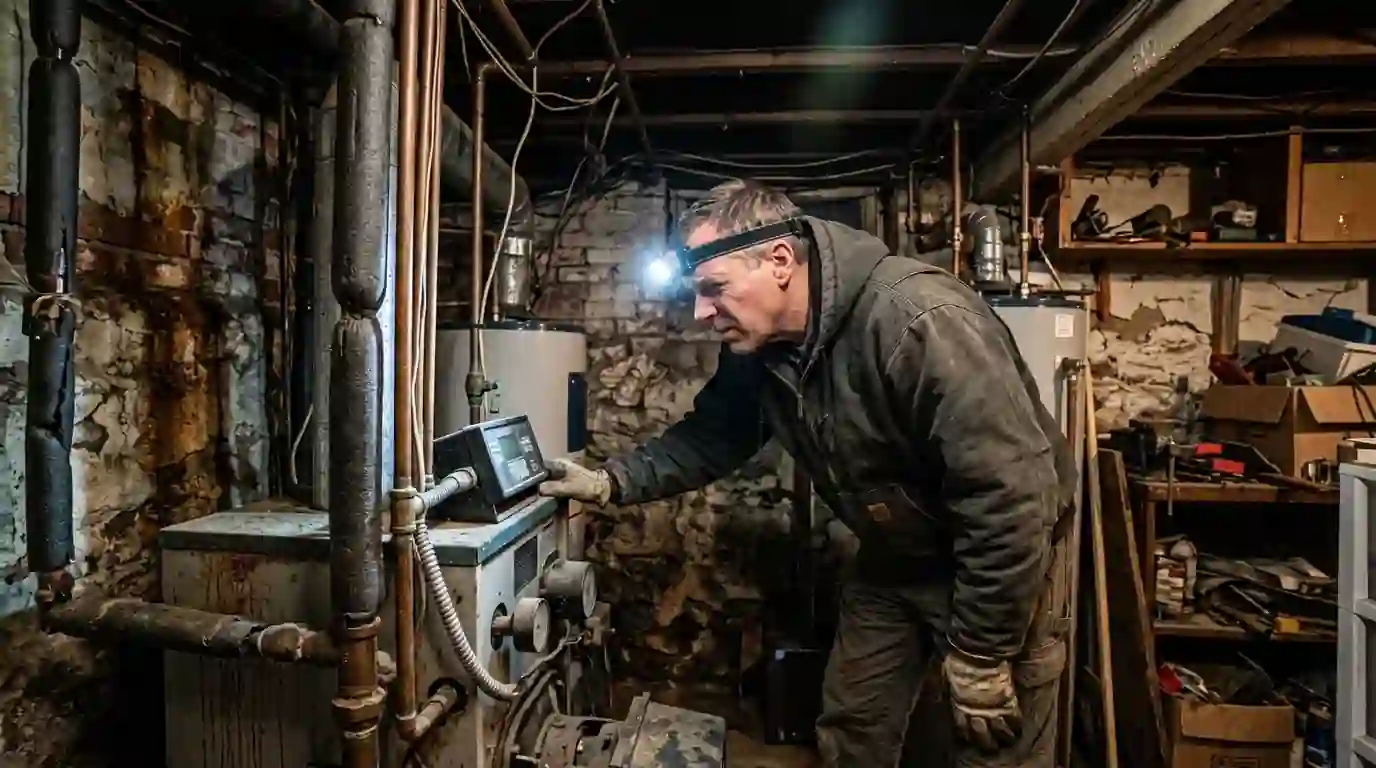
Most no-heat calls come down to a short list: dead thermostat batteries, a blown fuse on the furnace control, a dirty flame sensor that shuts the burner off seconds after it lights, a clogged condensate line, a high-limit trip from a packed filter, or a boiler locked out on low water. Check the thermostat, the furnace switch and the filter first. If it is still cold, call, and we test the ignition sequence and safeties to find the part that is stopping the heat. More on furnace repair and boiler repair.
AC out during a heat emergency
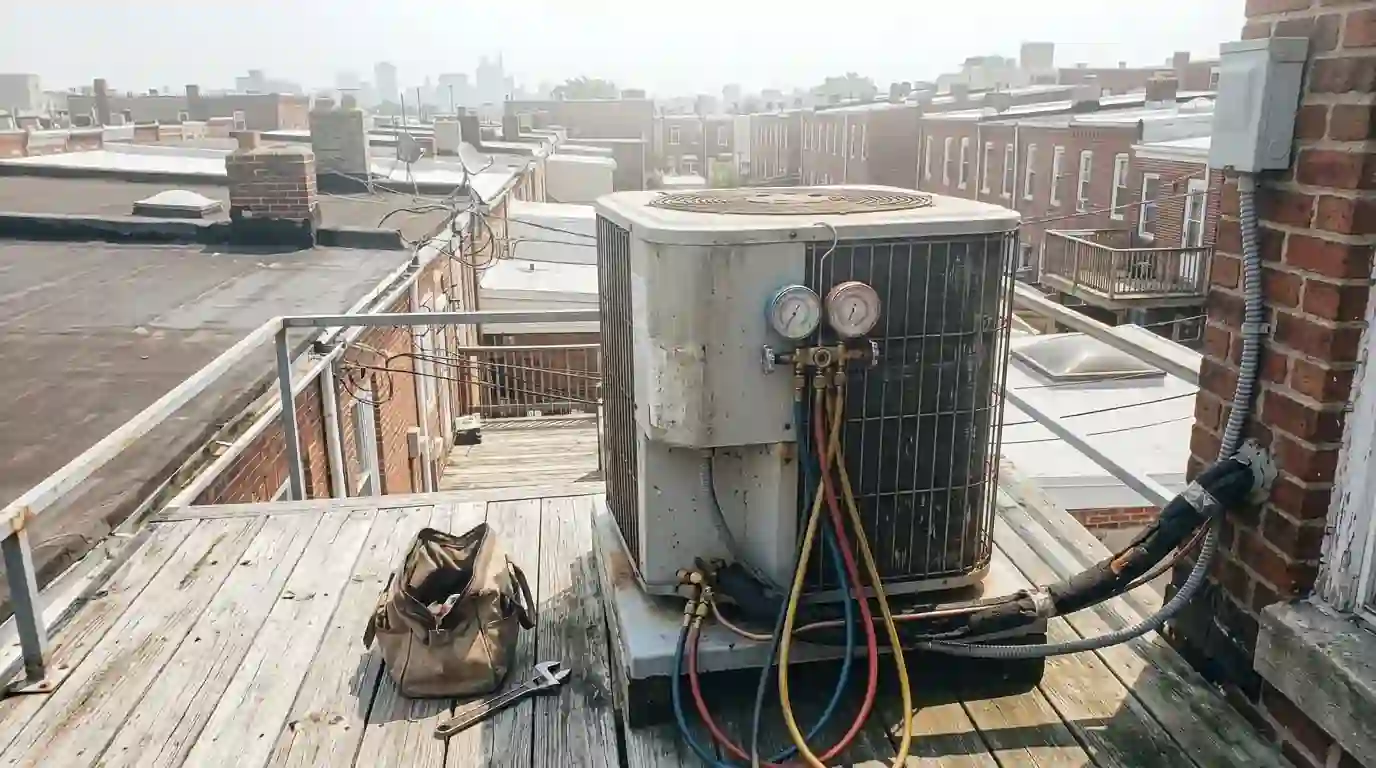
When central air stops on the hottest day of the year, the cause is usually electrical: a failed run capacitor, a burned contactor, a tripped breaker, or a condenser fan motor that quit. A frozen indoor coil shows up as ice on the copper line and weak airflow. If you see ice, switch the system off and let it thaw. A tech measures voltage, amperage and pressures before replacing anything, because a new capacitor on a failing compressor only buys a few days. See AC repair.
Gas smell or a CO alarm
These calls start with the utility, not with us. Get everyone out and call 911 or your gas utility's emergency line from outside. Once the utility has cleared the house, we find out why it happened: a cracked heat exchanger, a blocked or disconnected flue, a water heater spilling exhaust, or a burner running dirty. We test combustion and draft on every gas appliance in that space, not only the suspect one, and we do not relight anything that fails.
Water pouring from the heating system
Water near a boiler usually means the relief valve is opening, often because the expansion tank has lost its air charge and pressure climbs every cycle. It can also be a corroded fitting, a leaking circulator flange, or a radiator valve upstairs. Shut the boiler off at its switch and close the water feed if you can. We find the source, repair it, set the fill pressure and check the tank, so the valve is not discharging again a week later.
Night calls on both sides of the Walt Whitman
The Walt Whitman Bridge comes down in South Philadelphia, so a night call from our base in West Deptford crosses the river on a direct route. Summer is when those calls stack up. The city's first Heat Health Emergency of 2024 ran from June 20 to June 22, and on stretches like that an AC that limps through the afternoon often quits after dark, while the top floor of a rowhome is still holding the day's heat.
How a night call runs, start to finish
Tell us what is happening
What the system is doing, any error codes, and whether anyone at home is at risk.
Make it safe while you wait
Shut off a leaking boiler, switch an iced AC off, or leave if you smell gas.
Diagnose on site
Power, controls, ignition or refrigerant pressures, and the safeties, until the cause is clear.
Fix or stabilize
We repair what failed, or set a safe temporary fix when a part has to be ordered.
Confirm it runs
A full cycle before we leave, with gas appliances checked for safe venting.
What you can safely do before the tech arrives
These checks are safe for anyone. Anything past them is a job for a tech.
| Safe for you to check | Leave for the tech |
|---|---|
| Thermostat mode, setpoint and batteries | Resetting a boiler or furnace that keeps locking out |
| The furnace or boiler switch and the breaker | Anything inside the burner or control compartment |
| A clogged filter you can slide out | Refrigerant, capacitors and outdoor unit wiring |
| Switching an iced AC to off | Gas valves, gas piping and venting |
What changes the price of an after-hours repair
You see the price before the work starts. What moves it:
- Which part failed, and whether it is stocked or has to be ordered
- Whether tonight calls for a temporary fix with a full repair later
- Access: crawl spaces, tight closets and rooftop condensers take longer
- Equipment age and condition
Yes. The phone is answered 24 hours a day, every day, and night calls are booked like any other visit.
If you smell gas or a CO alarm goes off, call 911 or the gas utility first, from outside. Call us once they have made it safe, so we can find and fix the cause.
Call if anyone vulnerable is at home, if pipes on outside walls could freeze, or if the system is leaking or smells of burning.
No. At night the goal is getting heat or cooling back safely. If replacement makes more sense, we plan it for a normal workday.
A clear path to the equipment, pets in another room, and any error codes you noticed.