Heat Pumps & Ductless · open 24/7
Ductless mini-split cleaning in Philadelphia, PA
Mini-split smelling musty when it starts? That smell usually comes from a coated blower wheel and coil. We clean them in place and flush the drain so the air runs fresh.
- Phones answered 24/7
- Coil, blower wheel and drain
Updated October 2026
- Cleans
- Blower wheel, indoor coil, drain pan, drain line and filters
- Helps with
- Musty odors, weak airflow and dripping heads
- Good timing
- Before cooling season, and again before heating
Short answer
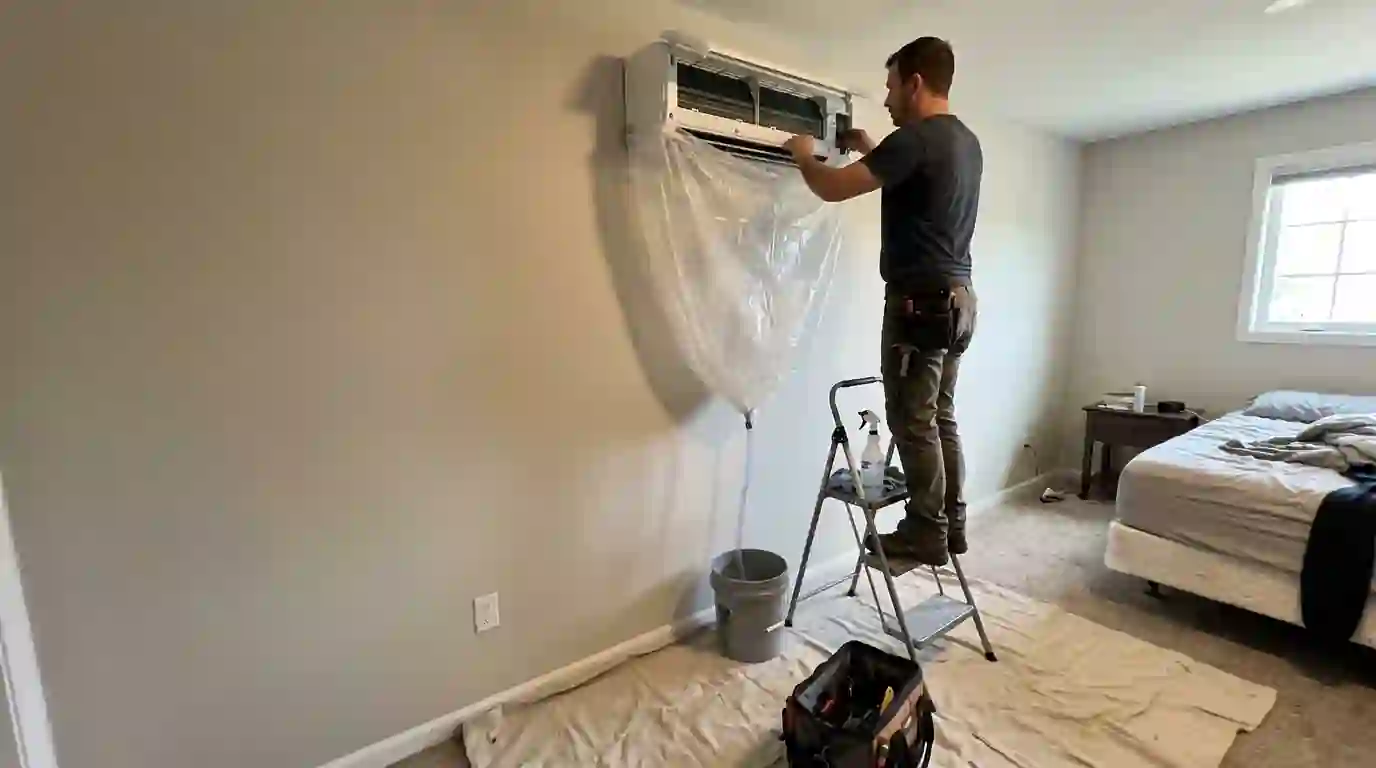
Mini-split cleaning in Philadelphia, PA goes well past rinsing the filters. We cover the wall and floor, hang a cleaning bag under the indoor head, and wash the blower wheel, coil and drain pan with coil cleaner and low-pressure water. Then we flush the drain line and check the outdoor unit, so airflow and drainage both recover.
What builds up inside a ductless head
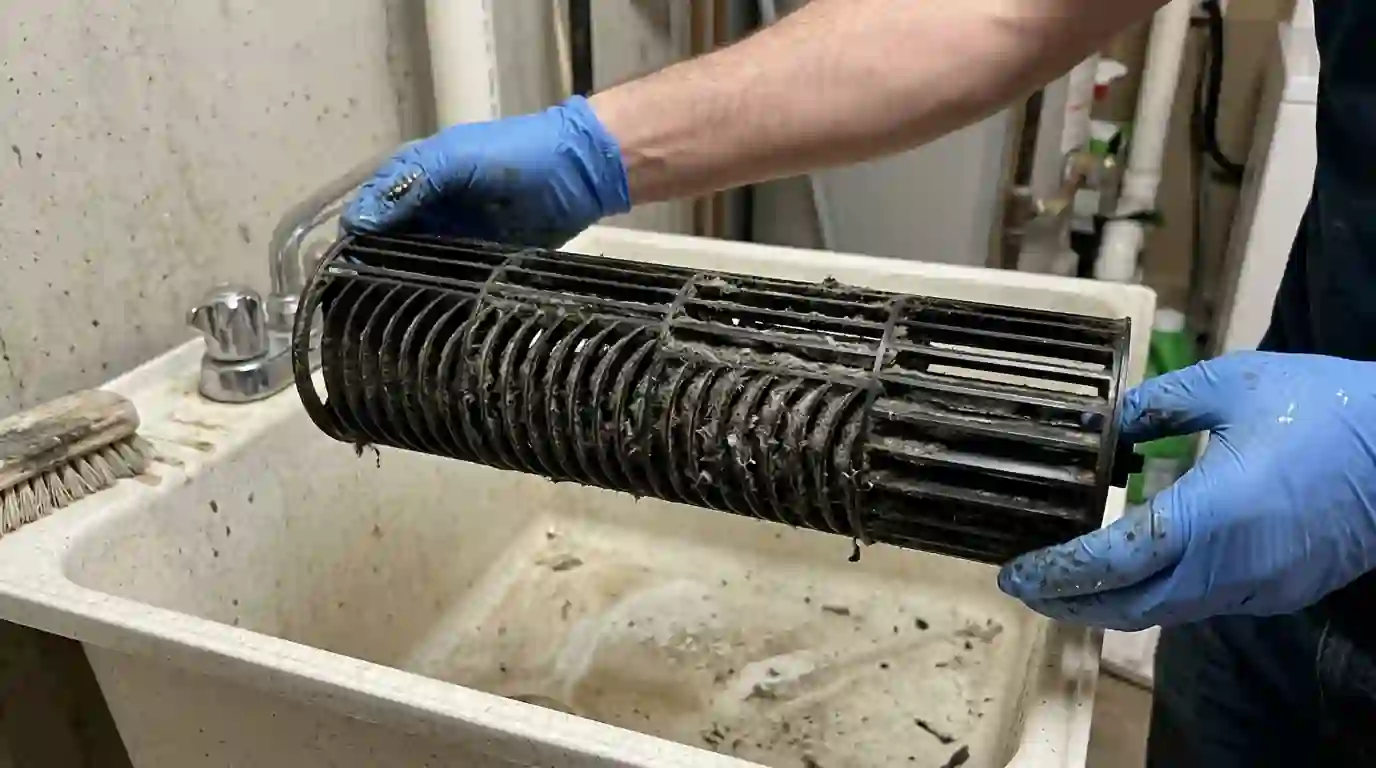
A mini-split head pulls room air across a cold, wet coil all summer, and the filters catch only part of the dust. What gets past them sticks to the damp coil and to the curved blades of the blower wheel, where it feeds mold and slime.
Rinsing the filters helps, but it does not reach any of that. A proper cleaning opens the head enough to wash the coil and wheel, clear the drain pan and line, and leave the unit dry and running. It is also a good moment to catch early wear.
What a mini-split cleaning covers
Each head gets the same thorough treatment:
- Drop cloths down and a cleaning bag fitted under the indoor head
- Filters removed, washed and dried
- Blower wheel cleaned in place or removed for washing
- Indoor coil treated with coil cleaner and rinsed at low pressure
- Drain pan scrubbed and drain line flushed and tested
- Outdoor coil rinsed and cleared of leaves and debris
- Test run in cooling and heating with a temperature check
Inside a deep cleaning
Blower wheel deep clean
The blower wheel is the long cylinder behind the louvers, and its curved blades collect the most buildup. On many models we clean it in place, with a cleaning bag hung under the head to catch the runoff. Where the coating is thick, removing the wheel lets us wash every blade and check the motor and bearings too. A caked wheel also runs out of balance, which can make the head rattle or hum. Clean, it moves noticeably more air, and the head runs quieter.
Indoor coil cleaning
The indoor coil is the finned block behind the filters, and dust that slips past them sticks to its wet fins. We apply an indoor-rated coil cleaner, let it work, then rinse at low pressure so the fins stay straight and the runoff lands in the bag, not down your wall. A clean coil moves heat properly in both cooling and heating. If the coil is iced or the unit is low on refrigerant, cleaning will not fix that, and a repair visit is the right call.
Musty odor removal
That locker-room smell when a head starts up comes from mold and bacteria on the wheel, coil and drain pan. Masking sprays cover it for a day or two. Removing the source is what works: washing the wheel and coil, scrubbing the pan and flushing the drain line so no water stands. We also check that the head sits level and drains completely, since water left in the pan restarts growth fast. Running fan or dry mode after cooling dries the coil and slows the smell's return.
Mini-split upkeep in older Philadelphia homes
In Philadelphia, mini-splits often go where ducts never could: third-floor bedrooms under flat roofs, rear additions and finished rowhome basements. Those spots are hard on a head. Top floors keep it running long hours through humid summers, basements add damp air and dust, and work on old plaster sends fine grit into the filters. Heads in rooms like these need cleaning more often than one in a mild middle-floor bedroom, so we look at where each sits before suggesting a schedule.
How a cleaning visit runs
Protect the room
Drop cloths down, furniture moved back and a cleaning bag hung under the head.
Open and inspect
Filters out, panels off, and the wheel, coil and pan checked for buildup.
Wash and rinse
Coil cleaner applied, then the wheel and coil rinsed at low pressure into the bag.
Clear the drain
Pan scrubbed and the drain line flushed and tested for full flow.
Test and dry
Head run in cooling and heating, then dried on fan mode before we leave.
What sets the price of a cleaning visit
You see the price before we start. What moves it:
- Number of indoor heads being cleaned
- Whether blower wheels need removal for a full wash
- Head height and access, such as stairwells or ceiling cassettes
- Condition of the drain line and outdoor unit
Warning signs
Signs a mini-split head needs a deep clean
Musty or sour smell at startup
Mold and slime on the blower wheel and coil release odor every time the fan spins up.
Weaker airflow than last year
Dust caked on the blower wheel blades cuts the air the head can move, even with clean filters.
Drips or spitting from the vents
A coated coil and slimy drain pan send water out the front instead of down the drain.
Dark specks on the louvers
Black spots on the vanes or inside the outlet usually mean the wheel behind them is coated.
Mini-split care between cleanings
Simple upkeep stretches the time between deep cleans. Some parts need a tech.
| Safe for you to check | Leave for the tech |
|---|---|
| Rinsing the mesh filters every few weeks in season | Removing the blower wheel or front housing |
| Wiping dust from the louvers and front panel | Spraying coil cleaner inside the head |
| Keeping leaves and snow off the outdoor unit | Flushing or clearing a clogged drain line |
| Running fan or dry mode after cooling | Anything involving wiring or refrigerant |
Many heads need it about once a year. Units in kitchens, basements or rooms with pets may need it more often, and lightly used heads less.
You can rinse filters, but spraying cleaner into the head often pushes grime deeper and can drip onto the board. A full clean has to reach the wheel and drain too.
Often, when the leak comes from a slimy drain pan or a clogged line. If the head is out of level or a pump has failed, that needs a repair.
A single head usually takes a couple of hours, depending on how coated the wheel is and whether it comes out. Homes with several heads take longer.
It comes from mold and bacteria growing inside the head. Some people are sensitive to it, so it is worth cleaning out rather than masking with sprays.