Ducts & Indoor Air · open 24/7
Whole-house dehumidifier installation in Philadelphia, PA
AC running, but the house still feels sticky? We measure the humidity, find where the moisture comes from, and install a dehumidifier sized to the space that drains on its own.
- Phones answered 24/7
- Ducted and standalone units
Updated October 2026
- Common jobs
- Damp basements, clammy summer air, musty smells, sweating pipes and ducts
- Typical aim
- Indoor humidity held under about 50 percent through summer
- Covers
- Philadelphia and South Jersey
Short answer
A whole-house dehumidifier in Philadelphia, PA removes moisture an air conditioner leaves behind, especially in basements and on muggy days when the AC isn't running long. We measure humidity first, look for water getting in, size the unit to the space, and give it a drain line so there's never a bucket to empty.
Why the AC alone doesn't dry the house
An air conditioner removes moisture only while it runs, and a correctly sized one shuts off on mild, muggy days before it dries much. Oversized units are worse: short runs cool the air fast and leave it damp. Basements, which the AC barely touches, stay wet all summer.
A whole-house dehumidifier runs on humidity, not temperature. It pulls moisture out whether or not the house needs cooling, which lets you set the thermostat a few degrees higher and still feel comfortable on a muggy evening.
What moves the cost of a dehumidifier install
You see the price before we start. What moves it:
- Unit capacity, sized to the space and its moisture load
- Ducted versus standalone, and the duct work involved
- Drain routing: gravity to a floor drain or a condensate pump
- Electrical outlet and control wiring
Moisture problems we solve
Basement humidity
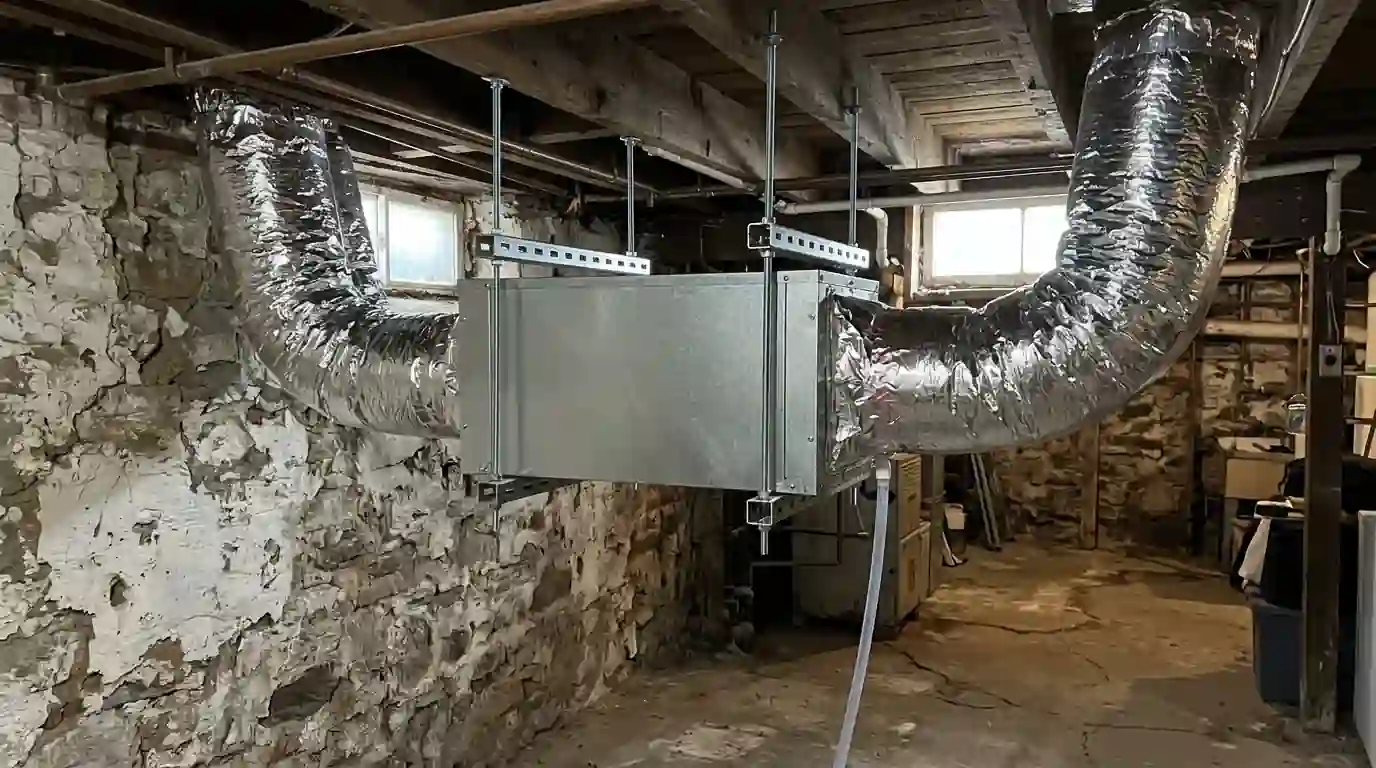
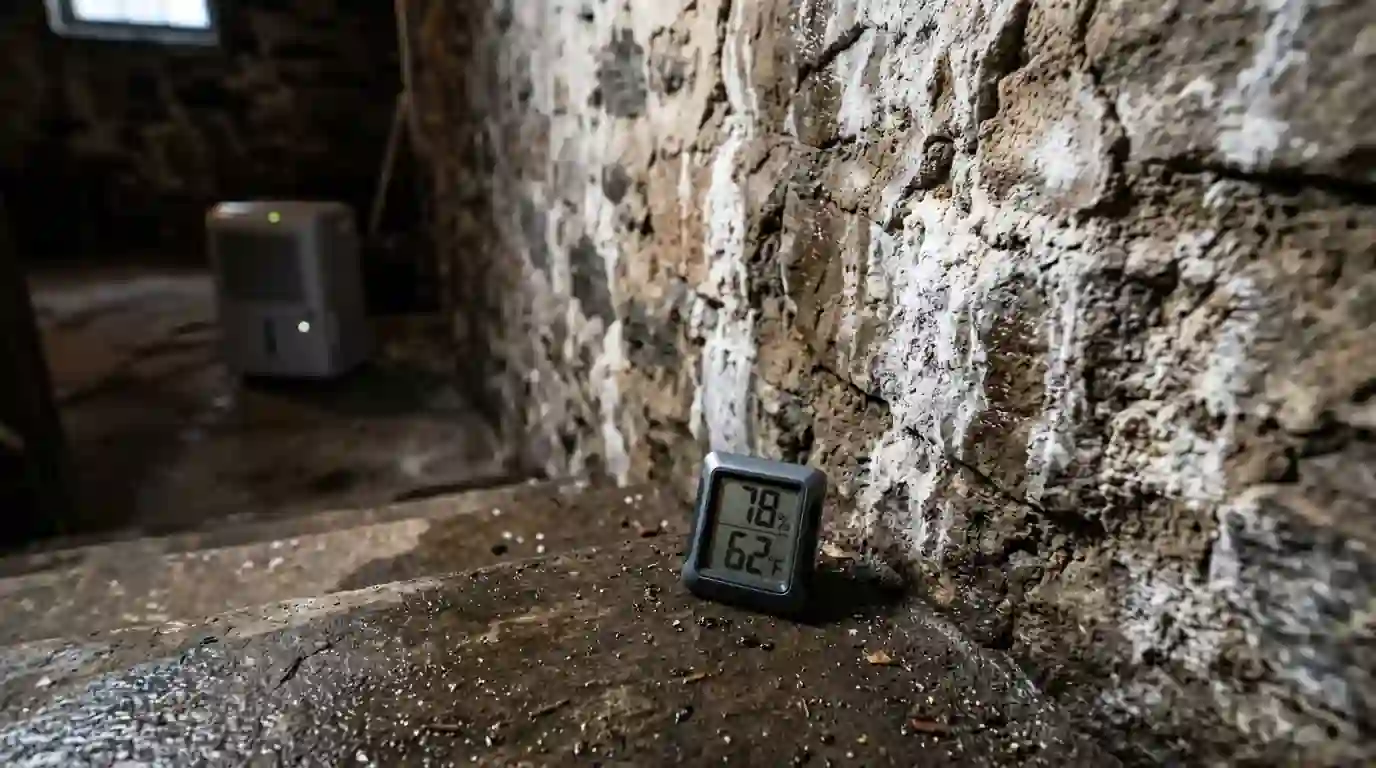
Rowhome basements are often stone or old brick below grade, and moisture moves through those walls all summer. Add a laundry, a cold water main and a floor drain, and the basement can sit damp enough to grow mildew. A standalone whole-house unit in the basement, drained to the floor drain or a condensate pump, handles it with no bucket. First we look for liquid water: gutters dumping at the wall, a leaking pipe, or a dryer vent that has come loose. Fix those, and the dehumidifier has far less work.
Clammy summer air
When the AC holds the setpoint and the house still feels sticky, the system is cooling without drying. Oversized equipment, a high blower speed or short cycling all cut moisture removal. Sometimes the fix is at the air conditioner, by slowing the blower or sizing correctly when it is replaced through AC installation. When that isn't enough, a dehumidifier ducted into the system keeps every floor drier on its own humidity control. Most people find they can set the thermostat a couple of degrees higher and feel cooler.
Ducted and standalone units
A ducted unit draws air from the return, dries it and sends it back into the system, so the dry air reaches every floor through the existing ducts. It needs forced air and some room near the air handler. A standalone unit sits in the basement or crawl space with a short duct or none at all. Both run off a humidity control, both need a drain line, and both have a filter to change. We size by the space and how wet it really is, not by picking the biggest model.
Ducted, standalone or portable: what fits
The choice depends on where the moisture is and how the house is ducted.
| Option | Fits when | Trade-off |
|---|---|---|
| Ducted into the HVAC system | The house has forced air and every floor feels damp | Treats the whole house through existing ducts; more install work |
| Standalone whole-house unit | The basement is the problem, or the house has no ducts | Treats the basement directly with a hard drain; mostly one area |
| Portable dehumidifier | One small damp room and a tight budget | Low cost, but a bucket or hose, more noise and a shorter life |
How a dehumidifier install runs
Measure humidity
Readings in the basement and living space, plus a look for leaks or water getting in.
Pick the type and size
Ducted or standalone, sized to the space and the moisture load we found.
Plan drain and power
Gravity drain or condensate pump, plus a dedicated outlet where the unit needs one.
Install and connect
Unit hung or set level, ducted where needed, and the humidity control mounted.
Set and verify
Humidity setpoint chosen, unit run, and drain flow checked before we leave.
Damp basements under Philadelphia rowhomes
Philadelphia summers are humid, and many older rowhomes sit on stone or brick foundations with no waterproofing on the outside. The basement stays cool, which is exactly why it collects moisture: warm, damp air hits cool walls and pipes and condenses. Shared party walls mean drainage can't always be fixed from outside. A dehumidifier with a hard drain line, plus sealing return ducts that pull basement air, keeps that dampness from spreading upstairs through the system.
Warning signs
Signs the house holds too much moisture
Clammy air with the AC on
Rooms feel cool but damp, and towels hung to dry never quite get there.
Sweating pipes and ducts
Cold water lines and supply ducts drip in the basement through the humid summer weeks.
Musty smells and mildew
Stored boxes, carpet and wood in the basement smell musty or start showing spots.
Damp foundation walls
Stone or block walls feel cool and damp, and white mineral deposits appear on them.
- Carrier
- Trane
- Lennox
- Rheem
- Goodman
- York
- Bryant
- American Standard
- Mitsubishi Electric
- Daikin
- Fujitsu
- Weil-McLain
- Burnham
We install whole-house dehumidifiers from Carrier, Lennox, Trane and Bryant, and duct them into most makes of furnace and air handler.
Under about 50 percent is a sensible target. Basements often need the dehumidifier running to stay there, while living floors may hold it with the AC alone.
For one small room, yes. Portables are noisy, need emptying or a hose, and struggle in a large damp basement. A whole-house unit drains itself and runs quieter.
Not if water is coming in as liquid. Leaks, gutters and grading need fixing first. A dehumidifier handles moisture in the air, not puddles on the floor.
A little. Pulling moisture out gives off some heat, which matters most in a closed basement. Ducted units send the dry air into the system to spread it out.
Change or clean the filter on schedule, keep the drain line clear, and check the humidity setting each spring. We can look at it during an AC tune-up.