Heating · open 24/7
Radiator and baseboard heat repair in Philadelphia, PA
Radiator cold, or a valve dripping on the floor? We find why one radiator or baseboard loop lags behind, fix the valve, vent or joint, and get heat even across the floors.
- Phones answered 24/7
- Cast iron radiators and baseboard
Updated October 2026
- Common fixes
- Air-bound radiators, valve packing, leaking unions, cold baseboard loops
- Covers
- Cast iron radiators, convectors and copper fin-tube baseboard
- Answers
- 24 hours a day, 7 days a week
Short answer
Radiator repair in Philadelphia, PA usually means one of three jobs: clearing air so a radiator heats again, stopping a leak at a valve or union, or fixing a baseboard loop that runs cold or ticks. We check the whole system first, since one cold radiator often points upstream.
Warning signs
When a radiator is telling you something is wrong
Cold at the top, warm at the bottom
On hot-water heat, that pattern means trapped air is keeping water out of the upper sections.
Water under a valve
A drip at the stem means dried packing. A drip at the union means a worn or shifted joint.
Ticking in baseboard
Copper grows as it heats, and pipe rubbing a bracket or tight wall hole ticks every cycle.
Rust stains or a damp floor
A seeping section joint in cast iron leaves stains long before it leaves a puddle.
Why one radiator lags while the rest heat
A radiator only heats as well as the water or steam reaching it. A cold one can be a local fault, like trapped air or a stuck valve, or trouble upstream, like low system pressure or a weak circulator. We check both before reaching for a wrench.
Most radiator work happens in place: bleeding, repacking a stem, swapping a valve or a union. Taking a cast iron radiator off the wall is a bigger job, planned around draining the system and moving the weight.
Radiator and baseboard jobs we fix
Cold radiators
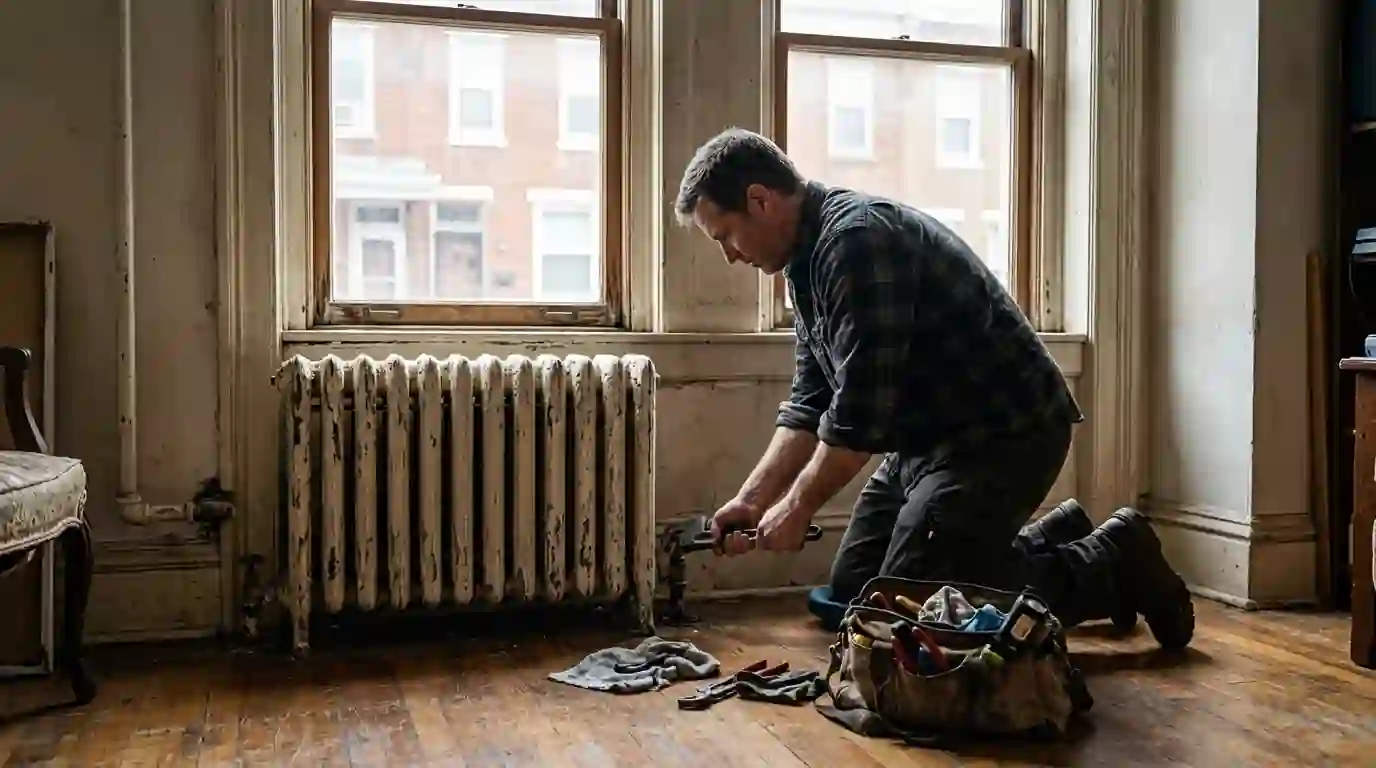
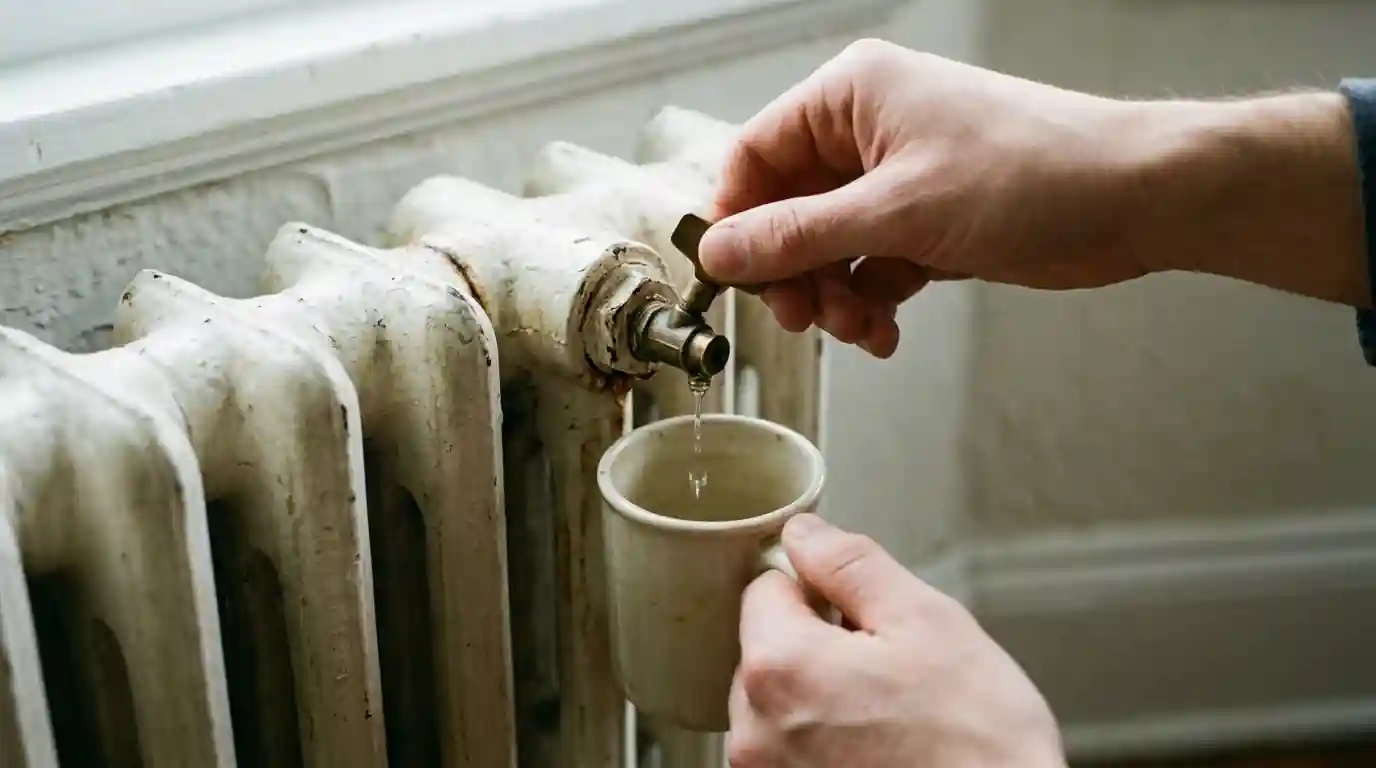
On hot-water heat, the classic cold radiator is air-bound: warm at the bottom, cold at the top. Bleeding the vent at the top usually brings it back. If the air keeps returning, it is getting in somewhere, often through low fill pressure or a failing automatic vent near the boiler. A radiator cold from top to bottom points to a closed or broken valve, or a blocked branch pipe. On steam heat the vent is the usual suspect, which our steam heat repair page covers.
Leaking radiator valves
Radiator valves leak in two places. At the stem, the packing around the shaft dries out, and turning a handle nobody has touched in a decade often starts the drip. Repacking it is quick. At the union, where the valve meets the radiator, the joint can seep once the radiator gets bumped or the floor settles. Seized valves can snap when forced. For a union leak or a broken valve, we isolate or drain the system, replace the valve and union, refill, and watch the joint under heat.
Baseboard fin-tube repair
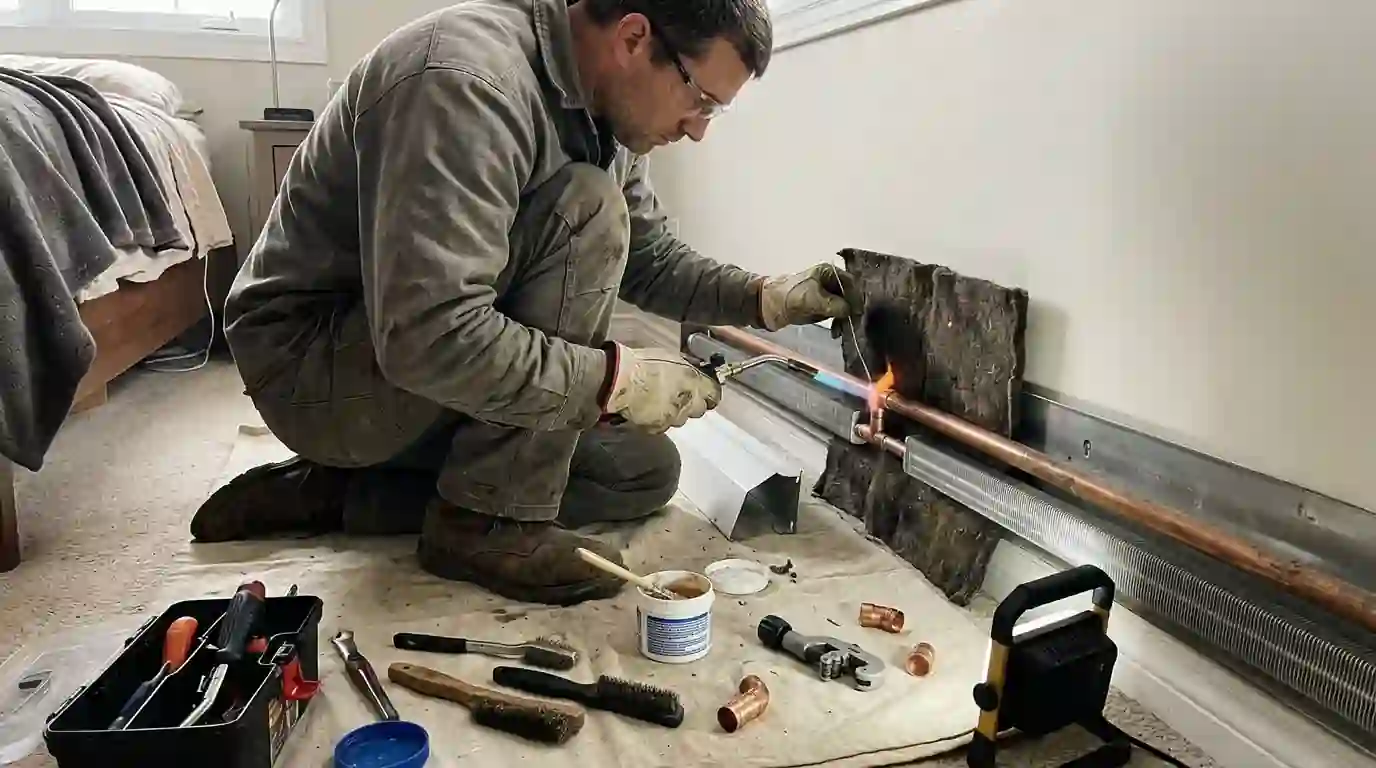
Copper baseboard shows up where hot-water heat was added or updated, like additions and finished basements. The thin fins bend easily under furniture and vacuums, which cuts output, and we straighten them with a fin comb. Leaks usually sit at a soldered elbow or a joint near the boiler, so we drain the loop, cut out the bad fitting and resweat it. Ticking that comes and goes with each cycle is copper expanding against a hanger or a tight hole, fixed by adding clearance or plastic glides.
Radiator removal and reinstall
Floor refinishing, new plaster or paint often means a radiator has to come out of the room. Cast iron is heavy enough that a large radiator needs a dolly, straps and a planned route down the stairs. We isolate or drain the system, break the unions and cap the open pipes, so the rest of the house can keep heating where the piping allows. On reinstall we clean the union seats, set the radiator level for hot water or tipped toward the valve for one-pipe steam, then refill and test it under heat.
Old radiators in a city of pre-1950 houses
Census figures reported by The Philadelphia Inquirer show most Philadelphia homes were built before 1950, and a lot of those houses still heat through cast iron. The radiators are often the oldest part of the system, painted many times over and fitted with valves nobody has turned in years. So we open a stuck valve gently, check the union before the heat comes up, and look at how each radiator was reset after floor work.
How we work on a radiator call
Check the whole system
Boiler pressure, the circulator or steam controls, and which radiators run hot or cold.
Isolate the problem radiator
Close its valves or drain the zone so the work stays off the floor.
Repair the valve, vent or joint
Repack, replace or resweat, with the floor and wall around the work protected.
Refill and purge
Bring the system back to pressure and push trapped air out of every affected radiator.
Run it hot
Watch the repaired joint under full heat and confirm each radiator warms top to bottom.
Radiator checks you can make yourself
A few checks are safe for any homeowner. Hot pipes and draining are not.
| Safe for you to check | Leave for the tech |
|---|---|
| Bleed a hot-water radiator with a key while the system is off and cool | Draining, refilling or setting boiler pressure |
| Check that the boiler pressure gauge reads where it normally does | Forcing a seized valve that will not turn by hand |
| Keep furniture and covers off baseboard fins | Removing, moving or re-pitching a radiator |
| Look for drips under valves and unions | Soldering or replacing leaking pipe joints |
What sets the price of a radiator repair
You see the price before we start. What moves it:
- Whether the fix happens in place or the system has to be drained
- Valve and union parts, and how well they match older piping
- Moving a heavy cast iron radiator, especially on stairs
- How many radiators or loops need the same work
Once at the start of the season, then whenever a radiator gurgles or runs cold at the top. Needing it weekly means air is getting in somewhere.
Yes, with a heat-resistant paint, kept off the valve stems and steam vents. Paint over a vent opening can leave a steam radiator cold all winter.
On one-pipe steam, condensed water drains back through the same valve the steam enters. A slight tip toward the valve lets it drain instead of banging.
A slow drip at the stem can usually wait for a booked visit. A steady leak, or water reaching the ceiling below, is worth calling about now.
Some do. A solid cover closed at the top and front traps heat. Open-front covers with space above the radiator block far less.