Heating · open 24/7
Boiler replacement and installation in Philadelphia, PA
Boiler too old to keep fixing? We size a new boiler from the house, not the old nameplate, and pipe it to suit the radiators or steam mains you already have.
- Phones answered 24/7
- Condensing, combi and steam boilers
Updated October 2026
- What we install
- Condensing, combi, cast iron hot-water and steam boilers
- Includes
- Sizing, near-boiler piping, venting, gas and controls
- Starts with
- A heat loss calculation and a look at the radiators
Short answer
Boiler replacement in Philadelphia, PA starts with the house and the radiators, not the old boiler's size, because many older boilers are oversized. We calculate heat loss, confirm whether the system is hot water or steam, and choose a condensing, combi or steam boiler that fits the piping, the venting and how your household uses hot water.
Sizing a new boiler to the house you have now
Older boilers were often sized generously, and since then the house may have gained new windows, insulation or a closed-off room. A boiler that is too big short cycles, wears faster and wastes gas. We size from a heat loss calculation, and on steam we also measure the radiators, since a steam boiler has to match the connected radiation.
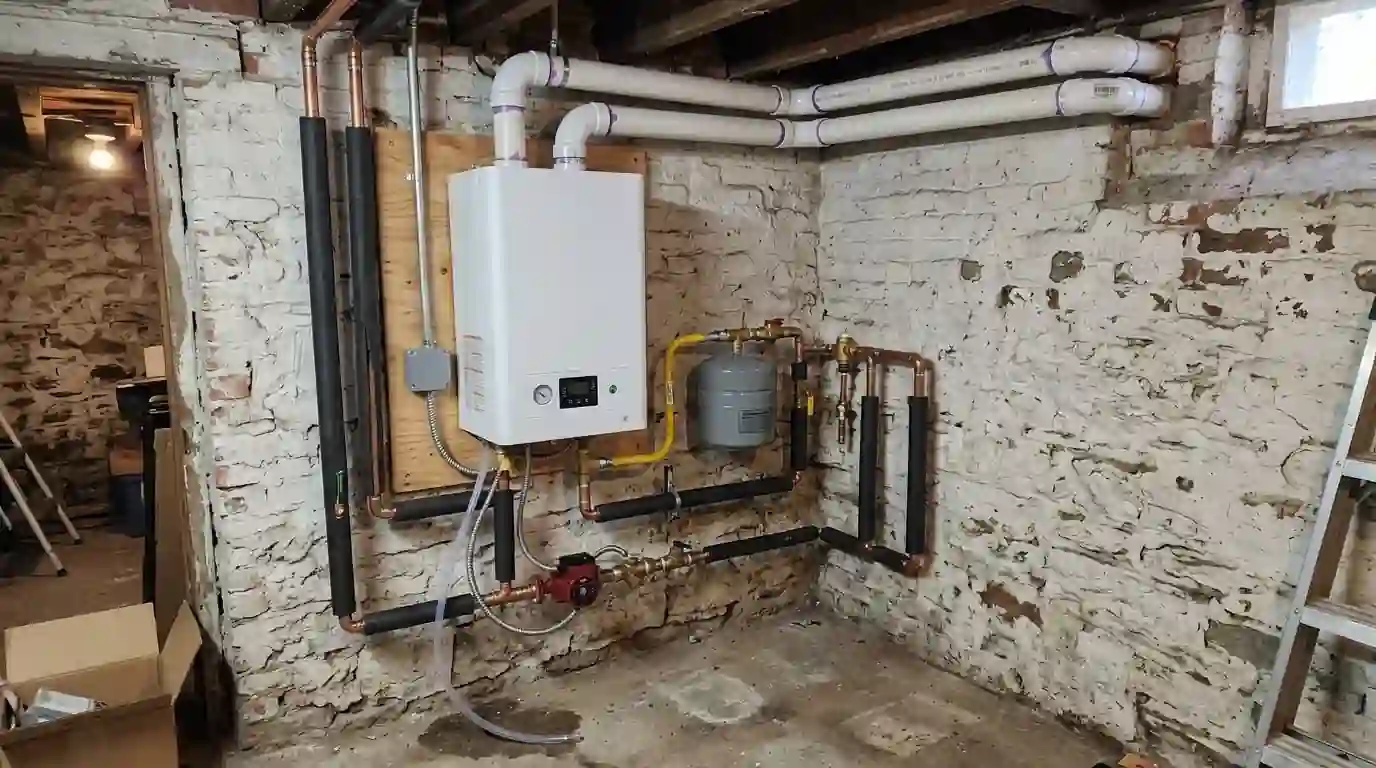
The near-boiler piping matters as much as the boiler. Most repeat trouble after a replacement traces back to piping that skipped the maker's instructions. We pipe to the installation manual, with proper air removal on hot water and the specified header on steam.
What decides the price of a new boiler
You see the price before we start. What moves it:
- Condensing, combi, cast iron hot-water or steam
- Venting: new PVC versus a chimney liner
- How much near-boiler piping has to be rebuilt
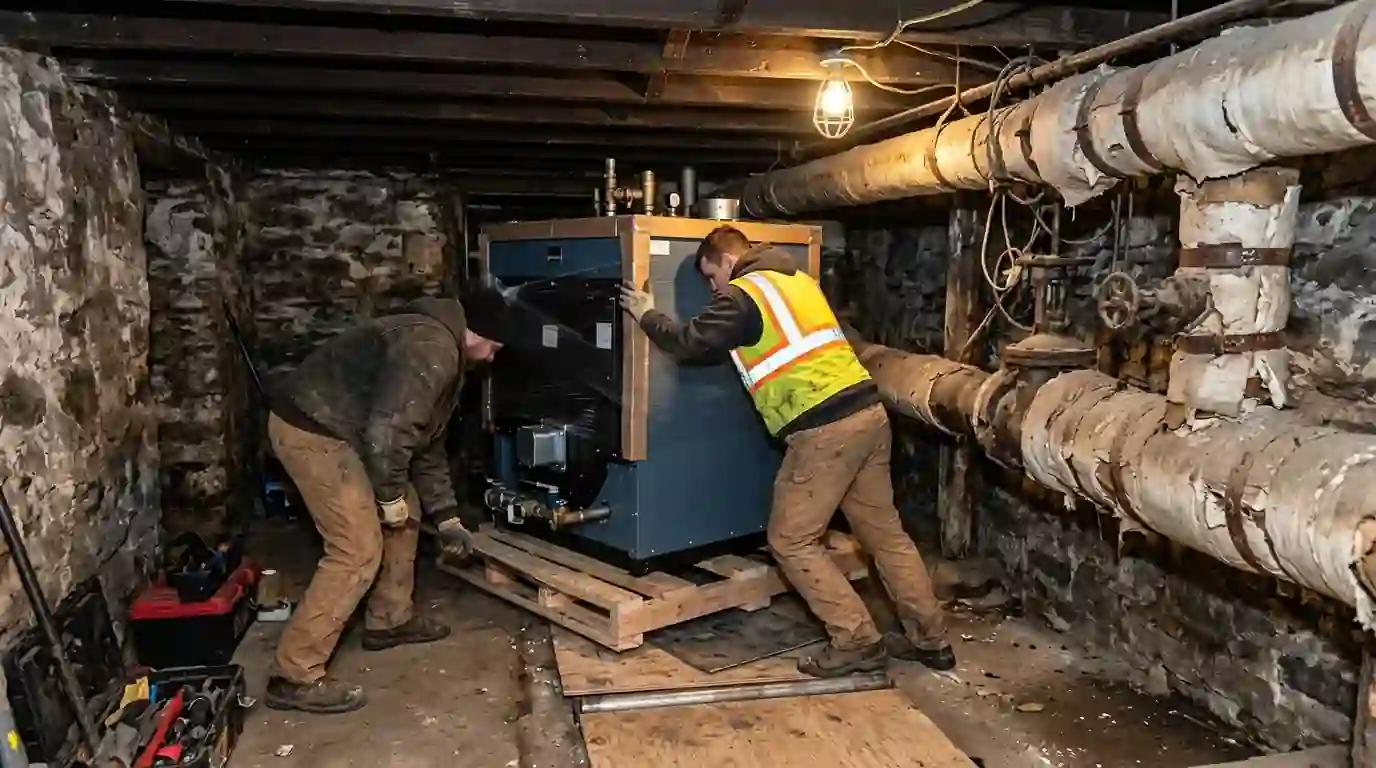
- Getting the old boiler out of a tight basement
Which boiler fits which house
Condensing boilers
A condensing boiler recovers heat from its own exhaust, which works well when the water coming back from the radiators is cool enough to condense. Cast iron radiators sized for an older, draftier house often let the boiler run lower water temperatures most of the winter, so the two pair well. Outdoor reset control raises the water temperature only as it gets colder outside. These boilers vent through PVC or polypropylene, need a condensate drain with a neutralizer, and usually want a hydraulic separator or primary-secondary piping to keep flow right through the heat exchanger.
Combi boilers for heat and hot water
A combi boiler heats the radiators and makes domestic hot water on demand, so the separate water heater can go. That frees space in a tight rowhome basement and takes one appliance off the chimney. The trade-off is flow: a combi heats water as it passes through, so two showers at once can stretch it, especially in winter when the incoming water is cold. We size a combi from your hot water use as well as the heat load, and suggest a boiler with an indirect tank when demand runs higher. Compare tankless water heaters.
Steam boiler replacement
A steam system needs a steam boiler, since a hot-water boiler cannot run it. We size the replacement by measuring every radiator and adding up the connected load, then pipe the new boiler with the header and equalizer the maker specifies. Skipping that header is a common reason a new steam boiler throws water into the mains and bangs. We replace failing main vents, set the pressure control low, and skim the new boiler to clear oil left from manufacturing. Ongoing steam trouble is covered on steam heat repair.
Comparing boiler types for an older house
Each type suits a different system and a different way of using hot water.
| Option | Fits when | Trade-off |
|---|---|---|
| Condensing hot-water boiler | Hot-water radiators or baseboard, and a route for PVC venting | Lowest gas use, needs a condensate drain and careful piping |
| Combi boiler | Small household, tight basement, water heater due for replacement | Saves space, limited hot water when taps run at once |
| Cast iron steam or hot-water boiler | Steam heat, or no practical route for PVC venting | Durable and simple, lower efficiency, needs a sound chimney or liner |
How a boiler replacement comes together
Survey the house and radiators
Room sizes, windows and radiator measurements for the heat loss or steam load.
Pick the boiler and vent route
Boiler type and size, the venting path, and where the drain or steam header goes.
Permit and install date
We check what permit the job needs and book the install day with you.
Remove and install
Drain, take out the old boiler, set the new one, and pipe, vent and wire it.
Start up and balance
Combustion readings, pressure or waterline set, and every radiator checked for even heat.
What a boiler replacement includes with us
A standard replacement covers these steps:
- A heat loss calculation, or a radiator survey for steam systems
- Draining the system and removing the old boiler from the basement
- Near-boiler piping to the maker's manual, with air removal or a steam header
- New expansion tank, relief valve and fill valve on hot-water systems
- Venting: PVC for condensing boilers, or a chimney check and liner for others
- Gas connection with a shutoff, sediment trap and leak test
- Startup with combustion readings, controls set and every radiator checked for heat
New boilers on old radiators across Philadelphia
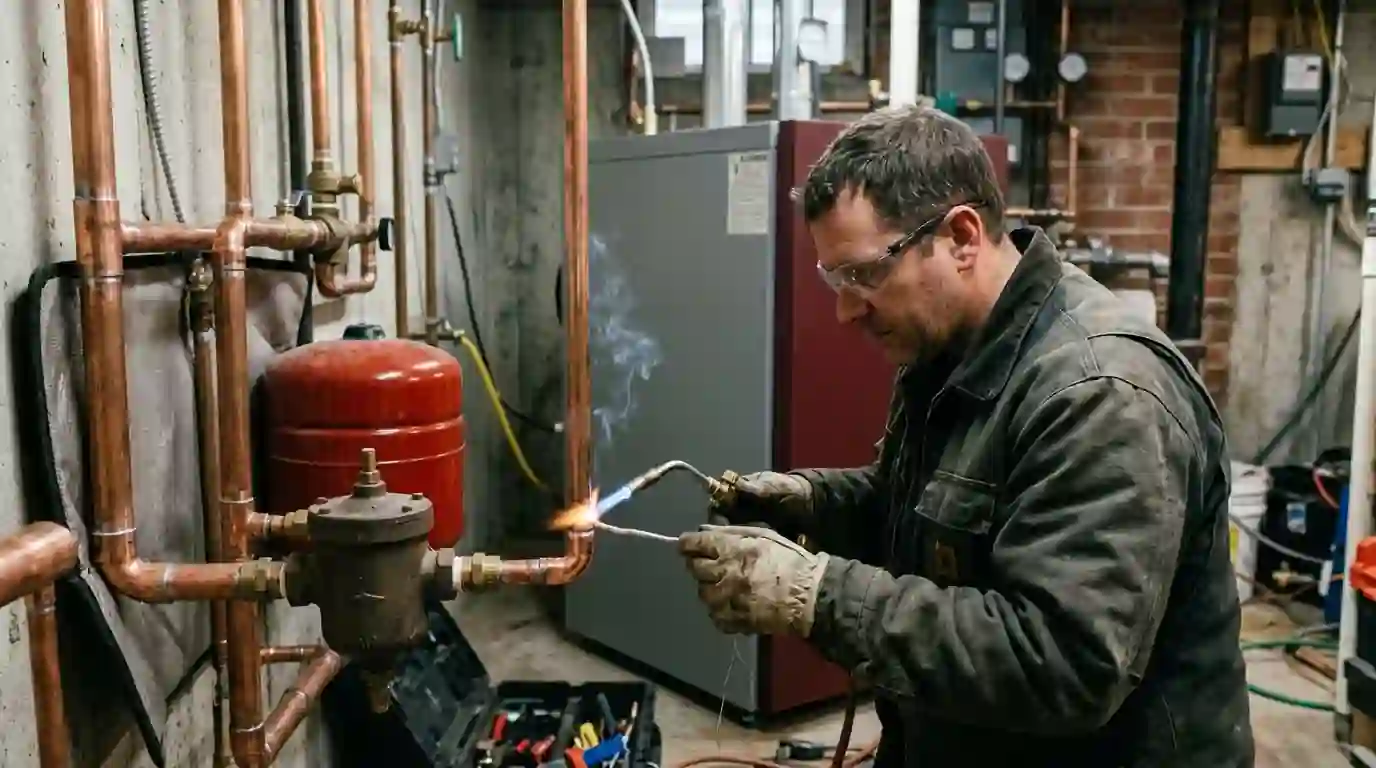
Census figures reported by The Philadelphia Inquirer show most Philadelphia homes were built before 1950, which is why a boiler replacement here usually means a new heat source on old distribution. The radiators and much of the piping stay, so the real job is fitting a modern boiler to cast iron that may hold decades of sediment. Where the old water is dirty, we flush the system and add a dirt separator, so sludge from the old piping does not settle in the new heat exchanger.
- Carrier
- Trane
- Lennox
- Rheem
- Goodman
- York
- Bryant
- American Standard
- Mitsubishi Electric
- Daikin
- Fujitsu
- Weil-McLain
- Burnham
We install boilers from Weil-McLain, Burnham, Bryant and other major makers, matched to hot-water or steam piping.
Not without converting the whole system. Steam radiators and piping work differently, so a steam system needs a steam boiler unless the house is repiped for hot water.
Often, yes. Large cast iron radiators let the boiler run cooler water much of the winter, which is where a condensing boiler saves the most gas.
Rarely. Many older boilers are oversized for the house as it stands now. We size from a heat loss calculation or a radiator survey instead.
For one bathroom at a time, usually. Households that run two showers together are better served by a boiler paired with an indirect tank.
Most hot-water swaps take one to two days. Steam boilers with new header piping, or jobs that need new venting, run longer, and we tell you up front.