Water Heaters & Home Repairs · open 24/7
Drywall and plaster repair in Philadelphia, PA
Cracked plaster or a stain spreading across the ceiling? We find what caused the damage, then patch drywall or repair old plaster so the wall is flat, primed and ready for paint.
- Phones answered 24/7
- Drywall and lath-and-plaster
Updated October 2026
- Common jobs
- Duct and line set cutouts, leak-stained ceilings, plaster cracks, sagging ceilings
- Finish
- Taped, skimmed, sanded and primed, ready for paint
- Answers
- 24 hours, 7 days a week
Short answer
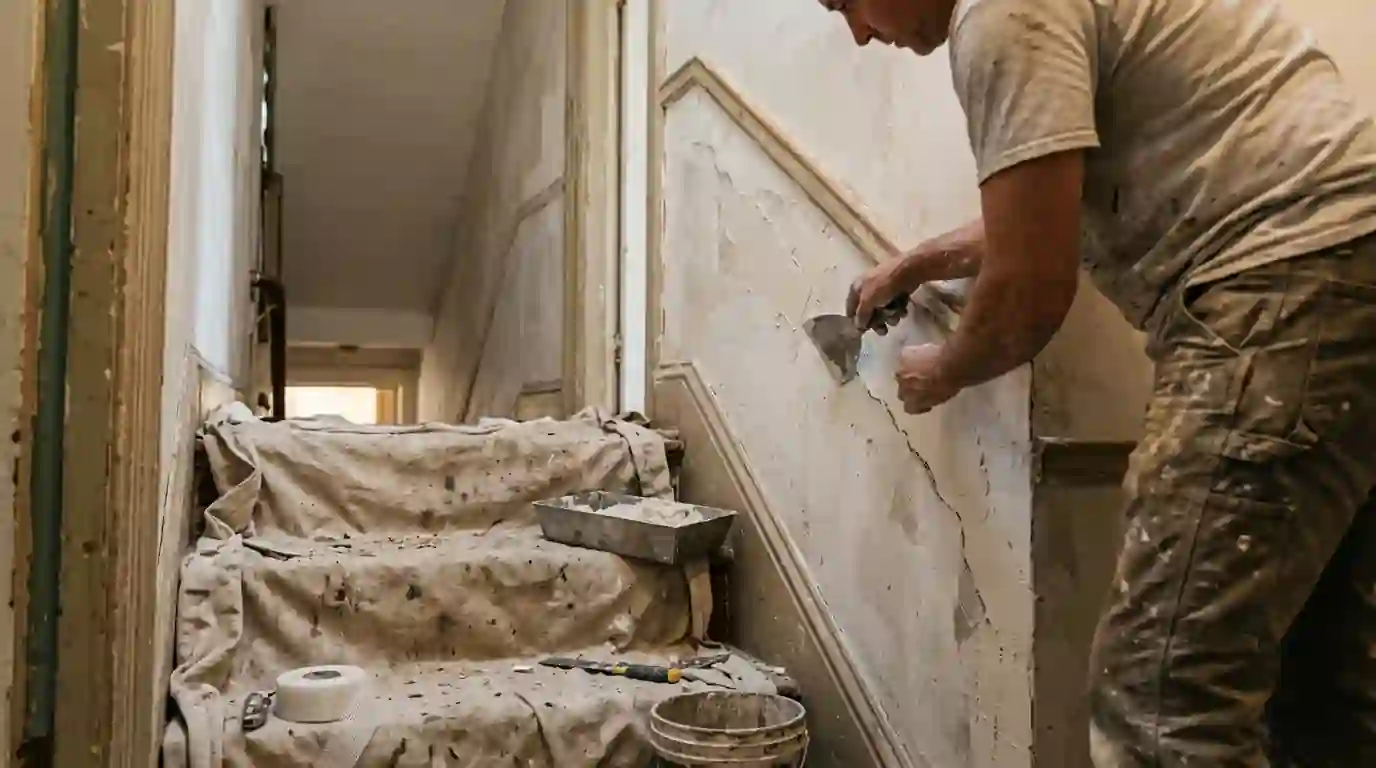
Drywall repair in Philadelphia, PA usually means old plaster as much as drywall, since many houses here have plaster on wood lath. We stop the cause first, whether a leak or a loose ceiling, then reattach, fill and skim so the patch disappears under paint. Pre-1978 paint is handled lead-safe.
Patch the wall only after the cause is fixed
A ceiling stain or a fresh crack is a symptom. Patching over a slow leak or a ceiling that is pulling away from its lath just means doing the job twice. So the first part of every visit is finding out why: water, movement, a loose section, or an old cutout that was never closed properly.
Plaster and drywall need different repairs. Drywall takes a screwed-in patch, tape and joint compound. Plaster is harder and thicker, so we use setting compound to build it back to depth, then skim to match the surrounding wall.
What moves the price of a wall or ceiling repair
You see the price before we start. What moves it:
- Size of the damage and whether it is a wall or a ceiling
- Plaster on lath, plaster on brick, or drywall
- Whether a leak has to be traced and stopped first
- Lead-safe setup needed for older painted surfaces
Wall and ceiling repairs we make
Patching after HVAC work
Installing ducts, a return grille, a mini-split line set or new thermostat wire often means opening a wall or ceiling. We plan those openings so they land between framing where a patch is easy, then close them properly instead of leaving a cover plate over a ragged hole. Small holes get a backed patch; larger cutouts get new board screwed to added blocking, taped, and feathered with two or three coats. If an earlier contractor left gaps around a mini-split line set, we seal and patch those too.
Water-stained ceilings
A brown ring on the ceiling means water got there, and the source decides the repair. Under an attic air handler it is often a clogged condensate line or overflowing pan; under a radiator upstairs, a leaking radiator valve; under a bathroom, a drain or toilet seal. We fix heating and cooling leaks as part of the job; a plumbing or roof leak has to be repaired first. Once the ceiling is dry and still firmly attached, a stain-blocking primer stops the ring bleeding through paint. Soft or sagging board is cut out and replaced.
Plaster cracks
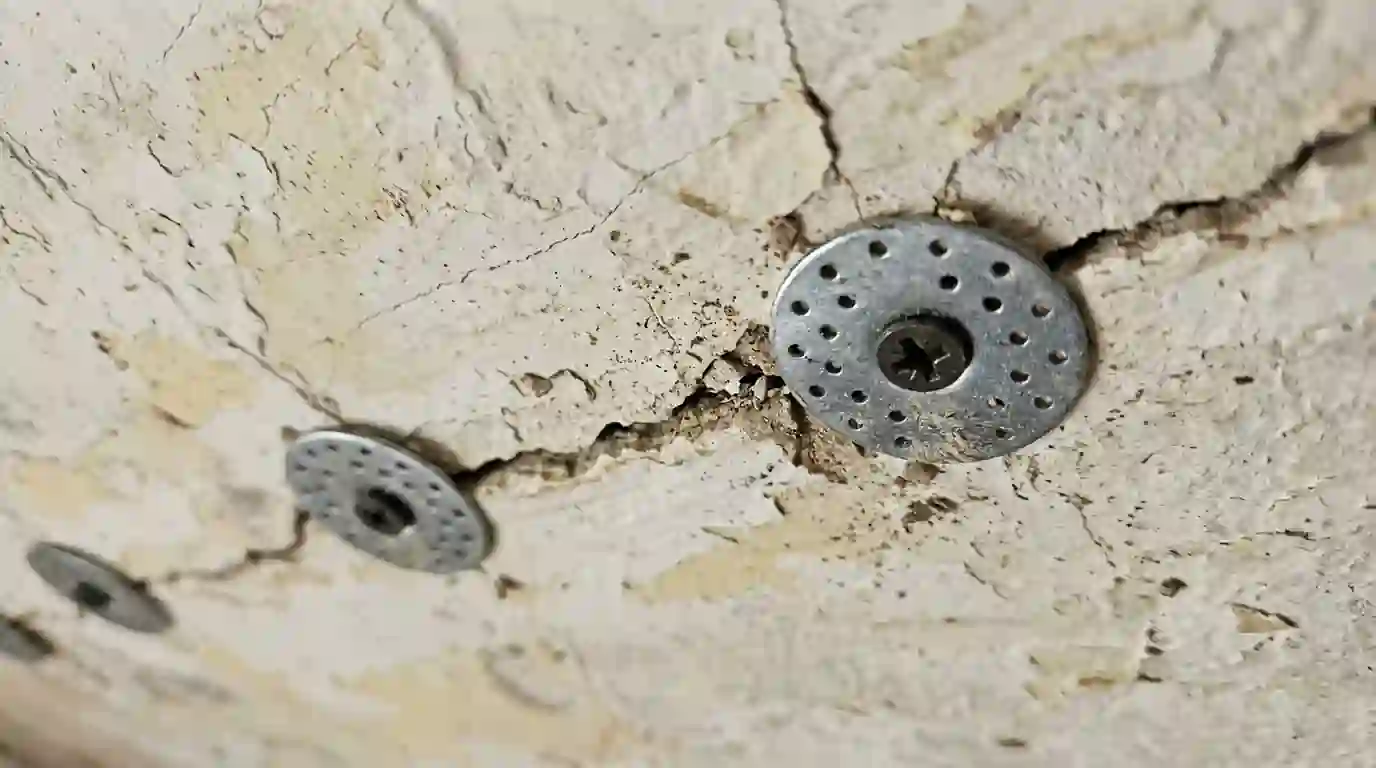
Hairline cracks running from door and window corners are usually house movement and need opening, mesh tape and setting compound. A crack with a raised edge, or a ceiling that sags or gives under light pressure, means the plaster has lost its keys and is pulling away from the lath. Keep people out from under it. We screw plaster washers through it into the lath or joists to draw it back, then fill and skim over them. If a section is too far gone, we cut it out and fill the opening flush with drywall.
Repair the plaster, cover it, or replace it?
Most old walls can be saved. The choice depends on how sound the plaster is.
| Option | Fits when | Trade-off |
|---|---|---|
| Repair the plaster | Cracks and loose areas are local and most of the wall is sound | Keeps the original wall and trim lines, but takes several coats and drying time |
| Overlay with thin drywall | Many cracks across a ceiling that is still mostly attached | Faster than fixing every crack, but outlets, trim and fixtures need extending |
| Tear out and replace with drywall | Plaster is crumbling, water-damaged or off the lath over a large area | A flat new surface, but messy, lead-sensitive demolition and new trim fit |
How a plaster or drywall repair is done
Find the cause
Moisture meter on stains, a light press test on cracks, and a look above if needed.
Set up lead-safe
Plastic on floors and furniture, and doors to other rooms closed while we work.
Secure and patch
Loose plaster reattached or cut back, new board or setting compound built up to depth.
Tape, skim and sand
Mesh or paper tape, skim coats feathered wide, then sanded smooth with dust control.
Prime and clean
Stain-blocking or bonding primer on the repair, plastic folded in, and a HEPA vacuum pass.
Repairing plaster the way older Philadelphia houses were built
Philadelphia's older rowhomes and twins were mostly finished in plaster, either on wood lath or applied straight to the brick of the party walls. Plaster on masonry does not take a screw the way lath does, damp brick can push paint and plaster off from behind, and a drywall patch set into a thick plaster wall needs shimming to sit flush. We repair to match the wall that is there, not the wall a newer house would have.
Which wall and ceiling fixes you can handle yourself
Small cosmetic fixes are fine to do. Anything loose or wet is not.
| Safe for you to check | Leave for the tech |
|---|---|
| Filling nail holes and small dents with spackle | Ceiling plaster that sags, bulges or sounds hollow |
| Marking the edge of a stain to see if it grows | Stains that are still damp or keep spreading |
| Photographing cracks to track changes over time | Sanding or scraping paint in a house built before 1978 |
| Checking whether a nearby door or window sticks | Cutting into walls that may hide wiring, gas or pipes |
Usually close. Smooth plaster is matched with skim coats; sand-finish or hand-troweled textures take test patches first, and we show you before the whole area is done.
Joint and setting compounds soak up paint differently than the surrounding wall. Without primer the patch shows as a dull or shiny spot, especially on ceilings and in raking light.
Not without precautions. Paint in pre-1978 houses may contain lead, so we contain the area, mist before scraping, skip dry power sanding and clean with a HEPA vacuum.
Usually because the patch only filled the crack. Without mesh tape and setting compound, or with loose plaster left unanchored, normal seasonal movement opens it right back up.
Once the leak is stopped and a moisture meter reads dry. Small stains often dry in days; a soaked ceiling takes longer, and priming wet material just brings the stain back.