Heat Pumps & Ductless · open 24/7
Ductless mini-split repair in Philadelphia, PA, any hour
Mini-split blinking, dripping or not responding? We read the error code, trace it to the sensor, board, drain or refrigerant problem behind it, and repair that.
- Phones answered 24/7
- Wall, ceiling and floor heads
Updated October 2026
- Common fixes
- Sensors, drain lines, fan motors, boards and communication wiring
- Covers
- Single-zone and multi-zone ductless systems
- Answers
- Around the clock, every day of the year
Short answer
Ductless mini-split repair in Philadelphia, PA usually starts with the error code the unit is showing. A code points to a system, like a sensor, the drain or the link between head and outdoor unit, not to one exact part. We confirm the fault with meter and pressure readings first, since boards often get blamed for sensor or wiring faults.
Warning signs
Mini-split problems that need a tech
Blinking lights or a code on the display
The unit has logged a fault and may stay shut down until the cause is found.
Water running down the wall
A clogged drain, a pump that stopped or a head hung out of level is spilling condensate.
Ice on the indoor coil or lines
Low refrigerant or a caked blower wheel can freeze the coil and choke off airflow.
Head runs but barely moves air
A coated blower wheel or a failing fan motor is cutting the air reaching the room.
Why mini-split faults need a different approach
A mini-split is run by circuit boards in both the indoor head and the outdoor unit, talking to each other constantly. When something goes wrong, the system protects itself and posts a code. That code narrows the search, but each manufacturer uses its own codes, and one blink pattern can mean different things on different models.
We read the code, pull up the fault history where the unit stores one, then test the suspected sensor, motor or circuit directly. That keeps the repair aimed at the actual fault instead of swapping parts until one works.
Common ductless repairs
Blinking error codes
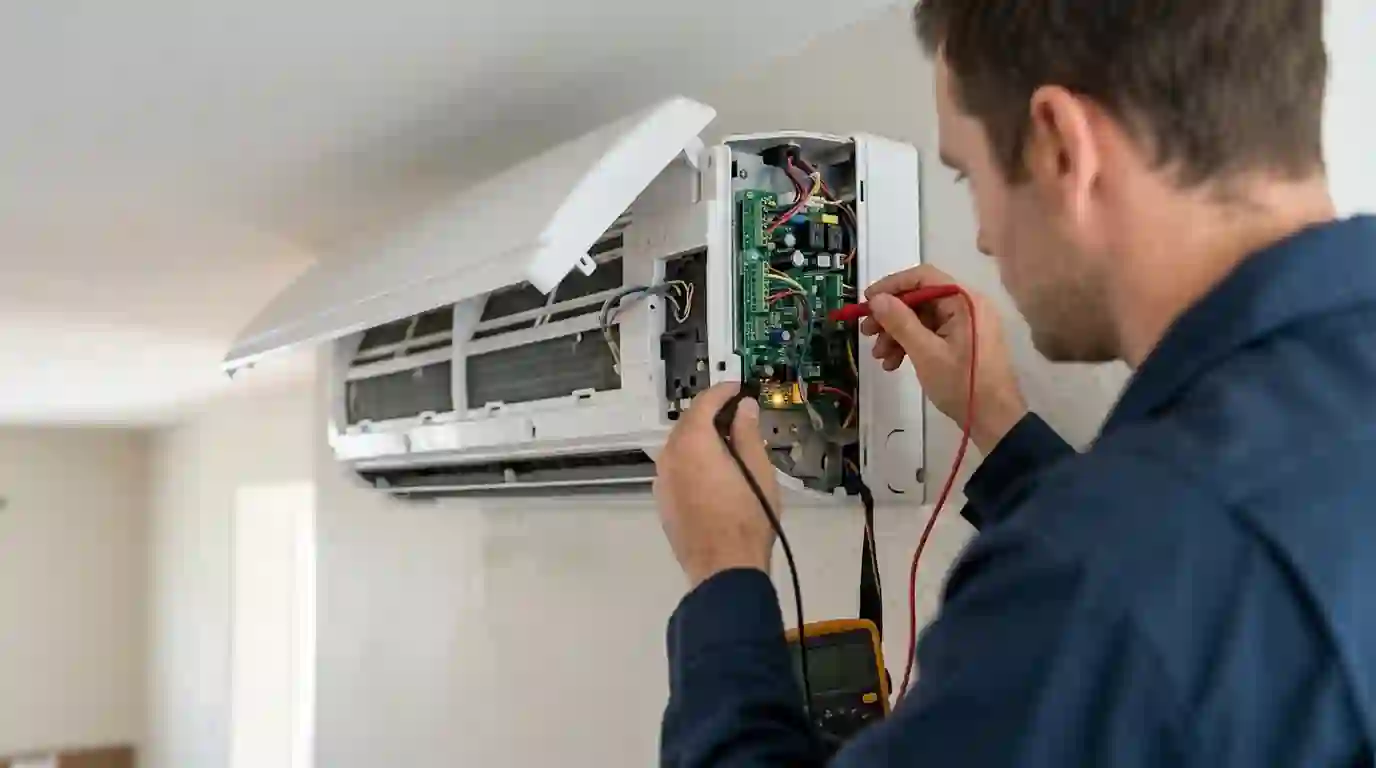
A blinking light or code is the system telling you it stopped itself for a reason. Common ones point to a thermistor reading out of range, a fan motor that failed to reach speed, high pressure on a hot day, or a drain float that tripped. We look the code up for your exact model, then test that part with a meter: thermistor resistance, fan motor feedback, line voltage at the board. Cutting power can clear a code for a while, but if it comes back, something real is wrong and needs testing rather than another reset.
Water dripping from the indoor head
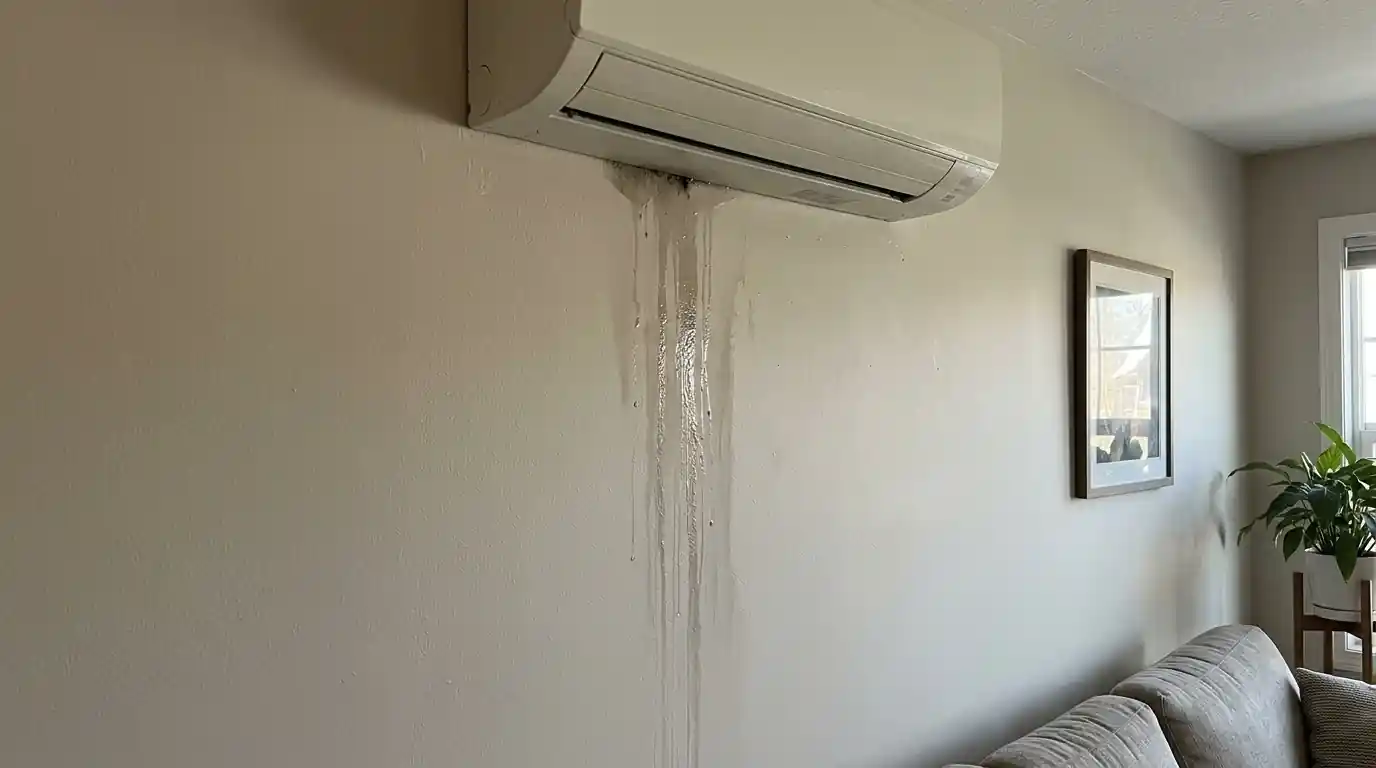
A mini-split head pulls moisture out of the air and sends it away through a small drain line, usually by gravity out through the wall. When that line clogs with slime or dust, water backs up and spills out the front of the unit. A head hung slightly out of level, a kinked drain hose or a condensate pump that has quit cause the same drip. We clear and flush the drain, check the head's pitch and test the pump. If the coil and blower are coated, a deep cleaning keeps the slime from coming straight back.
Remote and communication faults
When a head ignores the remote or shows a communication error, the cause can be as small as a dead remote battery or as involved as a broken signal wire between the head and the outdoor unit. Old line set wiring, a loose terminal, water in an outdoor junction box or a damaged board can all break that link. We check the remote first, then measure the communication circuit at both ends and inspect the wiring between them. On multi-zone systems we isolate each head to find which one is pulling the whole system down.
When a mini-split quits in a Philadelphia heat wave
From Sunday June 22 through Wednesday June 25, 2025, Philadelphia was under a Heat Health Emergency. Days like those are when mini-splits run hardest and fault most, often with high-pressure codes from a dirty outdoor coil or a fan that can no longer keep up. A head serving the only cool room in a rowhome is not a repair that can wait for a quiet week, which is why our phones are answered 24 hours a day.
How a mini-split repair visit goes
Read the code
The error code and any stored fault history pulled for your exact model.
Test the suspect part
Meter readings on sensors, motors, boards and communication wiring, not guesswork.
Check the refrigerant side
Pressures and temperatures read when the code or symptoms point to charge or airflow.
Repair and clear
The failed part replaced, the fault cleared and the system reset.
Run it through
Each head tested in cooling and heating so the code does not come straight back.
Safe checks before you call about your mini-split
These are quick and safe. Stop there if the code comes back.
| Safe for you to check | Leave for the tech |
|---|---|
| Remote batteries and the selected mode | Opening the head to reach the board or blower |
| Rinsing the washable filters under the tap | Clearing or replacing the condensate pump |
| The breaker or disconnect for the outdoor unit | Refrigerant pressures and leak checks |
| Leaves or snow packed against the outdoor coil | Communication wiring between head and outdoor unit |
What affects the price of a mini-split repair
You see the price before we start. What moves it:
- Which part failed: sensor, motor, board or pump
- Whether refrigerant work is needed
- How the outdoor unit is reached, roof or ground
- Parts availability for your brand and model
- Carrier
- Trane
- Lennox
- Rheem
- Goodman
- York
- Bryant
- American Standard
- Mitsubishi Electric
- Daikin
- Fujitsu
- Weil-McLain
- Burnham
Daikin, Mitsubishi Electric, Fujitsu and Trane ductless heads are all on our repair list, single-zone and multi-zone.
It is a fault code, and the meaning depends on the brand and model. Note the color and blink count before you reset it, and tell us when you call.
Most often a clogged drain line or a failed condensate pump. A head mounted out of level or a frozen coil can also spill water down the wall.
Yes, switching power off at the breaker for a short while is safe. If the code returns afterward, the cause is still there and needs testing.
It can be that head's sensor, fan or board, or the communication wire to the outdoor unit. We test each head separately to find out.
Most repairs on sensors, drains, fan motors and boards are worth doing. A failed compressor on an old system is when replacement deserves a look.