Cooling · open 24/7
High-velocity central air for older homes in Philadelphia, PA
No ducts, and plaster walls you want to keep? A high-velocity system runs small insulated tubes to round outlets, so central air fits homes that were never built for ductwork.
- Phones answered 24/7
- Attic and closet air handlers
Updated October 2026
- Fits
- Rowhomes, twins and older houses without ductwork
- Uses
- Small flexible tubing, round outlets and a compact air handler
- Plan around
- Attic access, closet chases and the condenser spot
Short answer
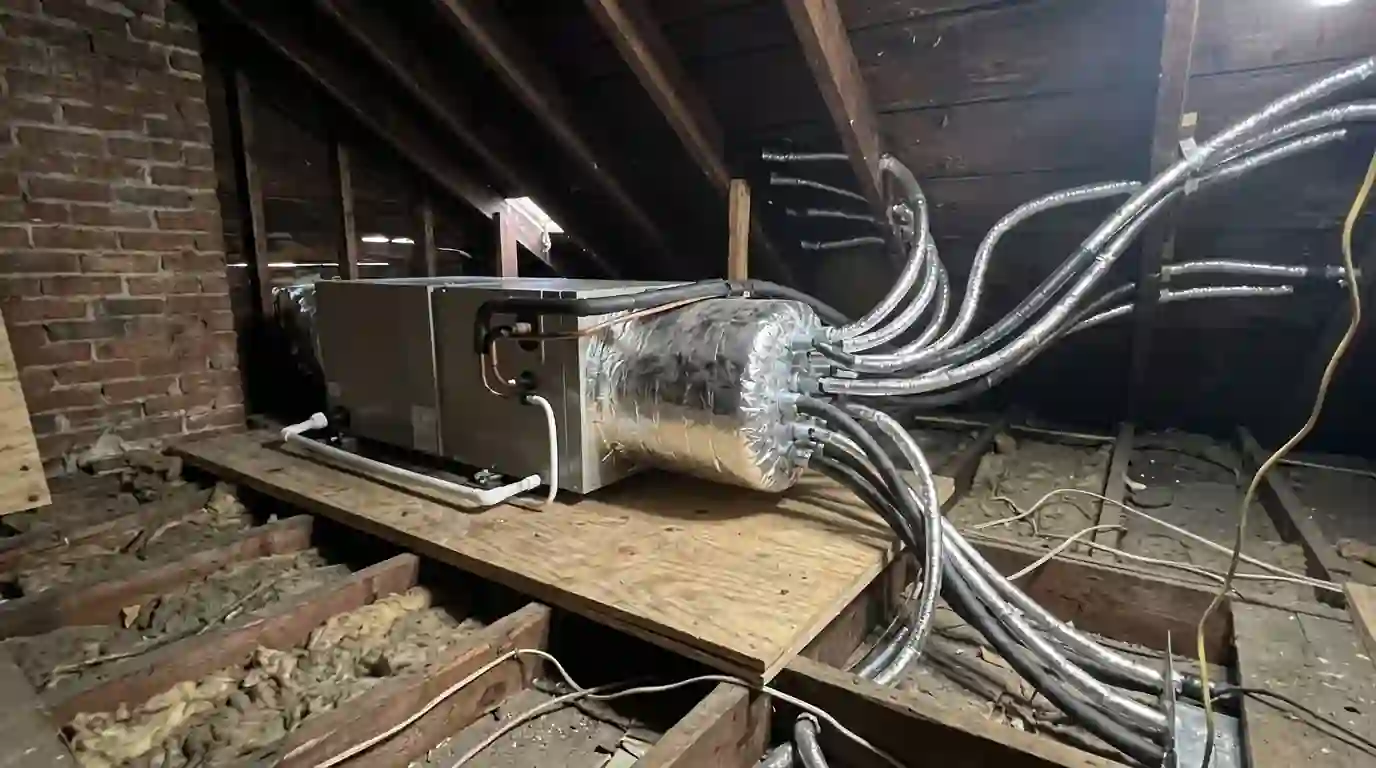
High-velocity central air in Philadelphia, PA suits older homes with plaster walls and no ductwork. A compact air handler, usually in the attic or a closet, pushes air at higher speed through small flexible tubes to round outlets. Each run needs enough length to stay quiet, so we lay out every outlet before any plaster is cut.
How small-duct air works in a house without ducts
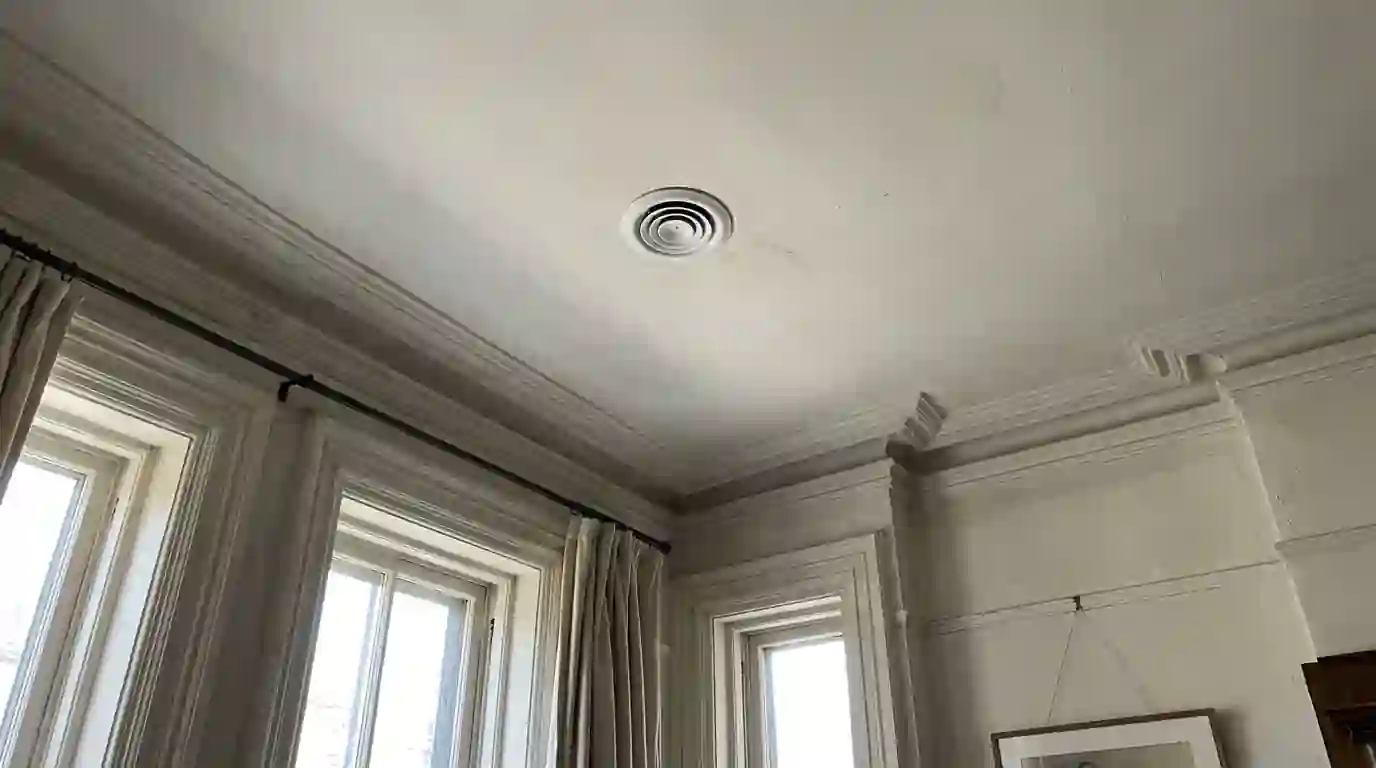
A standard system needs big trunk lines and rectangular registers, which an older rowhome rarely has room for. A high-velocity system moves the same cooling through tubes small enough to fish between joists and down wall cavities, ending at outlets that look like a small round disc.
The air leaves faster and mixes the room well, and the coil runs colder, which pulls more moisture out of humid summer air. The trade-off is a soft rush of air at each outlet and an air handler that needs a proper home with a drain.
What shapes the price of small-duct central air
You see the price before we start. What moves it:
- Number of outlets and how many floors they serve
- Where the air handler can go and how easy that space is to reach
- How many runs need wall openings versus clear chases
- Condenser location and line set length
Planning a small-duct install
Small-duct systems for rowhomes
In a rowhome the layout is the puzzle: deep, narrow floors, party walls on both sides and often a flat roof over the top floor. We usually set the air handler in the attic space or a top-floor closet and drop tubing to the floors below through closets, chases and the space behind built-ins. Small rooms often take one or two outlets and larger rooms more, set by a room-by-room load calculation. The condenser can sit on the roof or at the back of the house. For one cramped floor rather than the whole house, a ductless mini-split may suit better.
Attic air handlers
The air handler is a compact cabinet holding the blower and coil, and in most older homes it ends up in the attic or a knee-wall space. That spot needs a sturdy platform, a secondary drain pan with a float switch, a condensate line or pump, and enough clearance to change the filter and reach the coil. Attics get very hot in summer, so we insulate the supply plenum and refrigerant lines and seal the return. Where a flat roof leaves no attic at all, a closet on the top floor can usually host the cabinet instead.
Running tubing through plaster walls
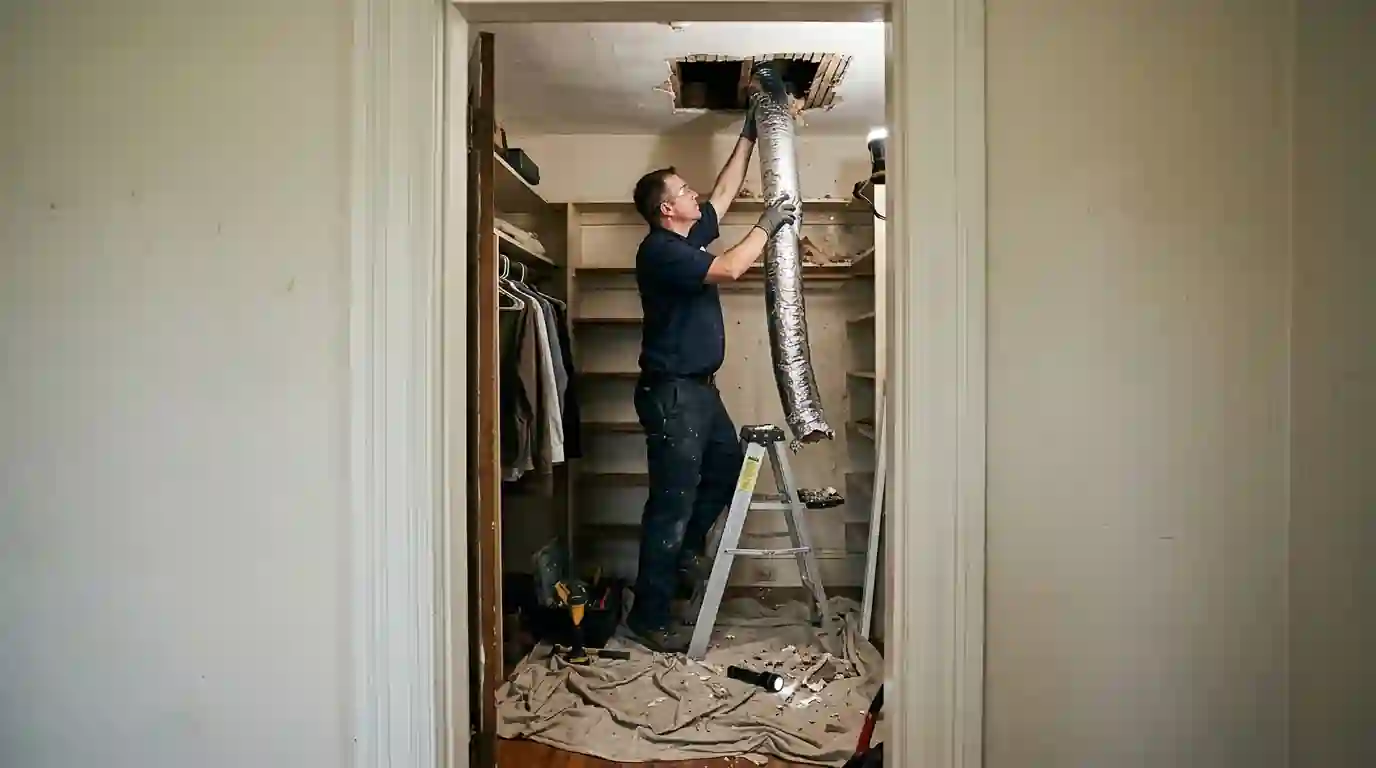
This is where the small tubes earn their keep. Flexible insulated tubing bends around joists and slips through holes far smaller than a standard duct needs, so most runs are fished from the attic or basement without opening walls. When a run has to cross a solid spot, we cut a small, neat access hole in the plaster and close it afterward. Every outlet spot is marked and agreed with you first, and we route around radiator pipes, gas lines and old wiring already hiding in the walls. Larger patching falls under drywall and plaster repair.
High-velocity, ductless or a standard duct system?
Three ways to cool a house that has no ductwork today.
| Option | Fits when | Trade-off |
|---|---|---|
| High-velocity small duct | You want whole-house central air and the plaster and trim left intact | Higher equipment cost, some air sound at outlets, needs an attic or closet |
| Ductless mini-split | Only a few rooms need cooling, or there is no attic or closet space | Wall-mounted heads in each zone, nothing hidden |
| Conventional ducts | A basement or attic has room for full-size trunks and returns | Lower equipment cost, more opening of walls and ceilings |
From walk-through to the first cool night
Walk the house
Every room, closet, attic hatch and chase checked for tubing routes and air handler space.
Lay out outlets
The load calculation sets the outlet count, then we mark each spot with you.
Set the equipment
Air handler on its platform with drain safety, condenser placed and line set run.
Run the tubing
Small insulated tubes fished to each outlet, with any plaster openings kept small.
Start and balance
Charge checked, airflow and sound at each outlet verified, thermostat set up.
What a high-velocity install covers
On a typical install, here is the work we handle:
- A room-by-room load calculation to size the system and set the outlet count
- Outlet layout walked through with you before any hole is cut
- Air handler set on a platform with a secondary drain pan and float switch
- Insulated small-duct tubing fished through closets, chases and floor cavities
- A return air path sized so the air handler is never starved
- Condenser set on the roof or at grade, with line set and power run to it
- Startup with charge, airflow and outlet temperature checks
Cooling top floors through a Philadelphia heat emergency
Philadelphia's Health Department declared a Heat Health Emergency from Monday July 15 to Wednesday July 17, 2024. Stretches like that are when window units in an older house fall behind, especially on a top floor under a flat roof. A high-velocity system cools every floor from one air handler, and because its coil runs cold, it also pulls out the sticky humidity that makes a July night feel worse than the thermometer says.
- Carrier
- Trane
- Lennox
- Rheem
- Goodman
- York
- Bryant
- American Standard
- Mitsubishi Electric
- Daikin
- Fujitsu
- Weil-McLain
- Burnham
Our small-duct installs pair the air handler with an outdoor condenser from Carrier, Trane, Lennox or Rheem, sized to the load.
There is a soft rush of air at each outlet. Runs of the right length and sound-dampening tubing keep it quiet. A loud outlet usually means its run was cut too short.
Usually only in a few spots, if at all. Most tubing travels through closets, chases and floor cavities, and any small opening is closed up afterward.
It can, with a heat pump outdoor unit or a hot-water coil fed from a boiler. Many older homes keep their radiators and use it for cooling only.
Usually on the flat roof or in the rear yard. We pick a spot with service access and a short, clean line set route.
One hidden air handler serves the whole house through small outlets. A mini-split puts a visible head in each room or zone, with no tubing to fish.