Commercial · open 24/7
Walk-in cooler and freezer repair in Philadelphia, PA
Box temperature climbing with stock inside? We repair walk-in coolers and freezers: condensing units, evaporators, defrost controls, door gaskets and heaters. A person answers 24/7.
- Phones answered 24/7
- Walk-in coolers and freezers
Updated October 2026
- Common fixes
- Condenser fans, contactors, defrost timers, expansion valves, gaskets, door heaters
- Buildings
- Restaurants, delis, corner stores, bars and church kitchens
- Answers
- 24 hours, 7 days a week
Short answer
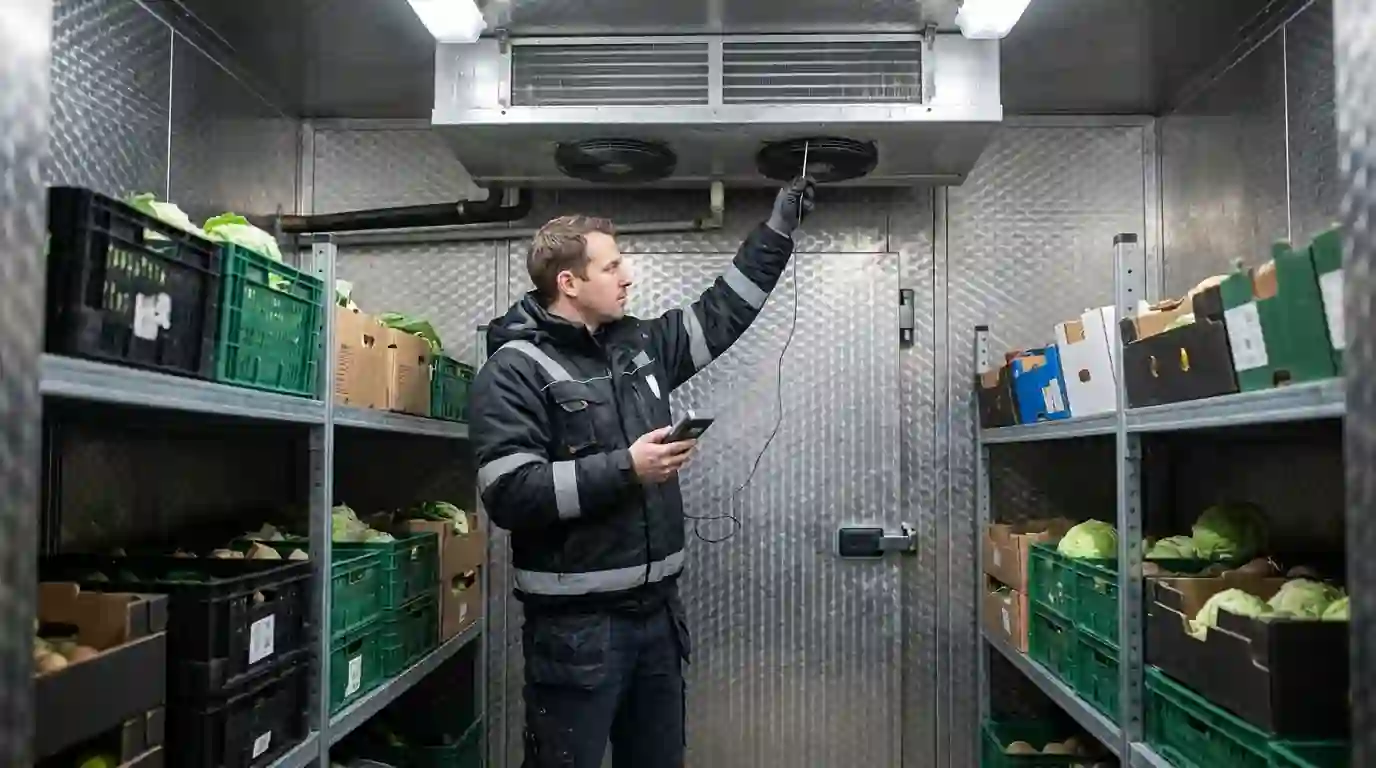
Walk-in cooler repair in Philadelphia, PA starts with finding where heat is getting in or failing to get out. We check the condensing unit, the evaporator and its fans, the defrost cycle and the door seals. A healthy box holds its setpoint steadily; one that climbs between cycles has a refrigeration fault or an air leak.
Warning signs
Signs the walk-in needs a tech before the stock is at risk
Box temperature drifting up
The thermometer reads warmer at every check, even with the door shut and the unit running.
Ice on the coil or around the door
Frost building on the evaporator or the door frame points at a defrost problem or an air leak.
Water on the floor under the coil
A plugged drain line, or a failed drain line heater on a freezer, sends meltwater onto the floor.
Condensing unit that never shuts off
A unit running nonstop is fighting a dirty condenser, a low charge or a door that leaks.
How we trace a walk-in that won't hold temperature
A walk-in is a box, a refrigeration system and a door. The condensing unit, often on the roof or behind the building, rejects heat; the evaporator inside absorbs it; the defrost cycle clears ice; the door keeps warm air out. A failure in any of them shows up as the same complaint: the box is warm.
We read box and coil temperatures, refrigerant pressures and superheat, confirm the evaporator fans and defrost are working, then look hard at the door. That order finds the fault faster than adding refrigerant and hoping.
Walk-in faults we fix most
Not holding temperature
When a cooler creeps into the 40s or freezer stock goes soft, start at the condensing unit. A dirty condenser coil, a failed condenser fan motor or a burned contactor stops heat from leaving the system. Low refrigerant from a leak shows up as long run times and a starved evaporator. A stuck expansion valve or a failed solenoid valve looks the same with a full charge. We check pressures, superheat and amperage before adding anything, and find the leak instead of topping it off. See refrigerant leak repair.
Iced evaporator
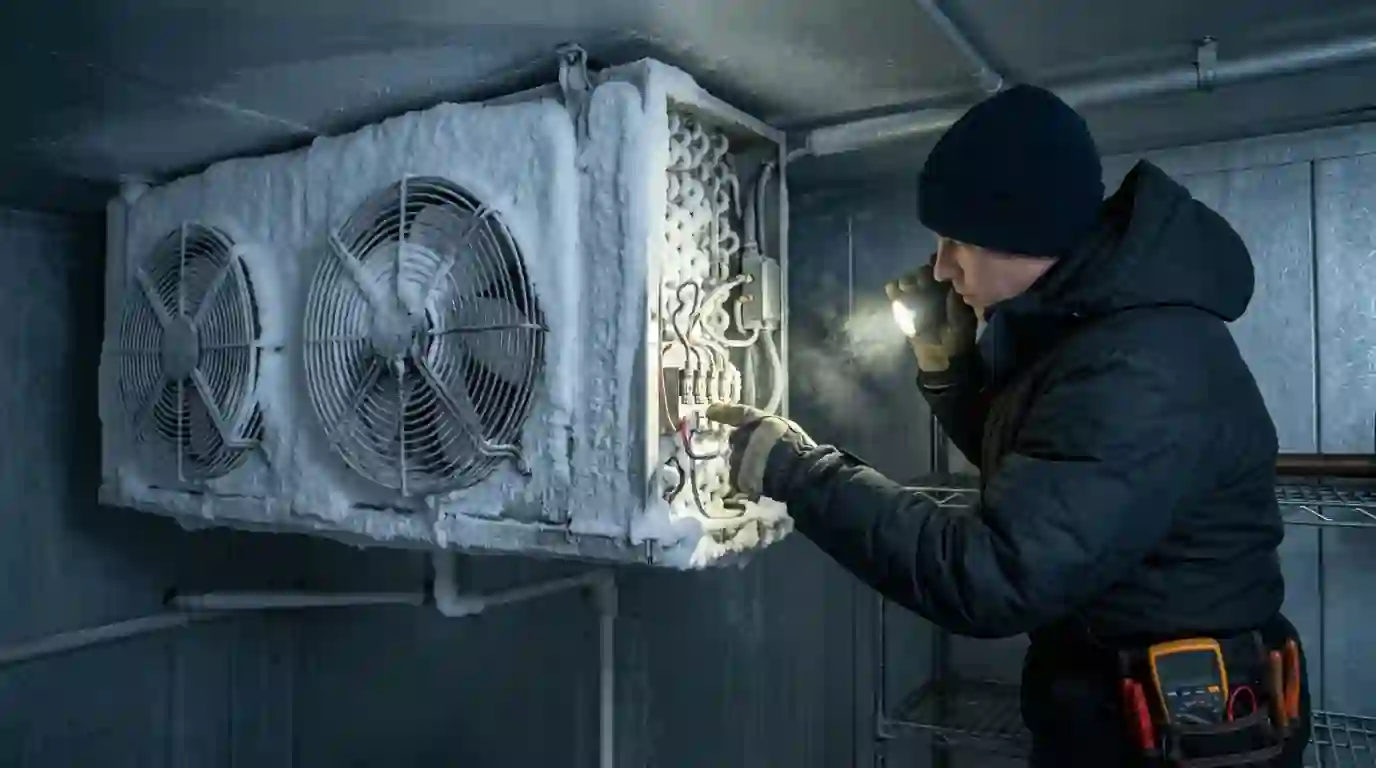
A coil that turns into a block of ice cannot move air, so the box warms even while the compressor runs. Freezers defrost with electric heaters on a timer or control, while most coolers defrost by simply cycling off. Iced coils come from a failed defrost heater, a bad timer or termination switch, a stuck evaporator fan, a low charge, or warm moist air leaking past the door. We clear the ice safely, test each heater and the defrost control, and watch a full defrost cycle so the ice stays gone.
Door gaskets and heaters
The door is the most-used part of a walk-in and the first place warm, moist air gets in. Torn or flattened gaskets leave gaps you can spot with a flashlight from inside. On freezers, a heater wire in the door frame keeps the gasket from freezing to the jamb. When it fails, the door sticks, ice builds on the frame, and staff yank it until the gasket tears. We replace gaskets, test the heater circuits, adjust the closer and hinges, and check the strip curtain if the box has one.
Walk-ins squeezed into older city kitchens
Many Philadelphia restaurants and corner stores work out of older buildings, and the walk-in often went wherever the building had room: a basement, a back room or a later addition. The condensing unit then sits on the roof, in an alley or on a wall bracket, sometimes at the end of a long line run from the box. Summer humidity means every door opening loads the coil with moisture, so gaskets, drain lines and defrost get a hard workout through the warm months.
What happens on a walk-in service call
Protect the stock first
We tell staff whether to move product to another box while the work goes on.
Read the box and the system
Box and coil temperatures, plus pressures, superheat and amperage at the condensing unit.
Check defrost and the door
Heaters, timer or control, drain line, evaporator fans, gaskets and door frame heaters.
Repair and pull down
We fix the fault, then watch the box come back down toward setpoint.
Confirm a full cycle
A complete run and defrost cycle before we leave, with the box temperature written down.
What kitchen staff can check before the tech gets there
Quick checks that are safe for staff. Leave the rest to us.
| Safe for you to check | Leave for the tech |
|---|---|
| The door closes fully and the gasket seals all the way around | Refrigerant, pressures and expansion valves |
| Thermometer readings near the door and at the back | Defrost timers, heaters and termination switches |
| Outdoor condenser coil clear of boxes, trash and leaves | Electrical panels, contactors and compressor wiring |
| Evaporator fans spinning while the unit runs | Chipping ice off the coil with any tool |
What changes the price of a walk-in repair
You see the price before we start. What moves it:
- Which part failed: a fan motor or gasket versus a compressor
- Refrigerant type and the size of the leak
- Where the condensing unit sits: roof, alley or wall bracket
- Whether parts are common or specific to the box
- Carrier
- Trane
- Lennox
- Rheem
- Goodman
- York
- Bryant
- American Standard
- Mitsubishi Electric
- Daikin
- Fujitsu
- Weil-McLain
- Burnham
Alongside walk-in refrigeration, we service the kitchen's cooling equipment from Carrier, Trane, Lennox and York.
Most coolers are set in the mid to upper 30s and most freezers around zero or below. Follow your health inspector's requirements for the food you store.
Usually a defrost problem, a door that does not seal, or a failed door heater. Constant icing can also mean a low charge. We test each before replacing parts.
If the box is already above a safe temperature, or the repair needs the system off, yes. We tell you on arrival whether moving stock makes sense.
Yes. Warm, humid air rushes in, frosts the coil and pushes the box temperature up. Use a strip curtain and close the door between loads.
Usually. The insulated box tends to outlast the refrigeration equipment. If the condensing unit or evaporator is worn out, we can replace that part of the system and keep the box.