Ducts & Indoor Air · open 24/7
Smart thermostat installation in Philadelphia, PA
New smart thermostat keeps going blank? We check the wiring at both ends, add a common wire when the old cable lacks one, and set it up for the system you actually have.
- Phones answered 24/7
- Furnaces, boilers and heat pumps
Updated October 2026
- Common jobs
- Wi-Fi thermostat installs, missing C-wires, heat pump and boiler setup
- Checks
- Wiring at the thermostat and at the equipment control board
- Covers
- Philadelphia and South Jersey
Short answer
Smart thermostat installation in Philadelphia, PA comes down to wiring and setup. Most Wi-Fi thermostats need a common wire for steady power, many older homes don't have one, and boilers and heat pumps need specific settings. We check both ends of the cable, add a C-wire where needed, and configure the stages before we leave.
Why a smart thermostat acts up in an older house
The thermostat itself is rarely the problem. The trouble is behind the wall: two-wire cable from an old boiler, a heat pump wired with the wrong reversing valve setting, or no common wire at all, so the new thermostat steals power and drops offline.
We open both ends, the wall plate and the equipment, before the new one goes up. Then we set it to match the system: heat pump or gas, steam or hot water, single or two stage, and the cycle rate the equipment wants.
What sets the price of a thermostat install
You see the price before we start. What moves it:
- The thermostat model, and whether you supply it
- Whether a C-wire needs new cable or an adapter
- System type: single stage, two stage, heat pump or boiler
- Patching the wall behind the old thermostat
Thermostat jobs we see most
Wi-Fi thermostats
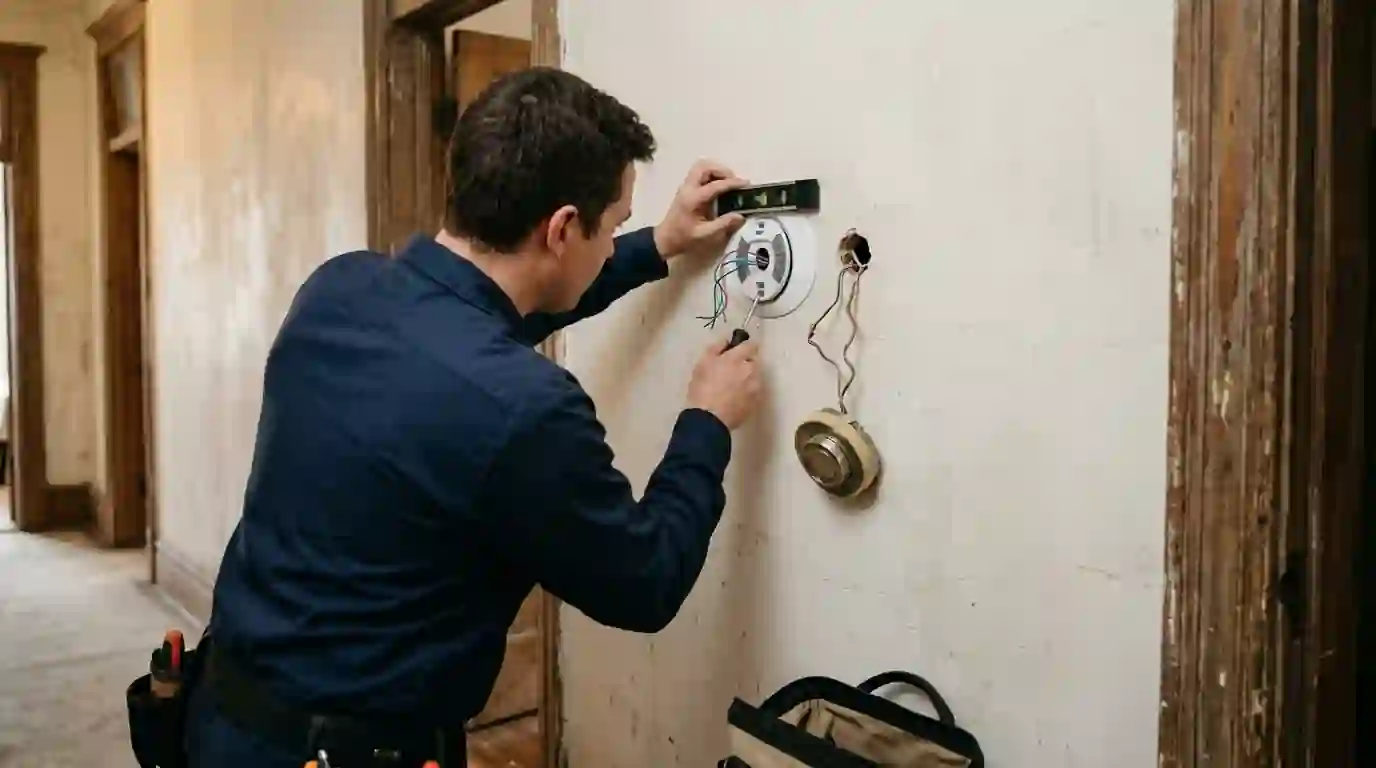
A Wi-Fi thermostat earns its keep with schedules, remote control and an alert when the house gets too cold. It only works well with steady power, a decent signal at that wall and the right settings. We mount it level, patch the old footprint if the new plate won't cover it, and pick the correct equipment type during setup. We also check placement: a thermostat on an exterior wall, beside a supply register or in direct sun misreads the room and cycles the system for no reason. Moving it a few feet can fix comfort complaints.
C-wire problems
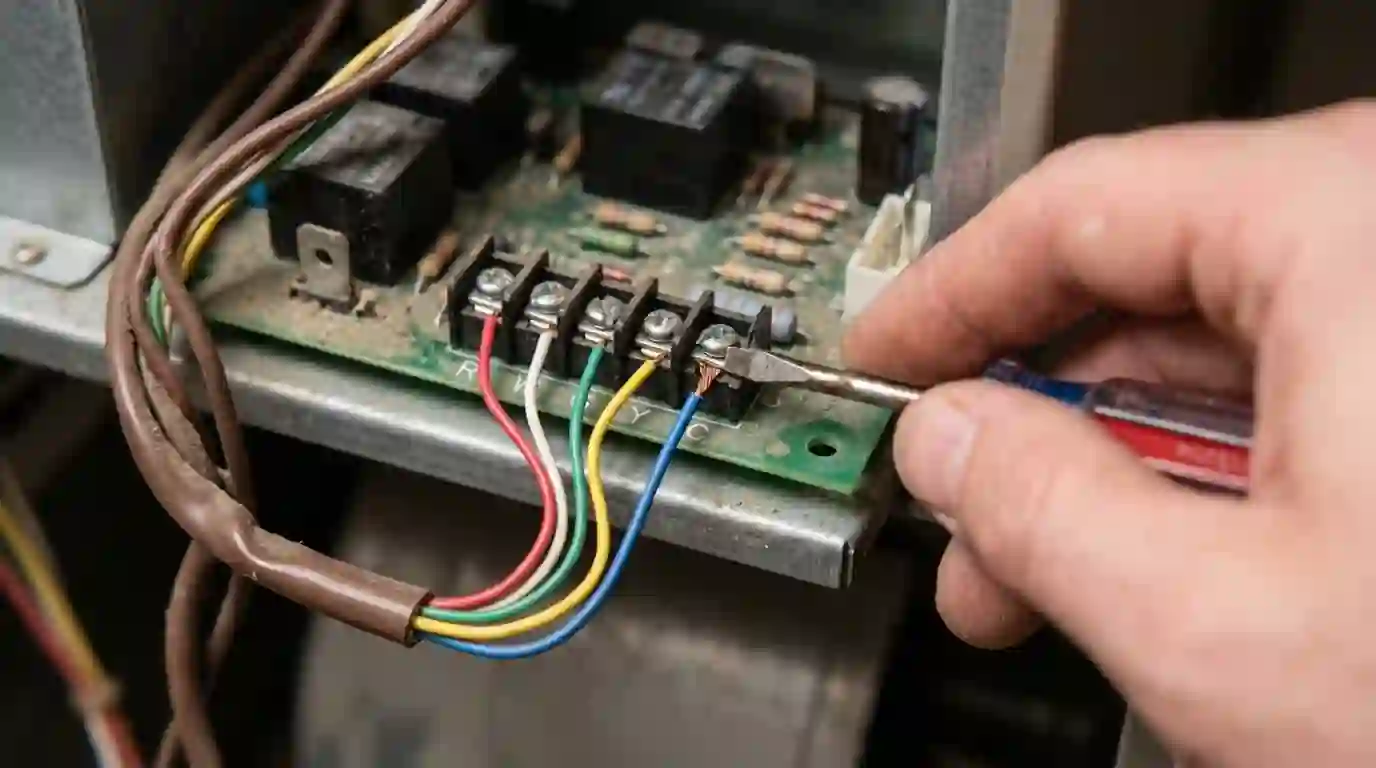
The C, or common, wire gives a thermostat constant power. Older homes often have only two or four wires in the wall, and many smart thermostats try to borrow power through the heating or cooling wire instead. That can blank the screen, drop the Wi-Fi or make the furnace click on and off by itself. We fix it by using a spare conductor if the cable has one, running new cable, or fitting an adapter at the control board that adds a common without new wire. Then we check transformer voltage.
Thermostats for boilers and heat pumps
Boilers and heat pumps are where a generic setup goes wrong. A heat pump needs the reversing valve set to the right mode and backup heat wired so it doesn't run constantly; set it wrong and the house heats on expensive strip heat or blows cold in January. Steam boilers want fewer, longer cycles than hot-water boilers, and some older boilers run on millivolt controls most smart thermostats can't operate. We wire and set the stages to match. For floors that never even out, zoning may be the real answer.
Which thermostat suits your system
Choose by the system and how you use the house, not by screen size.
| Option | Fits when | Trade-off |
|---|---|---|
| Wi-Fi smart thermostat | There is a C-wire or one can be added, and you want phone control | Most features, but needs steady power and a solid Wi-Fi signal at that wall |
| Programmable, no Wi-Fi | You keep a regular schedule and don't need remote access | Simple and dependable, but no app or alerts |
| Millivolt or line-voltage model | Standing-pilot boilers or electric baseboard heaters | Few smart choices, but the correct type matters for safety and reliability |
How a thermostat install runs
Identify the system
Furnace, boiler, heat pump or a combination, and how many heating and cooling stages it has.
Check the wiring
Every conductor at the wall and at the control board, plus transformer voltage.
Add power if needed
A spare wire, new cable or a common-wire adapter so the thermostat stays powered.
Mount and configure
Level mounting, then equipment type, stages, cycle rate and backup heat set up.
Test every mode
Heat, cool, fan and backup heat each run from the new thermostat before we leave.
Thermostat wiring in older Philadelphia homes
Thermostats in Philadelphia's older homes often sit on cable that was run for a boiler long ago, with two wires for heat and nothing else. When central air came later, a second thermostat or a spliced cable was the usual answer, which is why many houses still have two on the same wall. Plaster walls make fishing new wire slower, so we look for the easiest path, often from the basement up an interior wall, before choosing between new cable and a common-wire adapter.
What to check before calling about a thermostat
Some thermostat problems take seconds to fix. Start here.
| Safe for you to check | Leave for the tech |
|---|---|
| Batteries, and whether the screen is on at all | Opening the furnace or boiler control panel |
| The furnace switch and the breaker | Adding a C-wire or adapter at the board |
| Mode set to heat or cool, fan set to auto | Heat pump reversing valve and backup heat wiring |
| A photo of the old wiring before it comes off | Millivolt or line-voltage thermostat swaps |
- Carrier
- Trane
- Lennox
- Rheem
- Goodman
- York
- Bryant
- American Standard
- Mitsubishi Electric
- Daikin
- Fujitsu
- Weil-McLain
- Burnham
We wire thermostats to furnaces, boilers and heat pumps from Carrier, Trane, Lennox, Goodman, Weil-McLain and Burnham, old and new.
Most do for reliable operation. Some claim to work without one, but that is usually where blank screens, dropped Wi-Fi and short cycling come from.
Many can, if the boiler uses standard 24-volt controls and the thermostat has a steam or long-cycle setting. Millivolt systems need a compatible model.
It can, mostly through steady setbacks at night and when the house is empty. Savings depend on your habits and the system, so we don't promise a number.
On a simple furnace with a C-wire, plenty of people do. Heat pumps, boilers and missing wires are where we usually get called to sort out the mix-up.
On an interior wall in a room you use, away from supply registers, sunlight, the kitchen and exterior doors. A bad spot misreads the whole house.