Heating · open 24/7
Furnace replacement and installation in Philadelphia, PA
Old furnace on its last winter? We size a new gas furnace to the house, sort out the venting and drain, and install it to run quietly and evenly.
- Phones answered 24/7
- Standard and high-efficiency furnaces
Updated October 2026
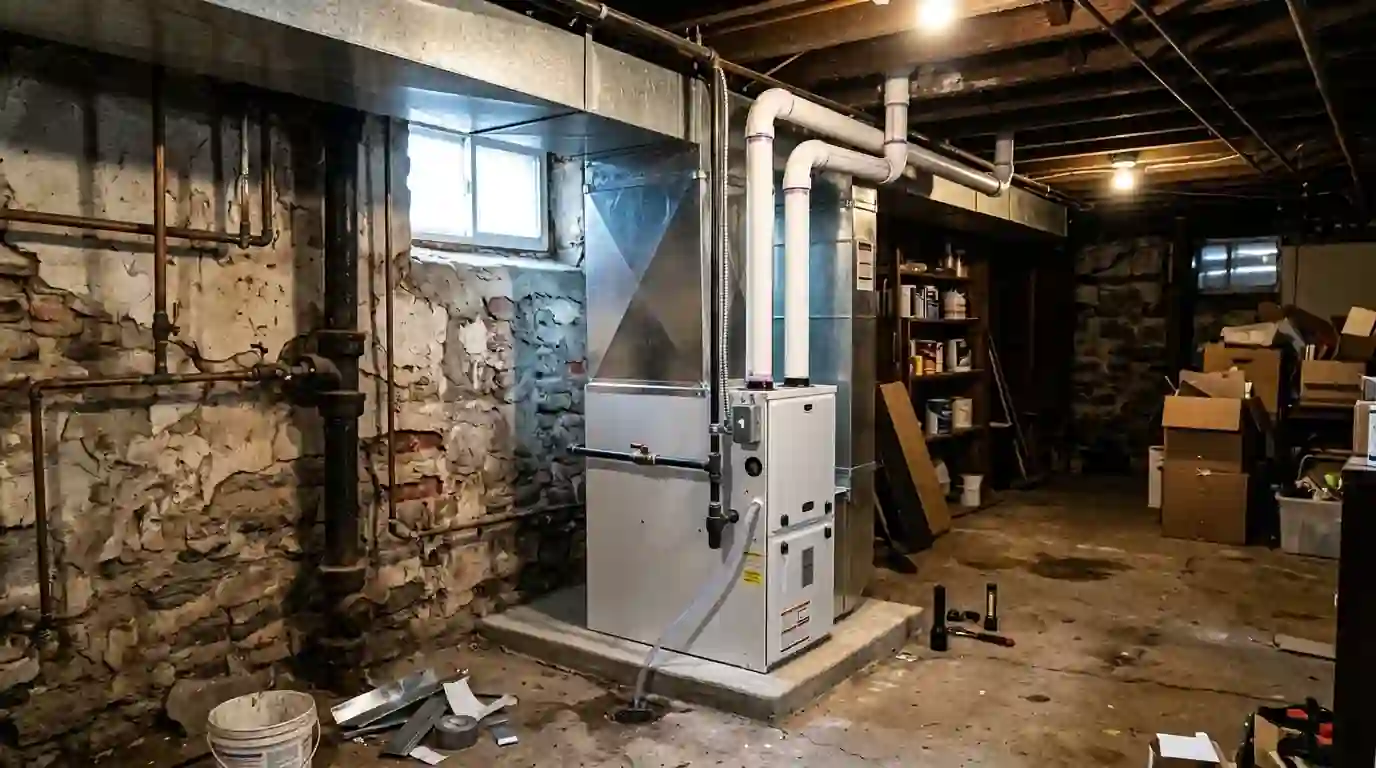
- What we install
- Gas furnaces: single-stage, two-stage and variable-speed
- Includes
- Sizing, venting, drain, gas and thermostat hookup
- Covers
- Philadelphia and South Jersey
Short answer
Replacing a gas furnace in Philadelphia, PA starts with a heat loss calculation, not the size of the old unit. We size the new furnace to the house, plan the venting and condensate drain, check the ductwork and permit needs, and install it in a day on most straightforward jobs.
Replacing a furnace the right way, not the fast way
A replacement is the time to fix what the old furnace got wrong. Many older furnaces were sized by guesswork or by copying the unit before them, and an oversized furnace short cycles, runs loud and leaves cold rooms. We start with a heat loss calculation and look at the ductwork, because a new furnace on undersized returns will not perform any better than the old one.
We also check what the new furnace depends on: the gas line, the chimney or vent route, the condensate path and the thermostat wiring.
What decides the price of a new furnace
A replacement price depends more on the house than on the furnace itself. What moves it:
- Efficiency level, and whether the furnace is single-stage, two-stage or variable-speed
- Venting: reusing a lined chimney versus running new PVC intake and exhaust
- Ductwork changes, especially adding return air the old system lacked
- Where the furnace sits and how hard it is to get the old one out
- Gas line and condensate drain work
- Whether a new AC coil is being matched at the same time
We lay out the price before anything is ordered.
What changes from one install to the next
High-efficiency condensing furnaces
A condensing furnace pulls enough heat out of its exhaust that the flue gas turns to water, so it vents through plastic pipe instead of a chimney and needs a drain. That makes the install about routing: where the intake and exhaust leave the house, how far they run, and where the condensate goes. In a rowhome with no side yard, a roof termination or a run along the joists to the front or back wall is common. We plan the vent route before the furnace is ordered, because a poor route causes icing and lockouts in cold snaps.
Two-stage and variable-speed furnaces
A single-stage furnace is either fully on or off. A two-stage furnace runs most of the time on its low fire, which is quieter and spreads heat more evenly between floors, then steps up on the coldest days. A variable-speed blower takes that further by matching airflow to the call. In a three-story rowhome where the top floor runs cold in winter, a two-stage furnace with a variable-speed blower can narrow the gap, though duct fixes or zoning may still be needed. We tell you which upgrades actually matter for your layout.
Basement, closet and attic installs
Where the furnace sits changes the job. Basement installs are the most common here and the easiest to service. Closet furnaces in converted or newer homes need the right cabinet size, a return air path and proper clearances. Attic furnaces need a secondary drain pan, a safe platform and a service path, and they work in summer heat when they share the space with an AC coil. We measure the space before quoting, and we set the unit so the filter and panels can actually be reached for maintenance.
Which kind of furnace fits your house
Most of the choice comes down to efficiency and how the furnace runs, not the brand on the cabinet.
| Option | Fits when | Trade-off |
|---|---|---|
| Standard efficiency (80% AFUE class) | The house has a sound chimney or liner, or the upfront budget is tight | Lower upfront cost, more gas per season, depends on a safe flue |
| High-efficiency condensing (90%+ AFUE) | There is a workable route for PVC intake and exhaust | Higher upfront cost, lower gas use, needs a condensate drain |
| Two-stage or variable-speed | Floors heat unevenly or noise matters | More even, quieter heat, higher price and more parts |
From the first visit to the first cold night
Look at the house
Rooms, windows, insulation and ducts, for the heat loss calculation.
Plan the install
Furnace size and type, vent route, drain and any duct changes.
Permit and scheduling
We check what permit the job needs and set an install day.
Install day
Remove the old furnace, set the new one, and connect gas, venting, drain and controls.
Start up and test
Combustion, gas pressure, temperature rise and a full heating cycle, then a walk-through of the thermostat and filter.
What a furnace replacement includes
Here is what a standard replacement covers with us:
- A room-by-room heat loss calculation instead of matching the old furnace's size
- Removing and hauling away the old furnace
- Setting the new furnace and connecting it to the existing ductwork with a new transition
- Venting: new PVC for a condensing furnace, or a check of the chimney or liner for a standard one
- Gas connection with a new shutoff, a sediment trap and a leak test
- A condensate drain or pump for high-efficiency models
- Thermostat hookup and a full startup with combustion and temperature-rise checks
Permits and old basements in Philadelphia
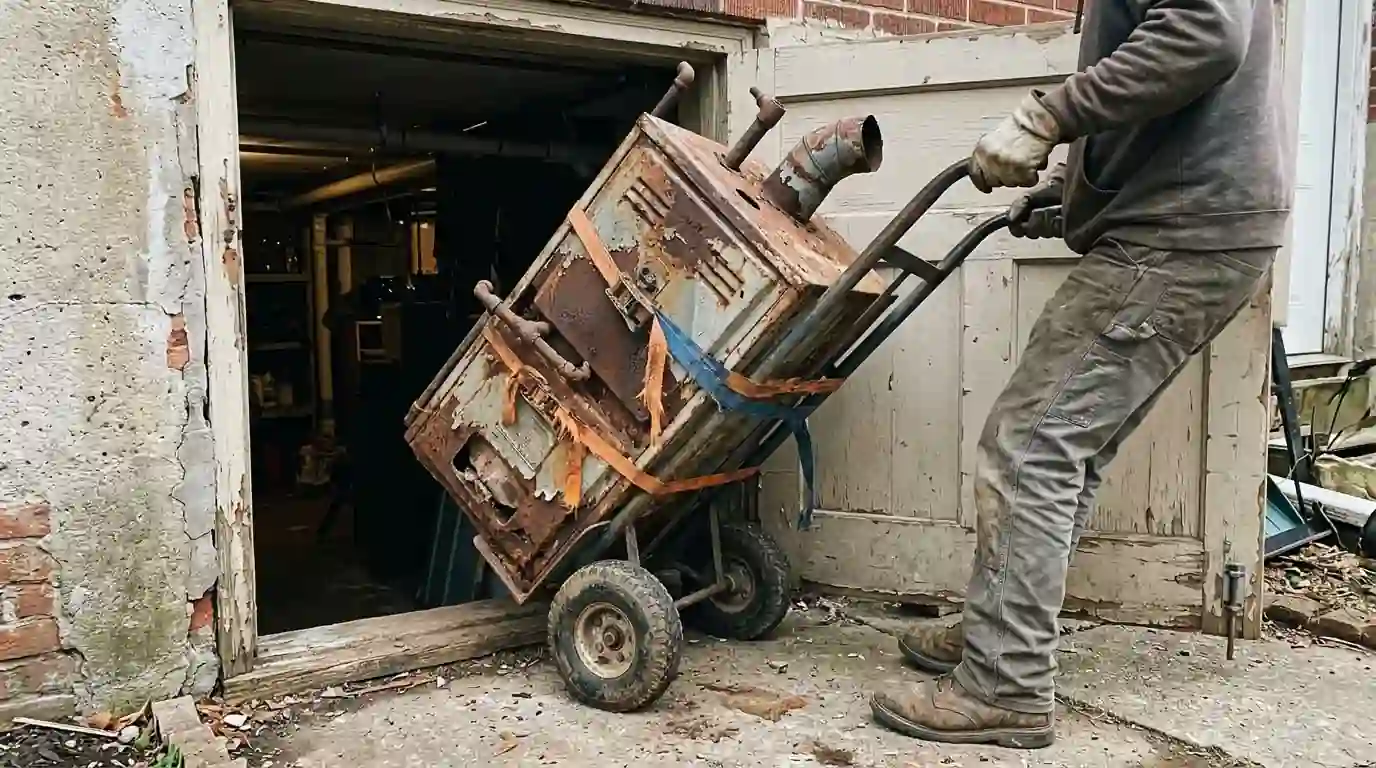
The City of Philadelphia runs a mechanical permit application as one of its building and repair permits, and we check what a furnace replacement needs before work starts. The bigger local issue is the house itself: older basements with low ceilings, stone foundation walls and chimneys sized for coal or oil. That is why the venting plan comes before the furnace order, and why we measure the path out of the basement for the old unit too.
- Carrier
- Trane
- Lennox
- Rheem
- Goodman
- York
- Bryant
- American Standard
- Mitsubishi Electric
- Daikin
- Fujitsu
- Weil-McLain
- Burnham
We install gas furnaces from Carrier, Trane, Lennox, Goodman, Rheem, York and Bryant, sized to the house.
A cracked heat exchanger, repairs piling up, rising gas bills, or rooms that were never comfortable. Condition matters more than age.
Not necessarily. Many older furnaces are oversized. A heat loss calculation often lands on a smaller unit with steadier cycles.
Often, when there is a practical route for PVC vents and a drain. If not, a standard furnace on a lined chimney can make more sense. We price both.
Yes. The AC coil sits on the furnace and should match the outdoor unit, so doing both together is often sensible.
Most straightforward replacements take a day. New venting or duct changes can add time, and we tell you up front.