Ducts & Indoor Air · open 24/7
Whole-house humidifier installation in Philadelphia, PA
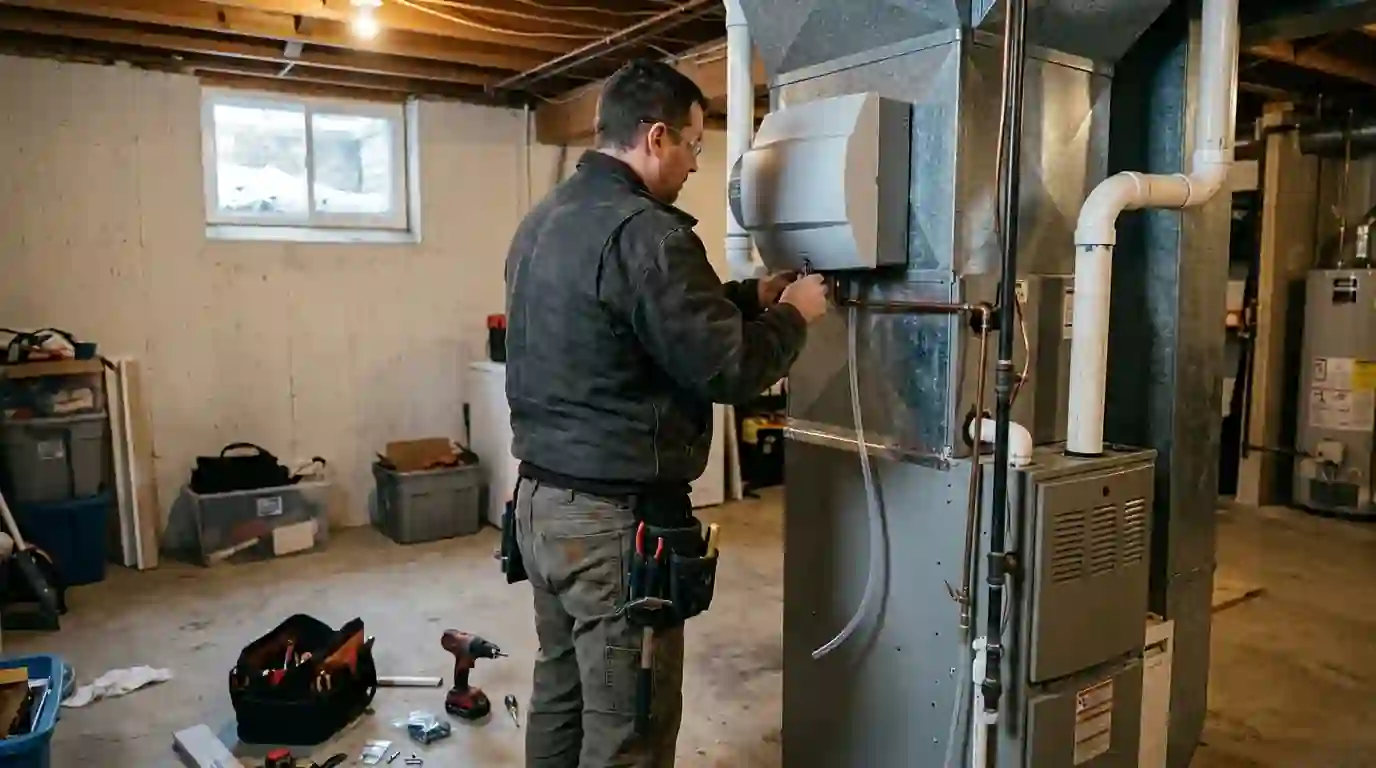
Dry air every winter, no matter what? We mount a humidifier on the furnace or air handler, plumb its water and drain, and fit a control that lowers the target as it gets colder.
- Phones answered 24/7
- Bypass, fan-powered and steam
Updated October 2026
- Common jobs
- New humidifiers, failed unit replacements, outdoor-reset controls
- Works with
- Gas furnaces, air handlers and ducted heat pumps
- Covers
- Philadelphia and South Jersey
Short answer
Whole-house humidifier installation in Philadelphia, PA adds moisture back into forced-air heat, which dries a house out all winter. We mount a bypass, fan-powered or steam unit on the ductwork, connect water and a drain, and wire an outdoor-reset control that lowers the target humidity in cold snaps so windows don't sweat.
Why forced-air heat dries out a house
Cold winter air holds very little water. Heat it to room temperature and its relative humidity drops low, often to the point of static shocks, dry sinuses, cracked wood floors and loose furniture joints. Older, leakier houses trade more air with the outdoors, so they dry out faster.
A humidifier puts moisture back, but too much is worse than too little. On a cold night, humid indoor air condenses on single-pane windows and inside cold exterior walls. That is why the control matters as much as the humidifier itself.
What sets the price of a humidifier install
You see the price before we start. What moves it:
- Humidifier type: bypass, fan-powered or steam
- Water supply and drain routing to the unit
- Room on the plenum and return for a bypass duct
- Electrical work for steam units and outdoor-reset controls
Humidifier work we do
Dry winter air
A house with forced-air heat and no humidifier can sit far below comfortable humidity from December through February. Most homes feel right around 30 to 40 percent in winter, and lower on the coldest nights to keep windows dry. We look at the house first: a very leaky house loses moisture as fast as a humidifier adds it, so sealing drafts or adding attic insulation sometimes helps as much as the unit. Then we size the humidifier to the house and wire it to an outdoor sensor so it backs off as temperatures fall.
Bypass and steam humidifiers
A bypass humidifier sits on the furnace plenum and uses the blower to push warm air through a wet water panel, with a small duct carrying that air back to the return. It is simple, but it only adds moisture while the furnace heats, and it sends some water down the drain. A steam humidifier boils water in a canister and injects steam into the duct, so it works with heat pumps and cooler supply air too. We choose by system, house size and upkeep, then pipe, drain and wire it properly.
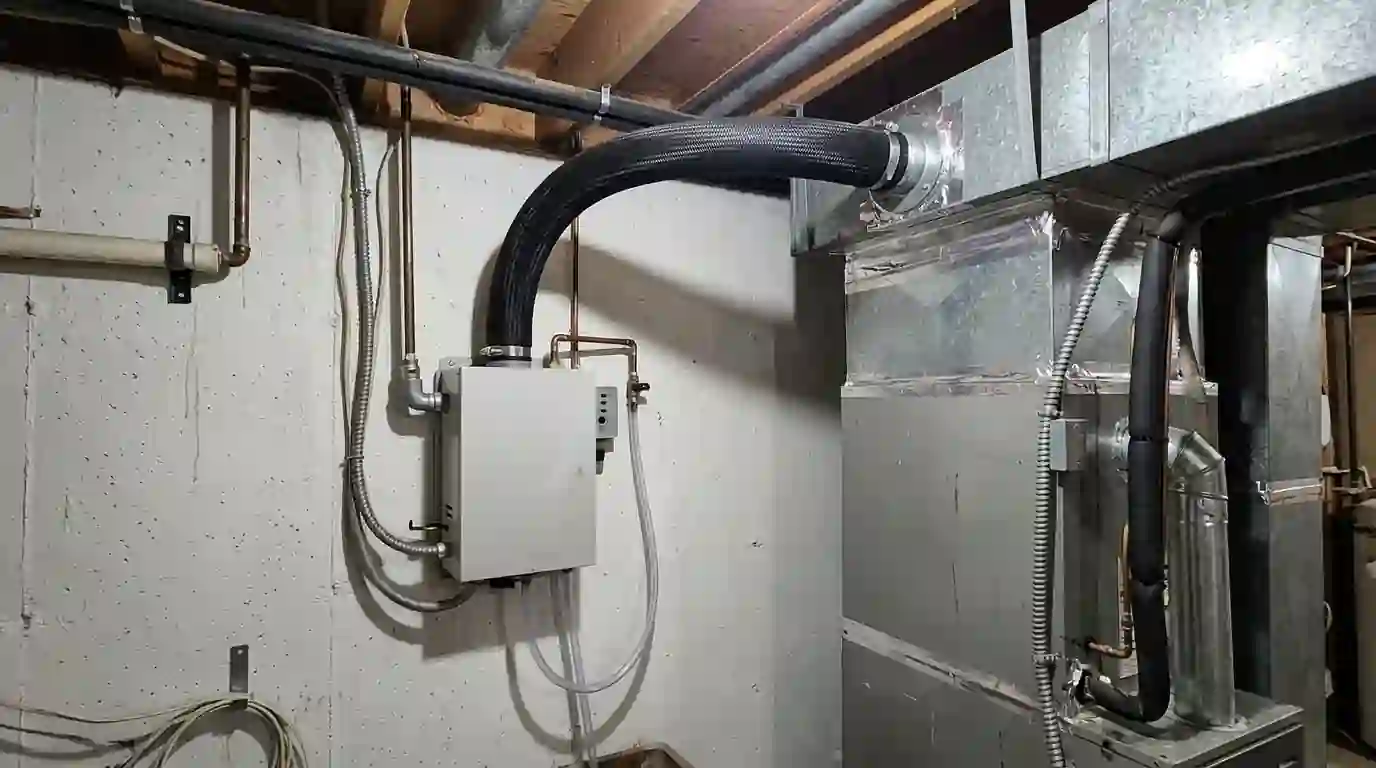
Bypass, fan-powered or steam humidifier?
Each type adds moisture differently; the right one depends on the system.
| Option | Fits when | Trade-off |
|---|---|---|
| Bypass humidifier | A gas furnace with room for a bypass duct between supply and return | Simple and low upkeep; sends some water to the drain and only works while heating |
| Fan-powered humidifier | No room for a bypass duct, or more output is needed | More output than bypass; needs power and runs a little louder |
| Steam humidifier | Heat pumps, larger homes or tight humidity control | Most output and control; higher cost, more electricity and regular canister care |
How we install a whole-house humidifier
Check the house
Indoor humidity, air leaks, windows and the furnace or air handler setup.
Choose type and size
Bypass, fan-powered or steam, sized to the house and how leaky it is.
Mount and plumb
Unit on the plenum, a water line with a shutoff, and a drain to a floor drain or pump.
Wire the control
A humidistat with an outdoor sensor so the target drops in cold weather.
Run and check
Humidifier run with the heat on, and the water and drain lines checked for leaks.
Dry winter air in older Philadelphia homes
Philadelphia winters bring weeks of cold, dry outdoor air, and older homes with original windows and plaster walls let a lot of it in. That matters in two ways. The house dries out quickly, so old hardwood floors and trim take a beating, and single-pane windows fog and frost if humidity runs too high. In houses converted from radiators to forced air, the dry-air complaint often starts the first winter after the change, because blowing heated air dries rooms faster than radiators did.
Warning signs
Signs the house is too dry in winter
Static shocks and dry skin
Shocks off door handles and itchy skin all heating season point to very low humidity.
Gaps opening in wood floors
Floorboards shrink and separate over the winter, then close back up in summer.
Loose chairs and cracked trim
Glue joints let go and painted trim or plaster cracks as the wood dries out.
Feeling cold at a normal setting
Dry air feels cooler on the skin, so people keep turning the heat up.
- Carrier
- Trane
- Lennox
- Rheem
- Goodman
- York
- Bryant
- American Standard
- Mitsubishi Electric
- Daikin
- Fujitsu
- Weil-McLain
- Burnham
We install and service whole-house humidifiers from Carrier, Lennox, Trane, Bryant and American Standard on most furnaces and air handlers.
Around 30 to 40 percent on mild days and lower when it is very cold. If windows fog or frost on the inside, the setting is too high.
It can if it is set too high or neglected. An outdoor-reset control, a clean water panel and a clear drain keep moisture in a safe range.
Usually once a heating season, more often with hard water. Steam canisters need cleaning or replacing on a schedule set by your water quality.
Yes, but a bypass unit works poorly with the cooler air a heat pump delivers. Steam or fan-powered models are the usual choice there.
No. A whole-house humidifier needs ductwork to carry the moisture through the house. Homes heated by radiators usually rely on room humidifiers instead.
Related work