Cooling · open 24/7
Air conditioning tune-ups in Philadelphia, PA
Want the AC ready before the first hot week? We clean the outdoor coil, check the charge, clear the drain and test the parts that fail most often in summer heat.
- Phones answered 24/7
- Central air and attic air handlers
Updated October 2026
- What we do
- Coil cleaning, charge check, drain flush and electrical tests
- When
- Spring, before the system runs every day
- Covers
- Split central air and heat pumps in cooling mode
Short answer
An AC tune-up in Philadelphia, PA is a spring cleaning and test of your central air before summer. We clean the condenser coil, check the refrigerant charge against the maker's numbers, flush the condensate drain, and test the capacitor and contactor, the parts most likely to quit on the first hot afternoon.
The checks that keep an AC running through a heat wave
An air conditioner can run for years while slowly losing ground: a coil packed with dust, a capacitor drifting out of spec, a drain growing algae. None of that stops the system in May. It shows up during a long stretch of hot days, when the condenser runs for hours and the weak part finally gives.
A tune-up looks for those weak parts while the weather is mild and a fix is easy to schedule. It also tells you how the system is holding up, so a replacement never has to be planned in a hurry.
Everything an AC tune-up includes
Each spring visit works through this checklist:
- Outdoor coil wash, fin straightening and debris cleared from the cabinet
- Refrigerant pressures, superheat or subcooling compared with the maker's numbers
- Capacitor tested in microfarads and contactor points inspected
- Condenser fan motor and indoor blower motor amp draw measured
- Indoor coil and blower inspected where they can be reached
- Condensate drain flushed and float switch tested
- Temperature drop across the indoor coil measured, filter checked or replaced
What the tune-up covers
Condenser coil cleaning
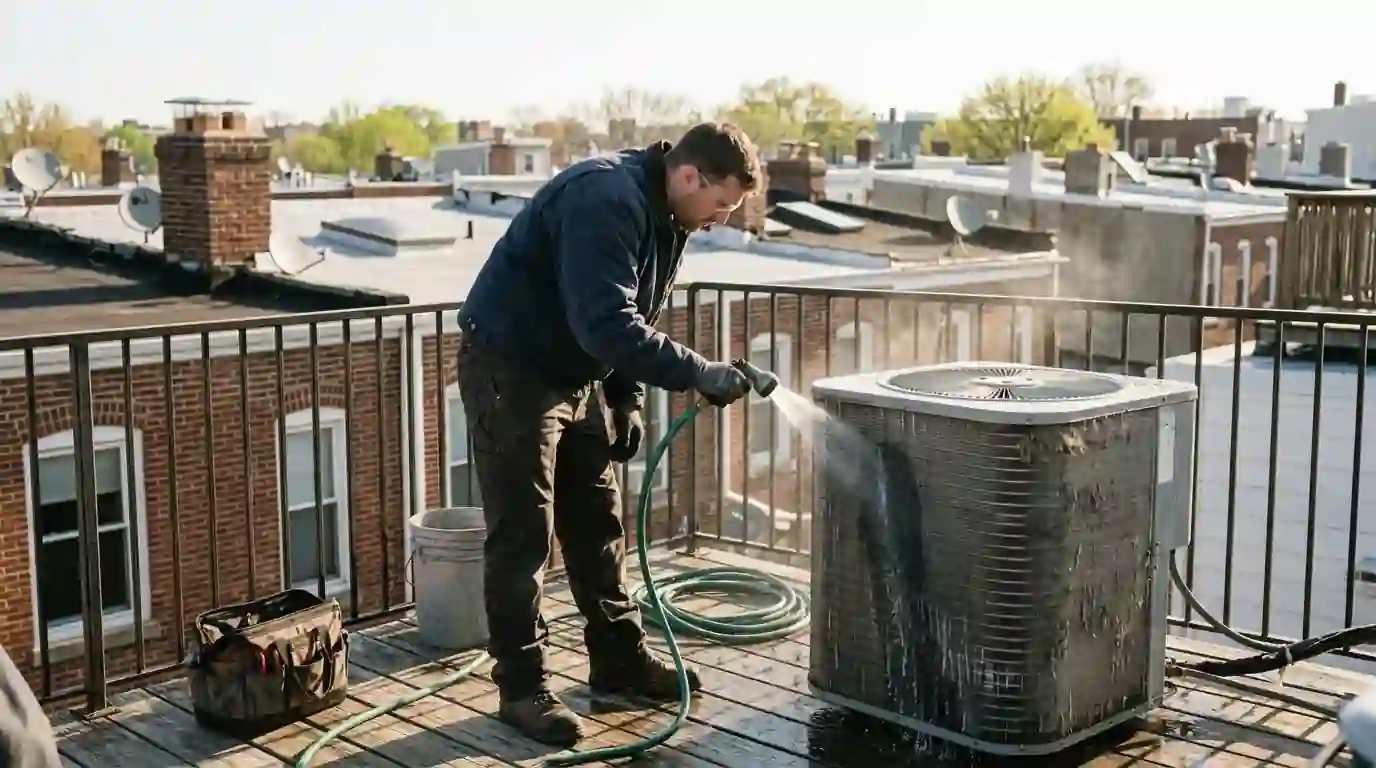
The outdoor coil sheds the heat your house collects. Dust, leaves, grass clippings and pollen mat onto its fins, and a blocked coil makes the compressor run hotter and draw more power. We shut the power off, clear debris from the top and sides, and wash the coil from the inside out so the dirt leaves the way it came in. On rooftop condensers we also check for roofing grit and tar on the fins. Bent fins get straightened with a fin comb, and we look over the fan blade and motor while the top is off.
Refrigerant charge check
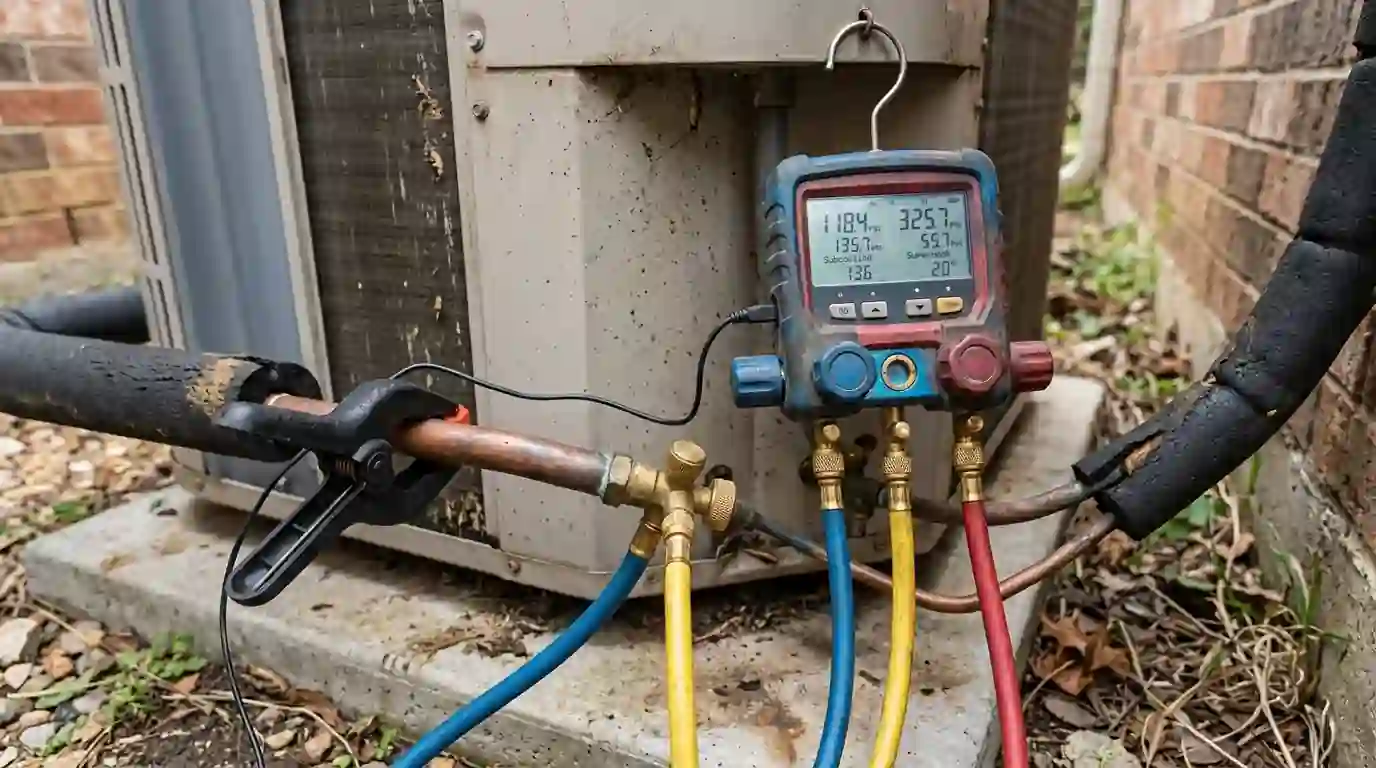
A correct charge is set by measurement, not by topping off. We read pressures and line temperatures, calculate superheat or subcooling depending on the metering device, and compare the numbers to the maker's chart. A low charge means a leak somewhere, since refrigerant does not get used up, and we tell you that plainly rather than adding some every spring. An overcharge, often left from a past top-off, is just as hard on the compressor. If the readings point to a leak, our leak repair page explains how we track it down.
Drain line flush
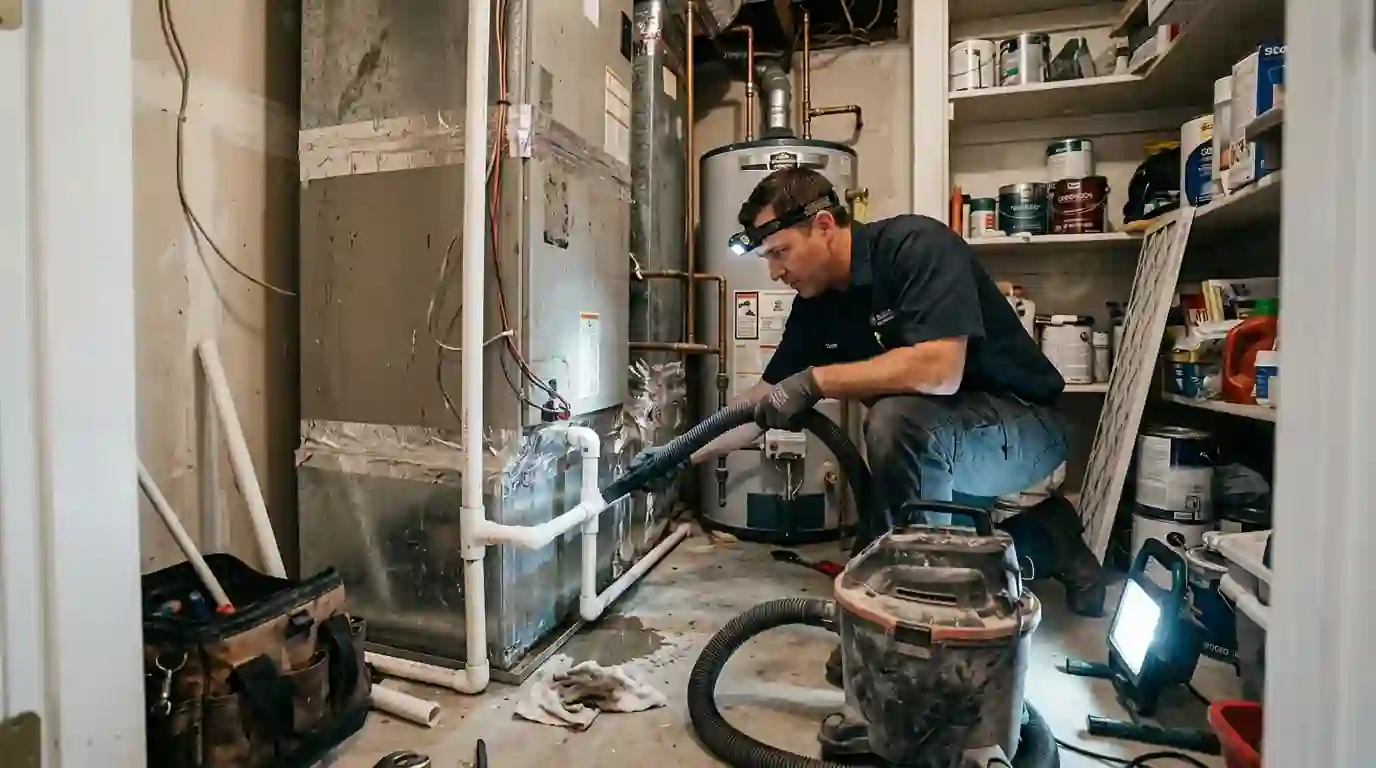
Every central AC pulls water out of the air, and that water leaves through a drain line from the indoor coil. Algae and dust build up in the line over a season, and a clog either trips the float switch, which shuts the AC off, or overflows the pan. In attics and upstairs closets, that water comes through a ceiling. We clear the line with a wet vacuum or a flush, clean the trap and pan, test the float switch, and check any condensate pump. If the coil itself is iced or corroded, see AC repair.
Getting ahead of Philadelphia's July heat
Philadelphia's Health Department declared a Heat Health Emergency from Monday July 15 to Wednesday July 17, 2024, and weeks like that are when a system skipped in spring tends to give out. On a rowhome the condenser often sits on a flat roof in full sun, the hardest spot an outdoor unit can have, and the top floor depends on it most. A tune-up in April or May finds the dirty coil or the weak capacitor while booking a visit is still easy.
How a spring AC visit runs
Hear how it ran last summer
Rooms that stayed warm, noises, ice on the lines or water where it should not be.
Power down and clean
Disconnect pulled, coil washed, debris cleared and the fan checked with the top open.
Test the electrical parts
Capacitor, contactor and motor amp draw measured against their ratings.
Run it and measure
Pressures, superheat or subcooling, and the temperature drop across the indoor coil.
Clear the drain and report
Flush the line, test the float switch, and tell you what needs attention.
What affects the price of an AC tune-up
You see the price before we start. What moves it:
- Roof condensers that need ladder or hatch access
- How dirty the outdoor and indoor coils are
- Attic air handlers and drains that are hard to reach
- Small parts replaced on the spot, like a capacitor, with your approval
AC care between tune-ups
Simple jobs help a lot. Electrical parts and refrigerant stay with the tech.
| Safe for you to check | Leave for the tech |
|---|---|
| Change or wash the filter every month or two in summer | Opening the electrical panel on the condenser |
| Keep plants and stored items a couple of feet from the condenser | Testing or replacing capacitors and contactors |
| Rinse loose dirt off the coil with the power off and a gentle spray | Adding or removing refrigerant |
| Check that the drain line drips outside or into its pump while the AC runs | Repairing a condensate pump or float switch |
- Carrier
- Trane
- Lennox
- Rheem
- Goodman
- York
- Bryant
- American Standard
- Mitsubishi Electric
- Daikin
- Fujitsu
- Weil-McLain
- Burnham
We tune up central air from Trane, Carrier, Lennox, York, Goodman and Bryant, on rooftop and yard condensers alike.
Spring, once it is warm enough outside to read the charge accurately and before the first hot week. That leaves time for any repair the visit turns up.
No. A sealed system keeps its charge. If it is low there is a leak, and adding refrigerant without finding it only postpones the problem.
A gentle rinse with the power off is fine. Pressure washers flatten fins, and chemical cleaners or anything inside the cabinet should stay with a tech.
They take more sun, wind-blown grit and roofing debris, so the coil usually needs more cleaning. We also check the stand, the pad and the line set insulation.
Yes, especially then. It shows whether the system has another summer in it, so a replacement can be planned instead of rushed in July.