Cooling · open 24/7
AC refrigerant leak detection and repair in Philadelphia, PA
AC keeps needing a refrigerant top-off? Refrigerant does not wear out. If the charge is low, something is leaking, and we find it before adding any more.
- Phones answered 24/7
- Coils, line sets and service valves
Updated October 2026
- Common leak spots
- Indoor coil, flare and braze joints, service valve cores
- Methods
- Electronic detector, bubble solution, nitrogen pressure test, dye
- Answers
- Any hour, any day of the week
Short answer
Refrigerant leak repair in Philadelphia, PA means finding where the charge is escaping before refilling the system. We use an electronic detector, bubble solution and a nitrogen pressure test to locate the leak, then repair the joint or valve or replace the leaking coil, and recharge by weight to the maker's spec.
Warning signs
Signs your AC is losing refrigerant
Ice on the large copper line
Low charge drops the coil temperature until moisture freezes on the suction line and the coil.
Air blowing but not cold
The system runs long cycles while the supply air stays barely cooler than the room.
Oily spots on coils or fittings
Refrigerant carries compressor oil, so a leak often leaves a greasy, dust-caked stain at the spot.
Higher bills, same comfort
A short charge makes the compressor run longer to move the same heat out of the house.
Why topping off is not a repair
An air conditioner is a sealed loop. It does not consume refrigerant the way a car burns gas, so a low charge always means a leak. Adding refrigerant without finding it gets the AC through a few weeks or a season, then the charge is low again, and the compressor ran short the whole time.
Finding the leak takes longer than filling the system, and it is the part that matters. Some leaks are obvious. Others are pinholes in an indoor coil that only show under a pressure test. We tell you which kind we found before anything gets charged.
Finding and fixing the leak
Leak search methods
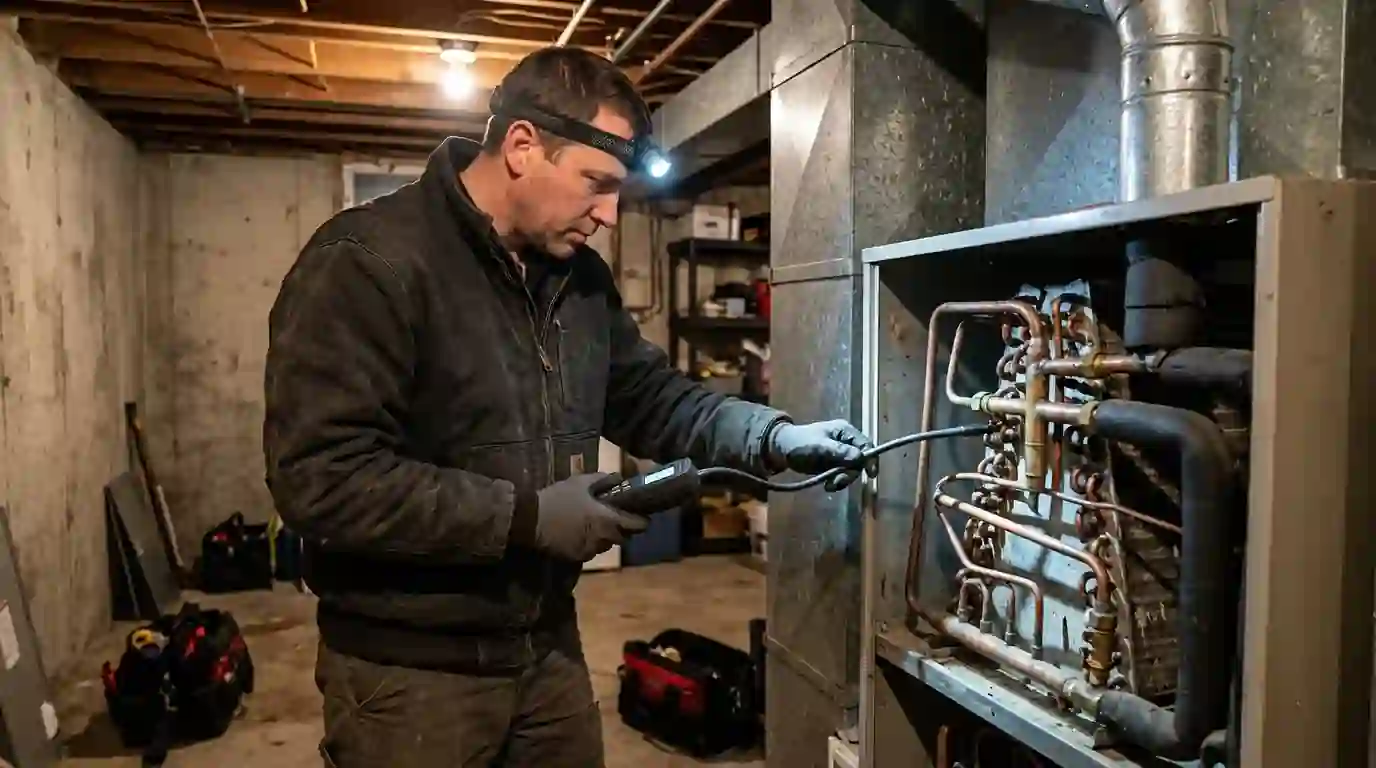
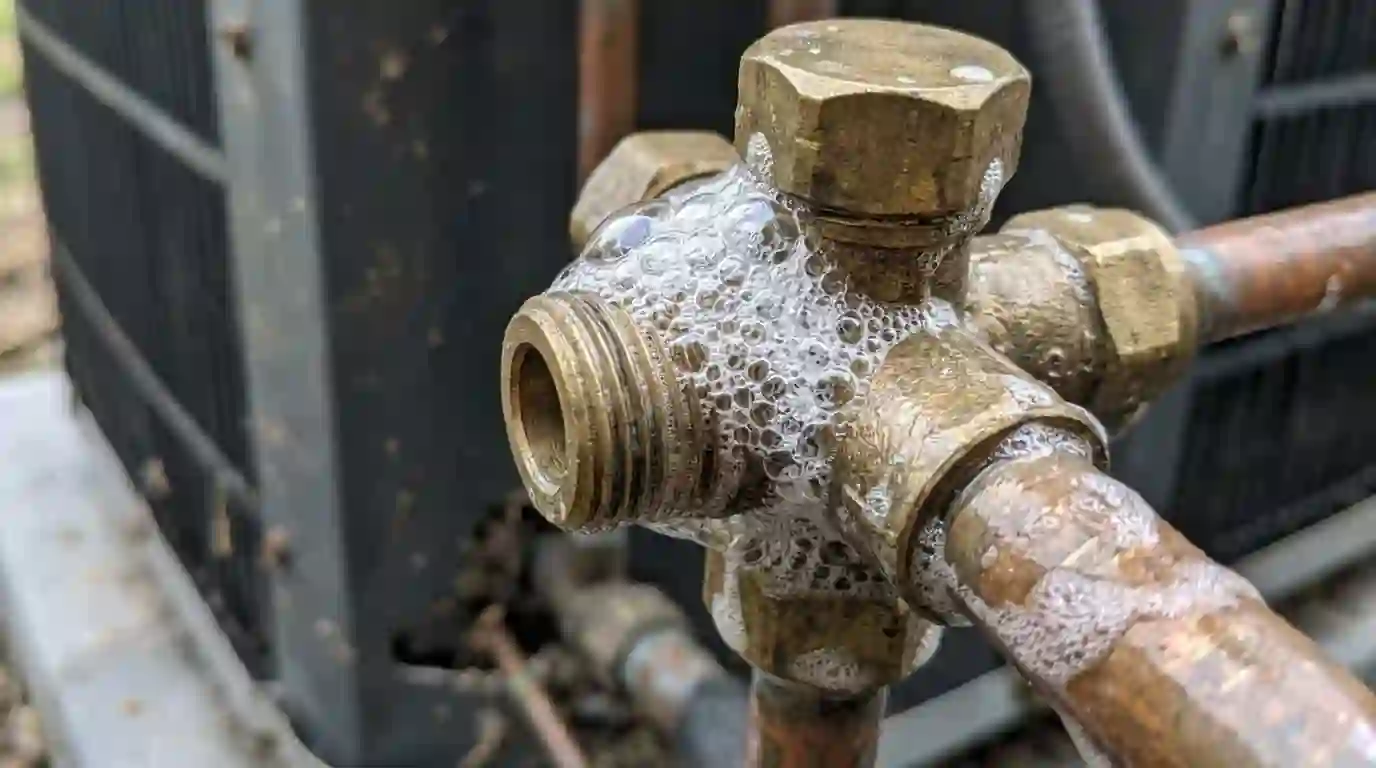
We start with the likely spots: service valve cores and caps, flare and braze joints, the indoor coil, and anywhere copper rubs against a bracket or another line. An electronic detector sniffs along the lines and inside the coil cabinet. Bubble solution confirms a suspect joint. When the system is too low to find the leak while running, we recover what is left, pressurize the system with dry nitrogen, watch whether the gauge holds, and soap every joint. UV dye helps with slow leaks that only show up over weeks.
Repair or coil replacement
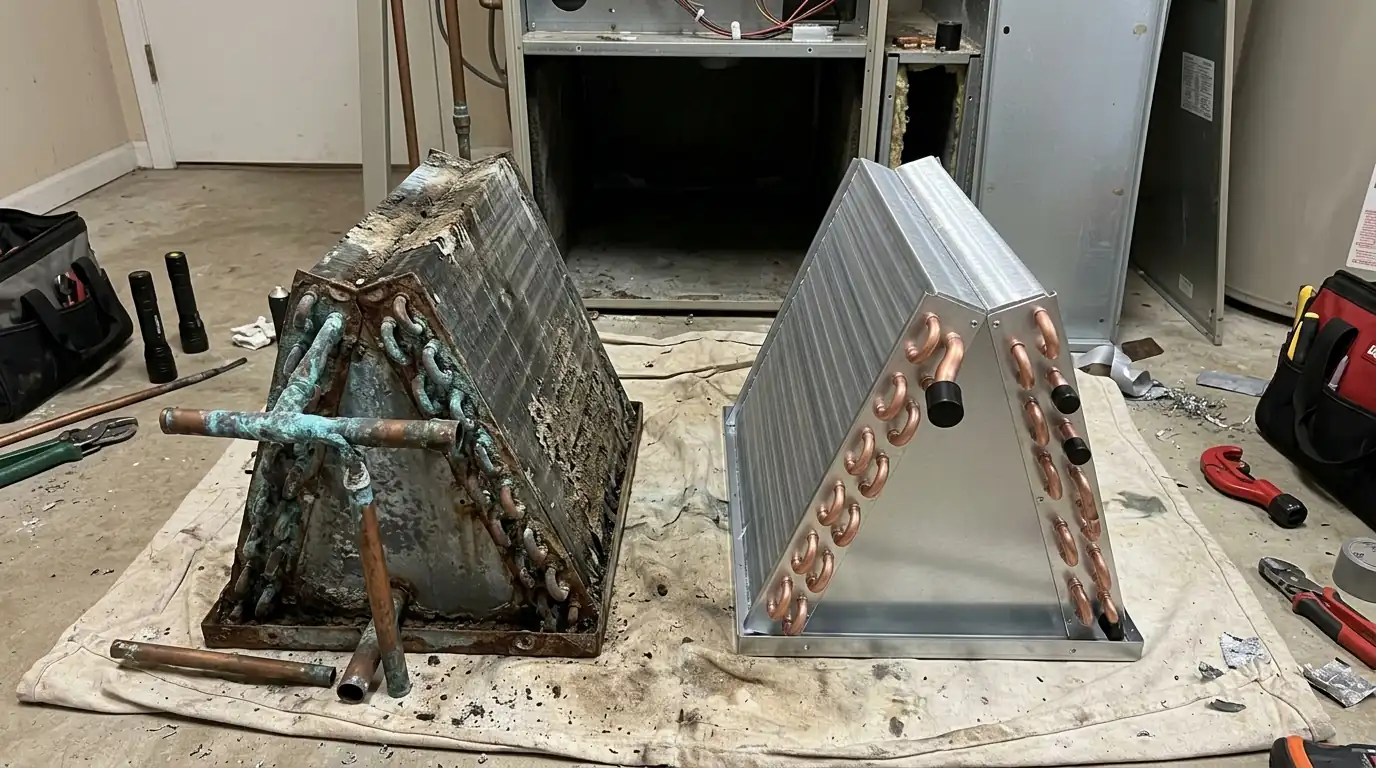
Where the leak sits decides the fix. A leaking valve core, a loose flare nut or a cracked braze joint is a repair: we recover the charge if needed, fix it, pressure test, pull a deep vacuum and recharge. A leak in the indoor coil is different. Pinholes from formicary corrosion spread across the tubing, and patching one usually leaves the next one waiting. Then a coil replacement is the real fix, and on an older system it starts the talk about replacement. See evaporator coil replacement.
Older R-22 systems
R-22 is no longer produced, so every recharge draws on a shrinking stock of recovered and stored refrigerant. That changes the math on a leak. A small, reachable leak on an otherwise sound system can still be worth fixing for a few more summers. A leaking coil on an older R-22 unit usually is not, because the coil, the labor and the refrigerant together add up to a large share of a new system on current refrigerant. We find the leak first, then lay out both paths. More on replacing central air.
What the 2025 refrigerant change means for a leak
Since an EPA refrigerant mandate took effect in 2025, new air conditioners come with different rules homeowners should know about. For a Philadelphia homeowner with a leaking system, that matters most when weighing repair against replacement. An existing system keeps running on the refrigerant it was built for, and we repair it with that refrigerant. If the leak is bad enough that replacement makes more sense, the new system's refrigerant becomes part of the decision, and we explain how it differs before anything is ordered.
From low charge to a sealed system
Confirm the charge is low
Pressures, superheat and subcooling read against the maker's numbers before we call it a leak.
Find the leak
Electronic detector, bubble solution and, where needed, a standing nitrogen pressure test.
Show you the options
Repair, coil replacement or system replacement, with the price of each before work starts.
Repair and test
Fix the leak, then pressure test with nitrogen and pull a deep vacuum.
Recharge and verify
Charge by weight to the nameplate, then confirm temperatures and pressures on a full cycle.
Fix the leak, replace the coil or replace the system
Where the leak is and how old the system is decide which option makes sense.
| Option | Fits when | Trade-off |
|---|---|---|
| Repair the joint or valve | Leak at a service valve, flare nut or reachable braze joint | Least work, the rest of the system keeps its age |
| Replace the indoor coil | Pinhole or corrosion leaks in the evaporator coil | Fixes the source, a bigger job that needs a matched coil |
| Replace the system | R-22 equipment with a leaking coil and an aging compressor | Highest cost, current refrigerant and new parts throughout |
What sets the cost of a leak repair
You see the price before we start. What moves it:
- How long the search takes, and whether a nitrogen test is needed
- Where the leak is: an outdoor valve or a coil inside a closet
- Which refrigerant the system uses and how much it holds
- Repairing a joint versus replacing the coil
We can, if you understand the leak will keep going. We still look for it first, because a fast leak can drain a fresh charge in days.
Home AC refrigerants are low in toxicity, but in a closed space a large leak displaces air. If a big leak happens indoors, ventilate the room and call.
Leaks at valves or joints often turn up quickly. Pinholes in a coil can take a nitrogen test and more time, and a few need dye and a second visit.
Copper coils can develop pinholes from a type of corrosion that spreads through the tubing. Once one appears, more usually follow, which is why coil replacement often makes sense.
We do not recommend it. Sealants can clog metering devices and recovery equipment, and they hide the leak instead of fixing it.