Water Heaters & Home Repairs · open 24/7
Dryer vent cleaning for Philadelphia, PA homes
Towels still damp after a full cycle? We clear lint from the dryer to the outside hood, check the airflow, and replace duct that should not be there.
- Phones answered 24/7
- Wall, roof and long runs
Updated October 2026
- What we clear
- Lint, nests and crushed or kinked duct
- Includes
- Full run cleaning, hood check, airflow test
- Covers
- Philadelphia and South Jersey
Short answer
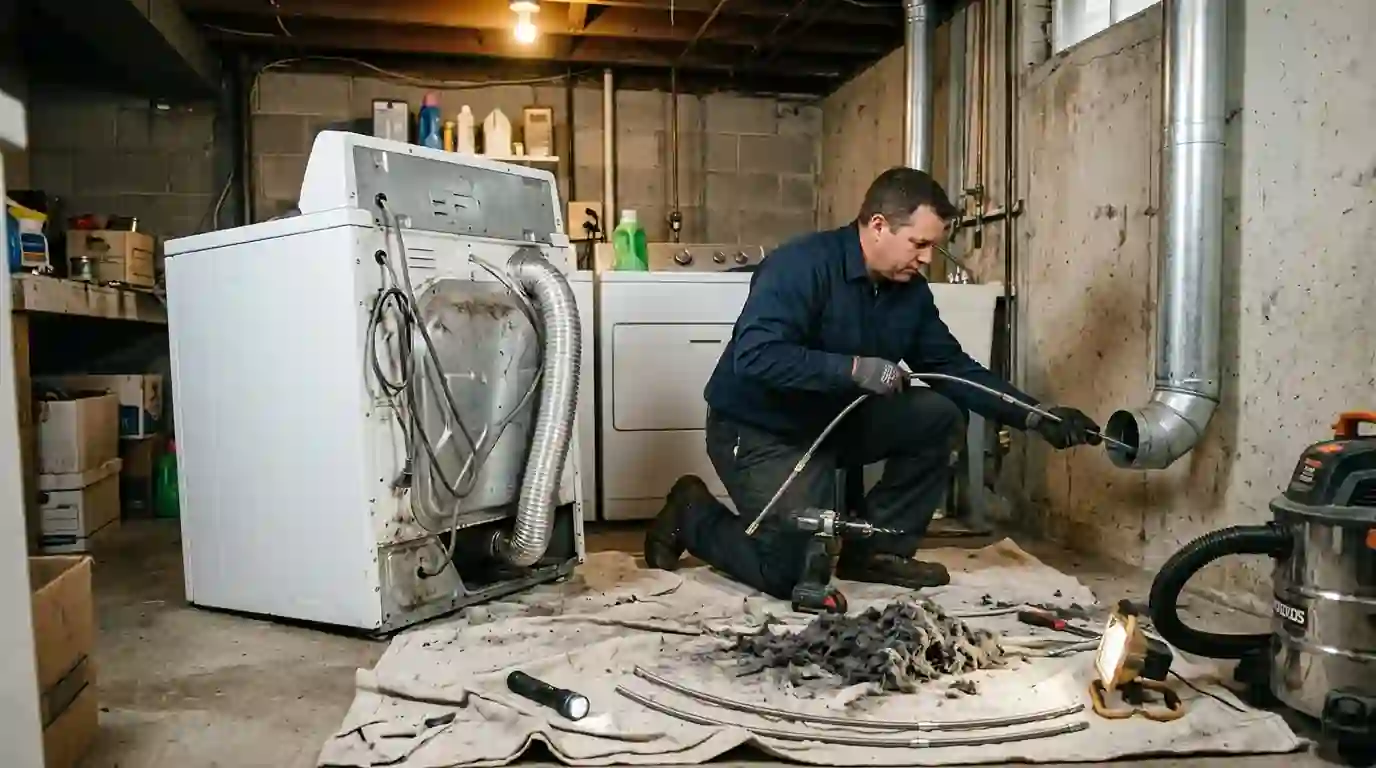
Dryer vent cleaning in Philadelphia, PA means clearing the whole run, not just the lint screen and the first few feet. We brush the duct from the dryer to the exterior hood, pull out nests and lint packed at the damper, replace foil or vinyl duct, and measure airflow at the outlet before calling it done.
Why a clogged dryer vent is more than a slow dryer
Lint is light and catches fire easily. When it builds up in the duct, airflow drops, the dryer runs hotter and longer, and the high-limit switch starts cycling the heat. Clothes come out damp, and the lint keeps piling up where nobody can see it.
A gas dryer adds another reason. Its exhaust carries combustion gases, and a blocked vent pushes them back into the house. We clean the full run and check that air leaves the hood with real force.
The vent problems we fix
Long runs and roof exits
Many row houses vent the dryer up through the roof or across a basement ceiling to the back wall, and long runs clog faster. Code limits a standard four-inch run to 35 feet, minus a set allowance for every elbow, unless the dryer maker permits more. Roof exits add a cap that collects lint and a vertical climb that dryer air struggles to push. We clean from both ends, check the run's length and fittings, and suggest a booster fan only when the run cannot be shortened or straightened. Our guide on why rowhome dryer vents clog covers the warning signs.

Bird and pest nests
A vent hood with a missing or stuck flap is an open door. Birds build nests in it in spring, and mice and wasps move in too. The first sign is often a dryer that suddenly takes twice as long, or chirping and scratching inside the wall. We pull the nest material out of the hood and the duct behind it, clean the run, and fit a hood with a working damper. We do not put screens on dryer hoods, because lint clogs a screen quickly and code does not allow one there.
Replacing foil duct
Flexible foil and white vinyl duct are common behind older dryers, and neither belongs in a concealed run. Vinyl is not allowed for dryer exhaust, and foil crushes against the wall, sags and traps lint in every ridge. We replace hidden sections with smooth rigid metal, use a short listed transition connector behind the dryer, seal joints with foil tape rather than screws that snag lint, and support the run so it cannot sag. The same rule about ending outside applies to a bathroom exhaust fan duct.
Dryer vents in Philadelphia row houses
In a Philadelphia row house the dryer usually sits in the basement or a second-floor closet, and neither spot has an easy way out. Shared walls rule out the sides, so the vent runs to the front, the back, or up through a flat roof. Those runs tend to be long, with several elbows, and older ones were often finished in foil duct hidden above a ceiling. A roof cap also sits where hardly anyone looks, so lint and nests build up there unnoticed.
What a dryer vent visit includes, step by step
Measure airflow first
We check air at the outside hood with the dryer running, to set a baseline.
Disconnect and inspect
Pull the dryer out and look at the transition duct and the wall connection.
Clean the full run
Rotary brush and vacuum from the dryer end and from the hood end.
Repair what is wrong
Replace crushed or foil duct, loosen or replace a stuck damper, seal and support joints.
Reconnect and retest
Reconnect the dryer, run it, and confirm airflow improved at the hood.
What sets the price of a dryer vent cleaning
You see the price before we start. What moves it:
- How long the run is, and how many elbows it has
- Wall exit or roof exit, and how we reach the roof
- Nests or packed lint at the hood
- Duct sections or a hood that need replacing
Warning signs
Signs the dryer vent needs cleaning now
Clothes need two cycles
Weak airflow means the dryer cannot carry moisture out, so loads come out damp.
Dryer or laundry room runs hot
The cabinet is hot to the touch, or the room warms up noticeably during a load.
Hood flap barely moves
Outside, the damper should open firmly with the dryer running. A limp flap points to a blockage.
Burning smell during a load
Turn the dryer off. Lint near the heat source can scorch, so have the vent checked before the next load.
Lint checks you can do yourself
These are safe and quick. Leave the hidden duct and the roof to us.
| Safe for you to check | Leave for the tech |
|---|---|
| Clean the lint screen every load and wash it if it looks coated | Brushing concealed duct inside walls and ceilings |
| Watch the outside hood flap while the dryer runs | Clearing a roof cap or a hood above the first floor |
| Straighten a kinked transition hose behind the dryer | Replacing hidden foil or vinyl duct with rigid metal |
| Vacuum lint out of the lint screen slot | Gas dryer connections and anything inside the cabinet |
Once a year suits most homes. Large households, long runs and roof exits clog faster and may need it sooner. Slow drying is the sign to watch.
No. Dryer exhaust has to end outside. Venting indoors dumps lint and moisture into the house, and with a gas dryer, combustion gases too.
No. It catches most lint, not all. The rest settles in the duct, especially at elbows and the hood, and only a full cleaning removes it.
Yes. We clean from the roof cap and from the dryer end, and check the cap for nests and a stuck damper while we are up there.
It crushes easily, sags and has ridges that trap lint. Concealed runs should be smooth rigid metal, with only a short listed connector behind the dryer.
Related work