Commercial · open 24/7
Commercial heating and cooling maintenance in Philadelphia, PA
Units running all season with nobody checking them? We service rooftop units, splits and makeup air units on a schedule that fits the building: filters, belts, coils, drains and safeties.
- Phones answered 24/7
- Rooftop units, splits, makeup air
Updated October 2026
- Each visit
- Filters, belts, coils, drains, electrical connections and safety controls
- Schedule
- Set around your building's load, kitchens more often
- Answers
- 24 hours, 7 days a week
Short answer
Commercial HVAC maintenance in Philadelphia, PA is scheduled service on rooftop units, splits and makeup air units: filters, belts, coils, drains, electrical connections and safety controls. Kitchens and busy retail spaces load filters and coils faster than offices, so they need visits more often. Every visit ends with each unit tested under load.
Why rooftop equipment needs regular hands on it
Rooftop equipment sits out of sight, so small problems grow until the space gets hot or cold. A slipping belt cuts airflow, a dirty coil raises head pressure, and a plugged drain pan overflows into the ceiling. Each of those is a small fix when caught early and a bigger one after it causes a failure.
Maintenance also gives you a record. We note belt sizes, filter sizes, refrigerant readings and anything close to failing, so repairs can be planned around the business instead of forced on it by a breakdown on a busy day.
What a maintenance visit includes on each unit
This checklist runs on every unit, every visit.
- Filters replaced, with the size and rating noted for the next visit
- Belts checked for tension, wear and alignment, replaced when glazed or cracked
- Condenser coil cleaned; evaporator coil and drain pan inspected
- Condensate drain, trap and pan cleared and flushed
- Electrical connections tightened, contactors and capacitors tested
- Refrigerant pressures and temperatures read and recorded under load
- Ignition, flame signal and heating safeties checked before winter
What each visit covers
Filter and belt service
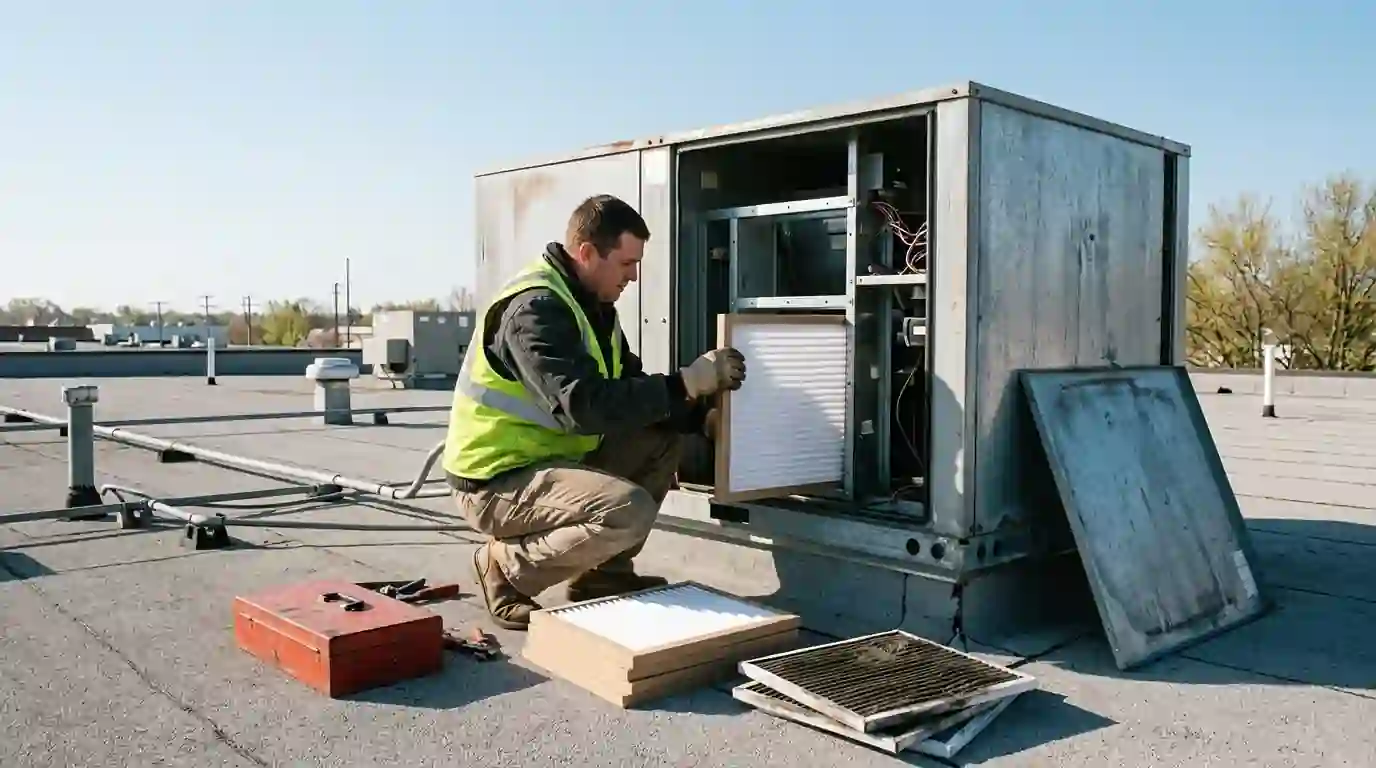
Filters on commercial units load faster than in homes, especially near kitchens, busy entrances and dusty stockrooms. A clogged filter starves the evaporator coil, which can ice over in summer and trip the high limit in winter. We fit filters of the correct size and rating for the rack, then check belt tension, wear and alignment. A glazed or cracked belt gets replaced, and we check the pulleys and blower bearings too, because a worn bearing chews through belts. Belt and filter sizes go on record so the right parts come next time.
Coil cleaning
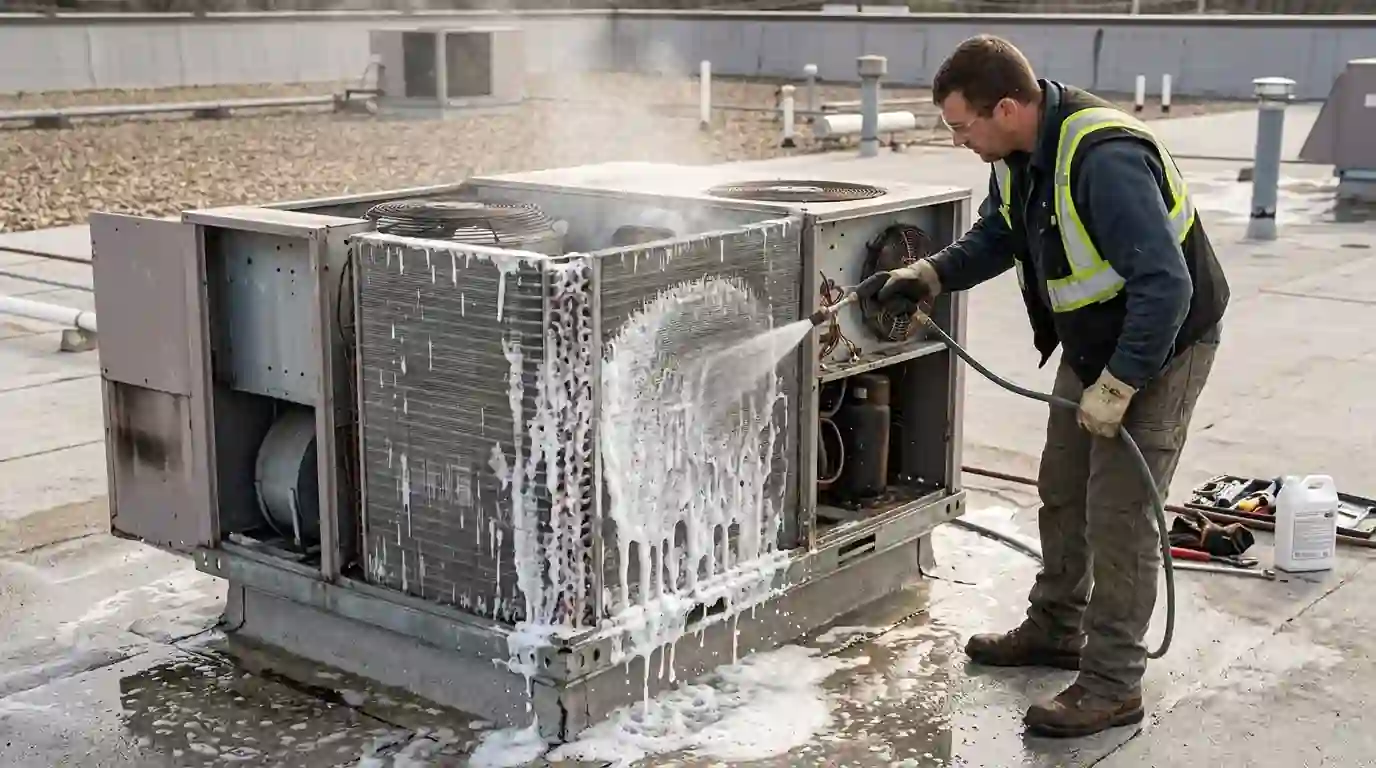
Condenser coils on the roof collect pollen, leaves, roof grit and, near restaurants, grease from kitchen exhaust. A dirty condenser raises head pressure and compressor amperage, and the unit cools less while drawing more power. We clean condenser coils with coil cleaner and a low-pressure rinse, comb out bent fins where we can, and clean the evaporator coil and drain pan when they need it. Readings before and after show whether the cleaning worked. A heavily corroded coil is a repair question, covered under rooftop unit service.
Seasonal startups
Spring and fall are when a building switches modes, and weak parts show up at the switch. A cooling startup covers pressures, superheat, compressor and fan amperage, contactors, capacitors, condensate drains and the economizer. A heating startup covers ignition, flame signal, the heat exchanger, the inducer, gas pressure, and the limit and rollout switches. We test each stage under load, not just that it turns on. Anything close to failing goes on a short list with a price, so you decide what to fix now. For boilers, see commercial boiler service.
Maintaining commercial units through Philadelphia's seasons
Philadelphia summers are humid and the winters are cold, so commercial units here switch hard between cooling and heating every year. Many storefronts and offices sit in older buildings where the rooftop equipment was added later, and reaching the roof can mean a ladder, a hatch, or a walk through a tenant's space. We plan visits around that access and around business hours, so maintenance does not get in the way of the people working below.
How a maintenance round works
Walk the roof first
We list every unit, its filters, belts and access before the first service visit.
Set the schedule
Spring and fall visits, with extra filter changes where kitchens or dust call for them.
Service each unit
Filters, belts, coils, drains, electrical checks and readings, unit by unit, on every visit.
Report what we found
A short list of anything close to failing, each with a price, so you decide what to fix.
What sets the cost of a maintenance visit
You see the price before we start. What moves it:
- How many units, and of what type
- Filter count and size in each unit
- Whether coils need a full cleaning or a light rinse
- Roof access: hatch, ladder or interior stairs
How long maintenance takes and how often to book it
Time on site depends on the number of units, roof access and what each unit needs. Filter and belt visits move quickly. A visit with coil cleaning and a seasonal startup takes longer per unit.
Most buildings do well with a spring cooling visit and a fall heating visit. Restaurants and dusty retail spaces often need filter changes in between, because their filters load much faster.
It depends on the building. Offices often go about three months between changes, while restaurants and dusty spaces may need monthly changes. We watch how fast yours load and set the schedule from that.
Yes, if the unit is still sound. Clean coils, good belts and tight connections keep an older unit running, and the visits show early which parts are close to failing.
Sometimes. Some roofs can be reached by an outside ladder, but many are only reachable through a hatch or interior stairs. We set the time with you first.
Yes. Makeup air units get filters, belts, burner and interlock checks. On split systems we service both the indoor air handler and the outdoor condensing unit.
We tell you what it is, how urgent it is and the price to fix it. Small items like a weak capacitor can often be handled during that visit with your approval.