Heat Pumps & Ductless · open 24/7
Heat pump installation for Philadelphia, PA homes
Thinking about heating and cooling with one system? We size a heat pump for the house, decide what backup heat it needs, and install it to carry both summer and winter.
- Phones answered 24/7
- Cold-climate and dual-fuel systems
Updated October 2026
- What we install
- Ducted heat pumps, cold-climate models and dual-fuel systems
- Starts with
- A room-by-room heat loss calculation
- Backup heat
- Electric strips or an existing gas furnace
Short answer
Heat pump installation in Philadelphia, PA begins with a heat loss calculation, because a heat pump sized only for summer cooling falls short on cold nights. We check the ductwork, the electrical panel and where the outdoor unit can sit, then choose a cold-climate model, a dual-fuel setup or a ductless system to fit the house.
Sizing a heat pump for winter, not just summer
An air conditioner is sized for the hottest days. A heat pump has to handle the coldest ones too, and its output drops as the outdoor temperature falls. We size for the winter load, check how much heat the unit still delivers in the cold, and plan backup heat for nights it cannot cover alone.
The house matters as much as the equipment. Old ducts sized only for cooling may be too small for heat pump airflow, and an older electrical panel may need room for a new circuit. We check both before recommending a system.
What decides the price of a heat pump install
You see the price before we start. What moves it:
- System type: cold-climate, dual-fuel or ductless
- Duct changes needed for heat pump airflow
- Electrical work, including a new circuit or panel space
- Where the outdoor unit goes and the line set run
Three common heat pump setups
Cold-climate heat pumps
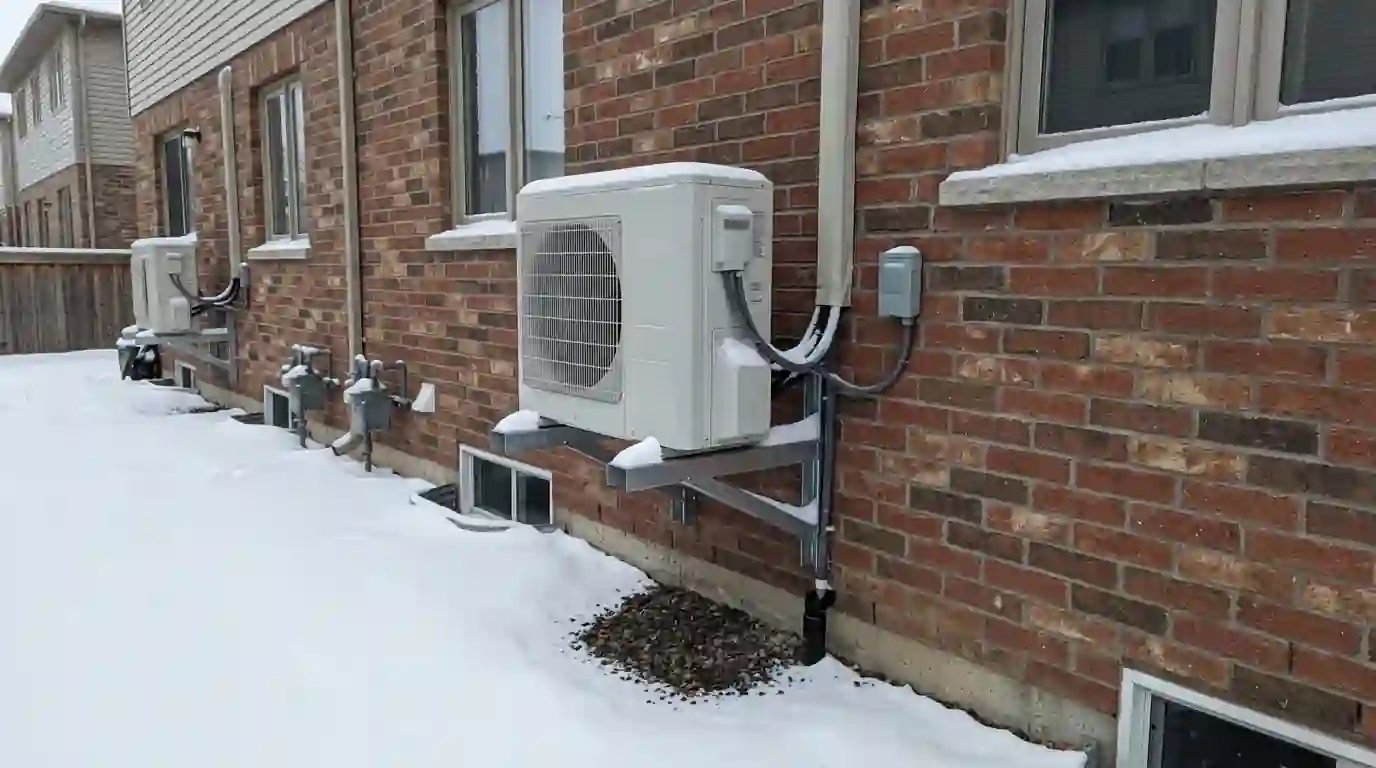
Cold-climate heat pumps use variable-speed compressors that keep delivering useful heat when it is well below freezing outside. They are the pick when you want the heat pump to carry most or all of the winter load without leaning on a furnace. They still need a careful outdoor setup: a stand or wall bracket that keeps the unit above drifting snow, a path for defrost water to drain, and a spot where meltwater will not freeze on a walkway. Before choosing a model, we compare the manufacturer's low-temperature output against your heat loss.
Dual-fuel with a gas furnace
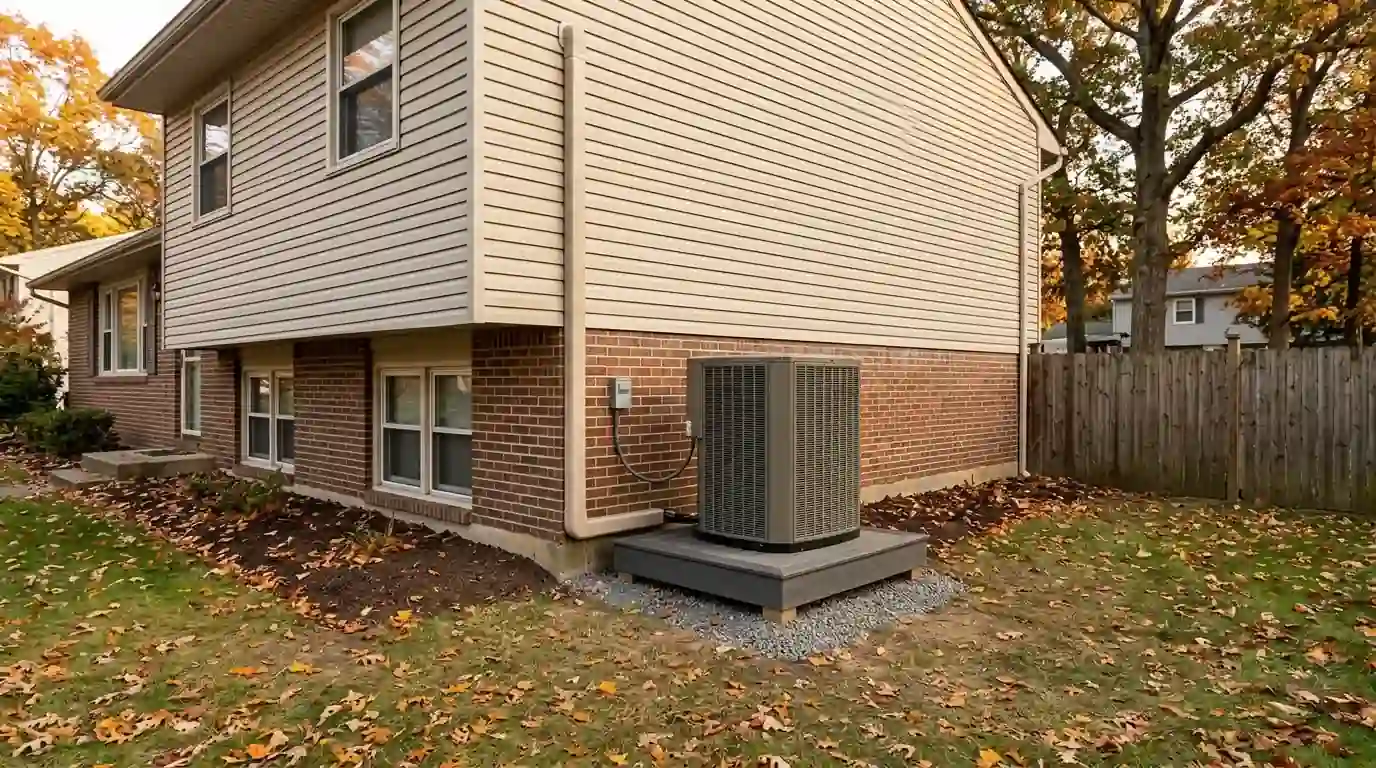
Dual-fuel pairs a heat pump with a gas furnace. The heat pump handles cooling and the milder heating days, and the furnace takes over once it is cold enough that gas heat makes more sense. It is a practical fit for homes with a furnace that still has life left, since the heat pump replaces the AC condenser and coil while the furnace stays in place. The key setting is the changeover temperature, which we set in the thermostat based on the house and local fuel costs, then adjust after the first winter if needed.
Replacing electric baseboard heat
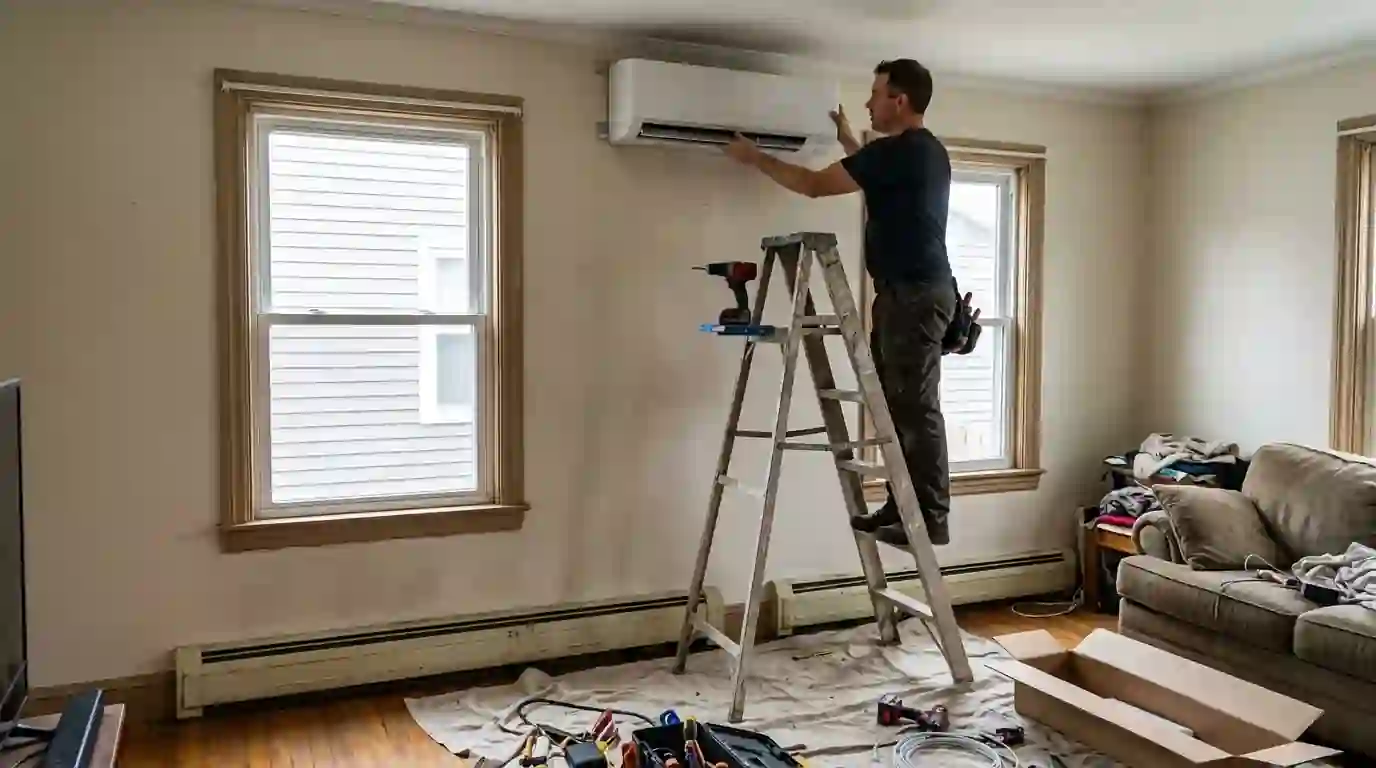
Electric baseboard heat is simple but expensive to run, and it does nothing in summer. A heat pump moves heat rather than making it from resistance, so it uses far less electricity for the same warmth. In homes without ducts, the usual path is a ductless mini-split with heads in the main living spaces. Where an attic or basement has room for ducts, a ducted system is possible too. Some owners keep a few baseboards as backup in small rooms the heat pump does not reach well, like a bathroom or a back bedroom.
Cold-climate, dual-fuel or ductless: which fits?
The right setup depends on your ducts, your current heat and your fuel.
| Option | Fits when | Trade-off |
|---|---|---|
| Cold-climate ducted heat pump | The house has decent ductwork and you want to rely mainly on electric heat | Higher equipment cost, ducts must handle heat pump airflow |
| Dual-fuel with gas furnace | A gas furnace in good shape is already in place | Two heat sources to maintain, strong heat on the coldest nights |
| Ductless heat pump | No ducts, or rooms heated with baseboards or space heaters | Visible indoor heads, each zone controlled on its own |
From the first visit to the first winter
Measure the house
Rooms, windows, insulation and ducts recorded for the heat loss calculation.
Choose the setup
Cold-climate, dual-fuel or ductless, based on the ducts, current heat and your goals.
Plan the install
Outdoor unit spot, line set route, electrical needs and any permit checked before ordering.
Install and start up
Equipment set, lines brazed and evacuated, system charged and tested in both modes.
Set the controls
Backup heat, changeover point and what defrost looks like explained before we leave.
What a heat pump installation covers
Here is what a standard heat pump install includes:
- A room-by-room heat loss and cooling load calculation
- Duct and electrical panel check before the system is chosen
- Outdoor unit set on a pad, stand or wall bracket clear of snow
- Refrigerant lines brazed, pressure tested and evacuated to a deep vacuum
- Indoor coil or air handler matched to the outdoor unit
- Backup heat wired: electric strips, or the existing furnace for dual-fuel
- Thermostat setup with changeover and backup heat settings
A heat pump as the next step for an old Philadelphia house
WHYY has told the story of a Philadelphia rowhouse that moved from firewood to solar over more than 250 years. Many older houses show their own version of that story in the basement: a chimney built for coal, a capped oil line, a gas furnace or boiler that came later. A heat pump is often the next change, and it can work with what the house already has, whether that means pairing with a furnace, running beside radiators or feeding ductless heads.
- Carrier
- Trane
- Lennox
- Rheem
- Goodman
- York
- Bryant
- American Standard
- Mitsubishi Electric
- Daikin
- Fujitsu
- Weil-McLain
- Burnham
We install heat pumps from Carrier, Trane, Lennox, Mitsubishi Electric, Daikin and Fujitsu, sized to the house and its winter load.
A properly sized heat pump handles most winter days here. Cold-climate models go further, and backup strips or a furnace cover the coldest nights.
Yes. In a dual-fuel setup the furnace stays and takes over in the coldest weather, while the heat pump replaces your AC condenser.
Not always. Heat pumps need more airflow than some old cooling ducts allow, so we check duct sizes and returns before quoting.
Yes. The outdoor unit and any heat strips need their own circuits. An older or full panel may need work first, and we check it at the first visit.
Modern units are fairly quiet. You will hear the fan and a whoosh during defrost. We keep the unit away from bedroom windows where we can.