Heating · open 24/7
Gas furnace repair in Philadelphia, PA
Furnace running but the house won't warm up? We test the ignition sequence, the safeties and the blower, then fix the part that is stopping the heat. Answering 24/7.
- Phones answered 24/7
- Gas furnaces, all major brands
Updated October 2026
- Common fixes
- Flame sensors, ignitors, pressure switches, blower motors, capacitors, drain lines
- Covers
- Philadelphia and South Jersey
- Answers
- 24 hours, 7 days a week
Short answer
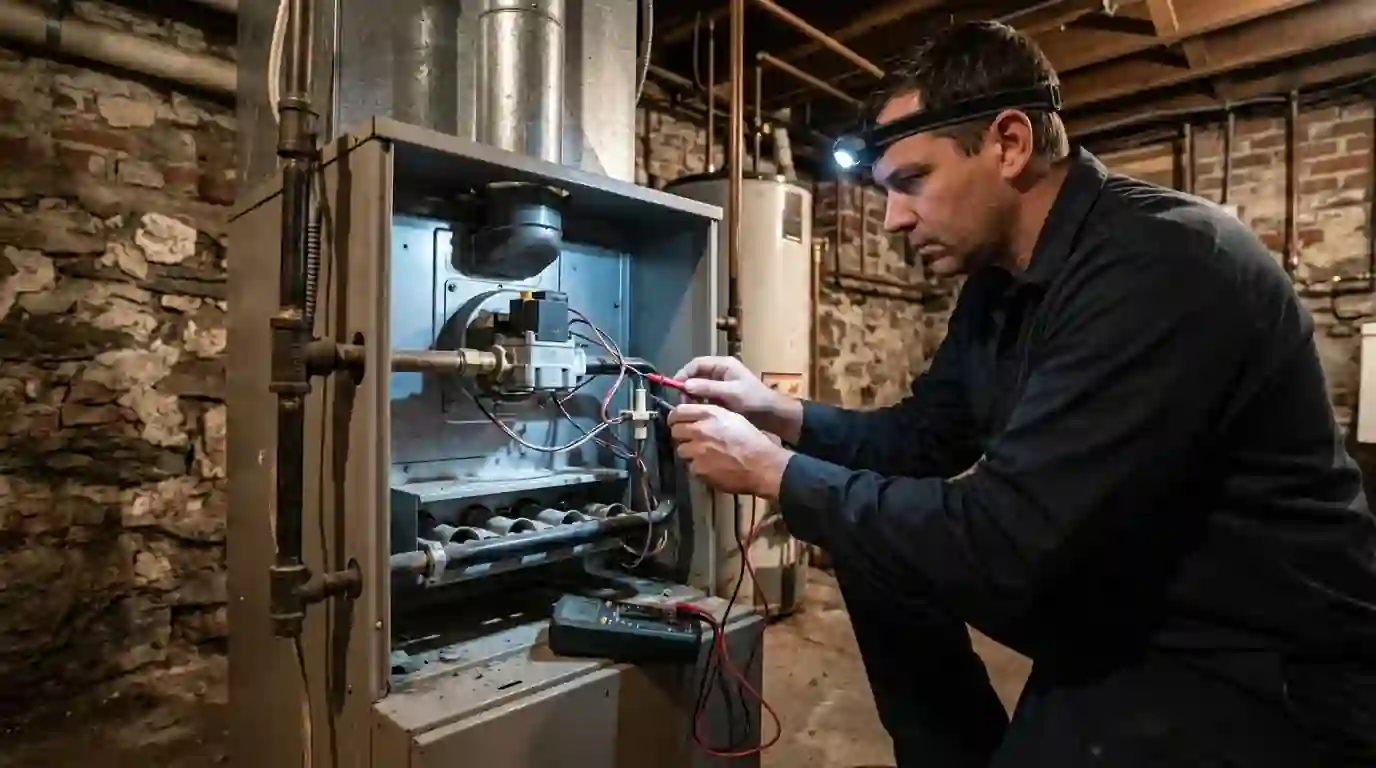
A furnace that runs but won't heat in Philadelphia, PA usually has one of five faults: a dirty flame sensor, a failing hot surface ignitor, a pressure switch problem, a clogged filter tripping the high limit, or a blocked condensate drain. We test each in order and replace only the part that failed.
Warning signs
Signs your furnace needs a repair, not a reset
Lights, then shuts off
The burner fires for a few seconds and goes out, usually a flame sensor or a venting fault.
Cold air from the vents
The blower runs but the burners never light, or light and drop out.
Short cycling
The furnace starts and stops every few minutes instead of running steady cycles.
Rattling, squealing or a boom
Blower noise or a delayed-ignition boom needs a look before it gets worse.
How we find the real fault in a furnace
A gas furnace runs the same sequence every start: thermostat call, inducer motor, pressure switch, ignitor, gas valve, flame proof, then the blower. A repair is about finding where that sequence stops. The fault code on the control board narrows it down, but it points at an area, not at the bad part.
We test that part and the safeties around it, and look at what caused it. A pressure switch fault, for example, is often a cracked hose, a wet condensate trap or a partly blocked vent.
The repairs we make most
Furnace blowing cold air
Cold air from the registers means the blower is running but the burners are not. Usual reasons: a thermostat set to fan ON instead of AUTO, a dirty filter that tripped the high-limit switch, a weak ignitor, or a flame sensor too coated to prove the flame. On high-efficiency furnaces, a plugged condensate trap or a stuck pressure switch stops the sequence before ignition. We read the fault code, watch the startup, and test the part the code points to rather than swapping parts until it works.
Ignitor and flame sensor faults
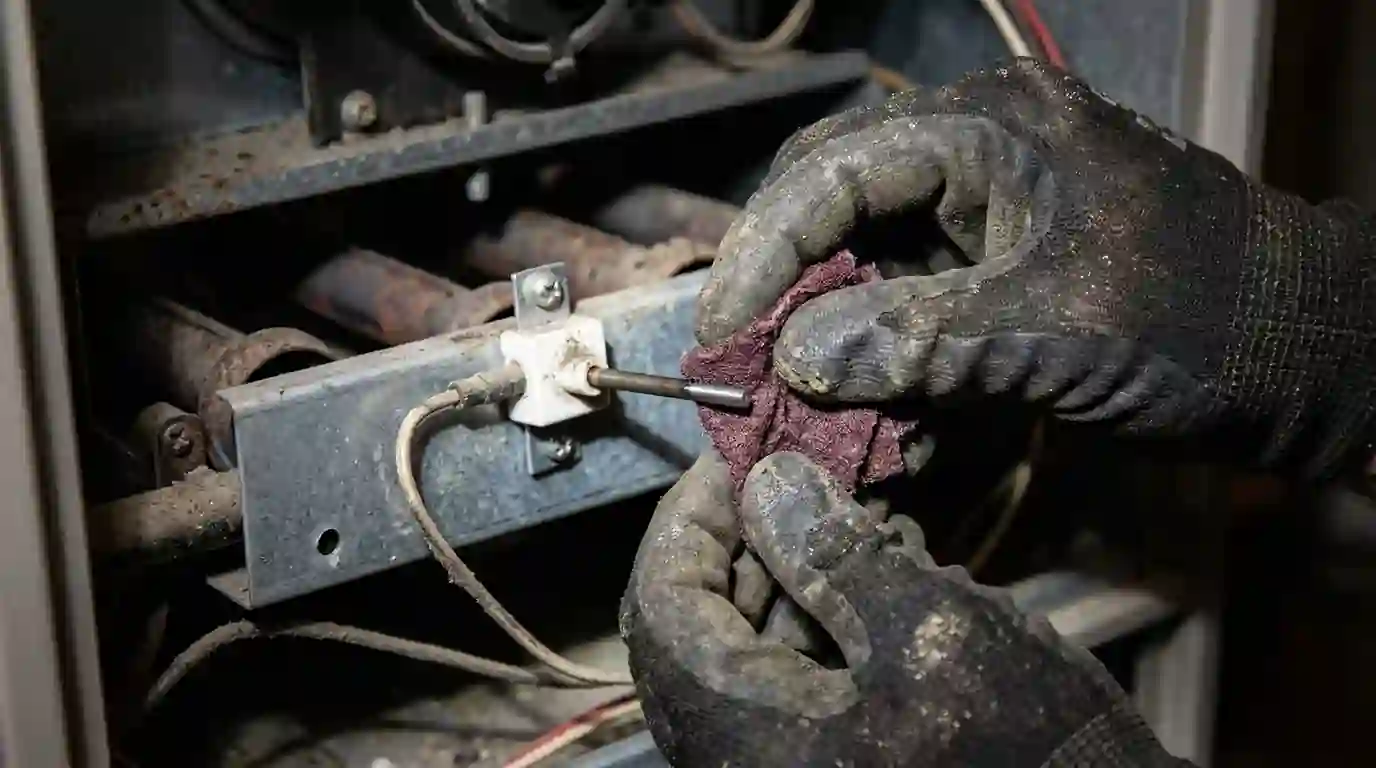
Most newer furnaces light with a hot surface ignitor, a small ceramic element that glows before the gas valve opens. They crack with age and handling. The flame sensor is a metal rod in the flame that tells the board the burner is lit; a thin layer of oxide stops it from reading, and the furnace shuts the gas off after a few seconds. We measure ignitor resistance and flame signal, clean or replace the sensor, and fit the correct ignitor for that furnace.
Blower motor and capacitor
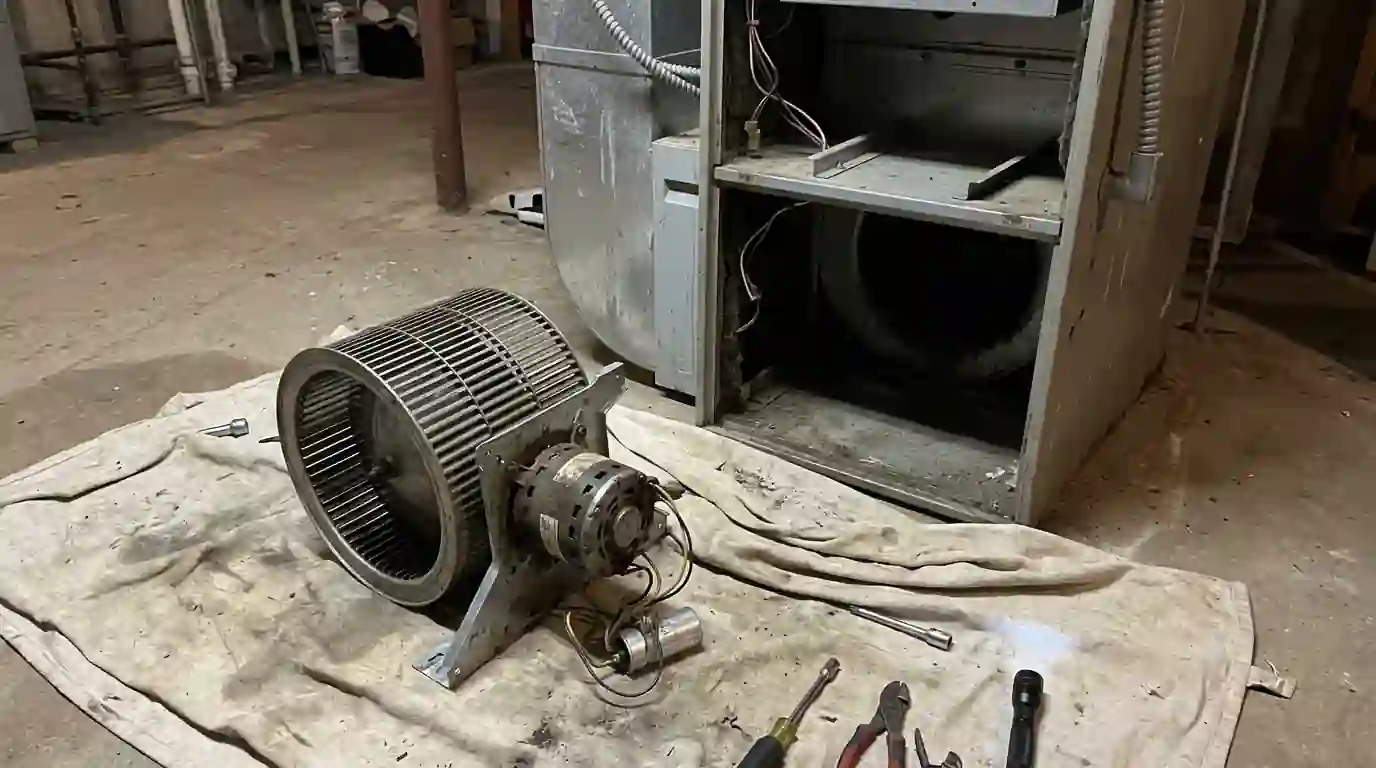
The blower moves heated air through the ducts, and when it struggles, the heat exchanger overheats and the limit switch shuts the burners off. On older PSC motors the run capacitor weakens over time, so the motor hums, starts slowly or runs hot. Variable-speed ECM motors usually fail in the motor module instead. We check capacitor value, motor amperage and the blower wheel, which collects dust and loses airflow on its own. Cleaning a dirty wheel sometimes fixes what looked like a motor problem.
Short cycling
A furnace that runs for two or three minutes and shuts off is either protecting itself or being told to stop. Common causes are an oversized furnace, a thermostat near a supply register or a drafty door, a high-limit trip from poor airflow, or a flame sensor dropping out mid-cycle. Short cycling wears out ignitors and motors and wastes gas. We watch a full cycle, check temperature rise and airflow, and fix the cause instead of adjusting settings to hide it.
Furnace repair when the house is older than the furnace
WHYY has reported that old homes and high poverty make Philadelphia housing less affordable for some residents, and that matches what many furnace calls look like here: an older furnace in an older house, where the owner needs it fixed rather than replaced. A repair that buys several more winters is usually the right call on a sound furnace, and we say so. When the heat exchanger or the controls are past saving, we explain why before anything else happens.
What happens on a furnace repair visit
Read the history
Fault codes, the filter and the thermostat settings, before anything is opened.
Watch a startup
We run a heat call and watch each stage of the sequence to see where it stops.
Test the suspect part
Ignitor resistance, flame signal, switch operation, motor amperage or gas pressure, depending on the fault.
Repair and recheck
We replace or clean the failed part, then check the safeties and the venting around it.
Run a full cycle
The furnace runs through a complete heating cycle, and we check temperature rise before we leave.
How long a furnace repair takes
Most furnace repairs are finished in one visit, because the parts that fail most often are common across brands.
Control boards, inducer motors and some blower motors have to be ordered for specific models. When that happens we tell you on the first visit and set up a safe temporary fix if one will keep heat on.
What decides the cost of a furnace repair
You see the price before we start. What moves it:
- The part: cleaning a flame sensor is a short visit, an inducer motor or control board is a bigger job
- Whether the part is stocked or specific to your furnace's model
- Furnace age, and whether other parts are close to failing
- Access: basements are quicker than attics or tight closets
- Carrier
- Trane
- Lennox
- Rheem
- Goodman
- York
- Bryant
- American Standard
- Mitsubishi Electric
- Daikin
- Fujitsu
- Weil-McLain
- Burnham
We repair gas furnaces from Carrier, Trane, Lennox, Goodman, Rheem, York and Bryant, plus older units from makers long gone.
Usually the flame sensor. Oxide stops it from proving the flame, so the board shuts the gas off. We clean or replace it and check grounding and venting too.
Not over and over. Repeated lockouts mean a safety switch is tripping, and resetting it can overheat the heat exchanger. Turn it off and call.
Check one-inch filters every month or two in heating season and change them when they look gray. A clogged filter causes a lot of no-heat calls.
It depends on what failed. A bad ignitor on a sound furnace is worth fixing; a cracked heat exchanger usually is not. We show you what we find first.
Yes. Their condensate trap, drain pump and plastic venting are behind many winter lockouts, and we service all of them.