Heating · open 24/7
Heating tune-ups for furnaces and boilers in Philadelphia, PA
Want the heat ready before the first cold night? We clean, adjust and test your furnace or boiler in the fall, so small faults get caught while they are still small.
- Phones answered 24/7
- Gas furnaces and boilers
Updated October 2026
- What we check
- Burner, ignition, safeties, combustion, venting and carbon monoxide
- Covers
- Gas furnaces, hot-water boilers and steam boilers
- When
- Early fall, before the heat runs every day
Short answer
A heating tune-up in Philadelphia, PA is a cleaning and safety check on a gas furnace or boiler before the season starts. We clean the burner, test every safety control, measure combustion, and check the flue and carbon monoxide levels. A worn part found in October is easier to deal with than one that quits in January.
What a fall tune-up catches before it fails
Most winter breakdowns start as something small that was already there in the fall: a flame sensor coated in residue, a loose wire on the inducer, a boiler low on water, a drain trap full of sludge. A tune-up finds those during the system's first easy days of running, not on the coldest night.
It is a safety check as much as a cleaning. Furnaces and boilers burn gas a few feet from where people live, so we test how the system vents and what is in the exhaust, not only whether the burner lights.
What every heating tune-up includes
Every visit works through this list, whatever the system:
- Burner inspection and cleaning, with the flame sensor or thermocouple serviced
- Ignition sequence and every safety switch tested, including limit and rollout switches
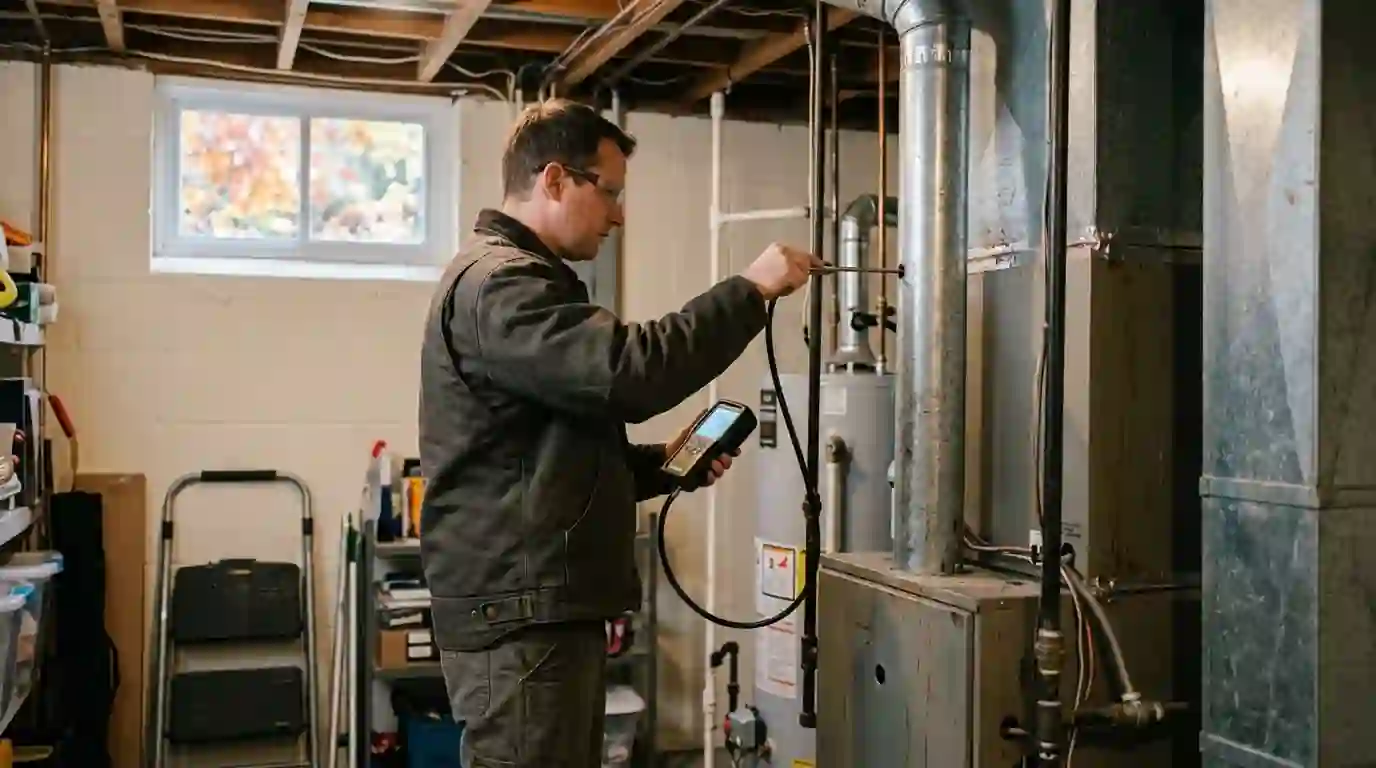
- Combustion analysis and a carbon monoxide reading in the flue
- Flue, vent connector and chimney connection checked for draft and spillage
- Gas pressure checked at the appliance
- Furnaces: filter, blower and temperature rise. Boilers: pressure, waterline and low-water cutoff
- Condensate trap and drain cleared on high-efficiency equipment
What the visit covers by system
Gas furnace tune-up
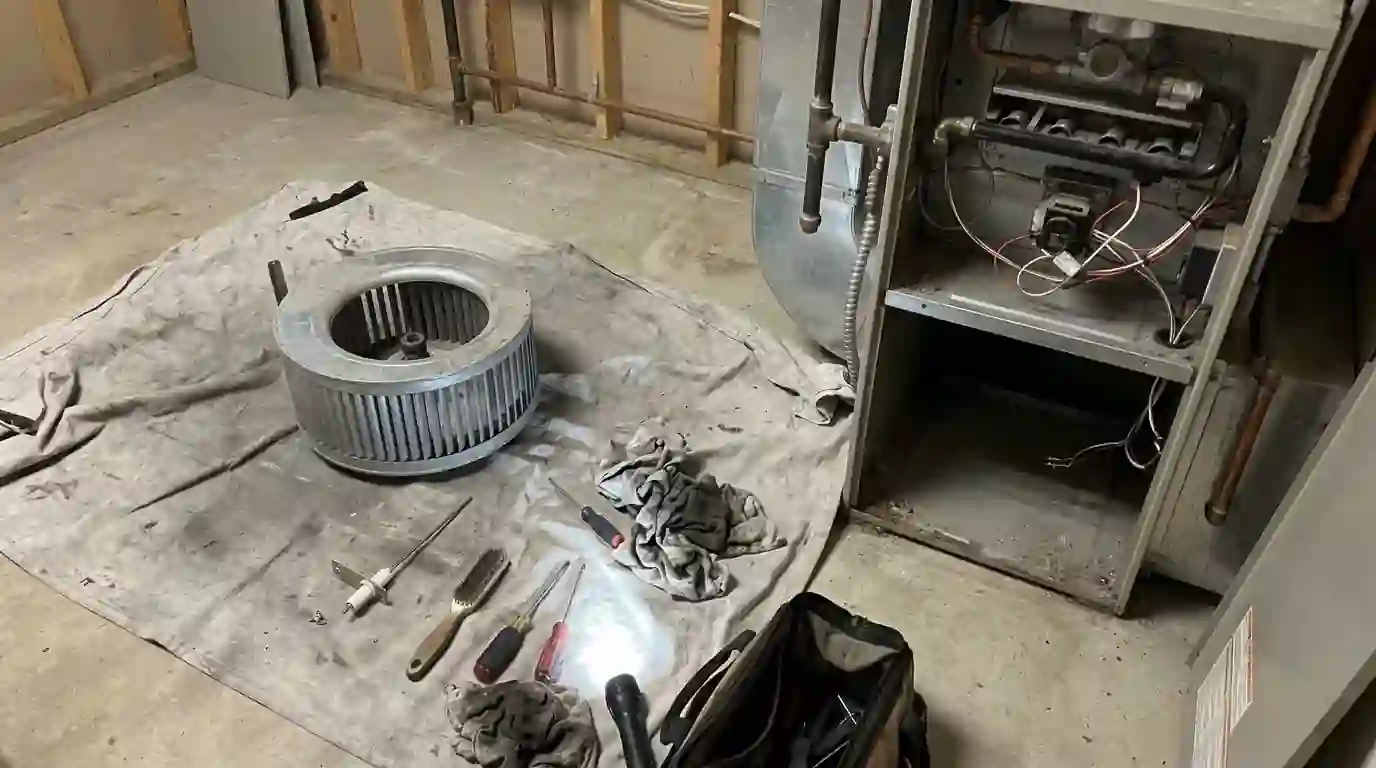
On a furnace we open the burner compartment and walk through the ignition sequence. We clean the flame sensor, check the hot surface igniter, look at the burner flames, and test the inducer, pressure switch and limit switch. Gas pressure and temperature rise get measured, because a rise outside the nameplate range points to an airflow problem or a gas setting that is off. High-efficiency furnaces get the condensate trap and drain cleared. If anything turns up beyond a cleaning, our furnace repair page explains the usual fixes.
Boiler service
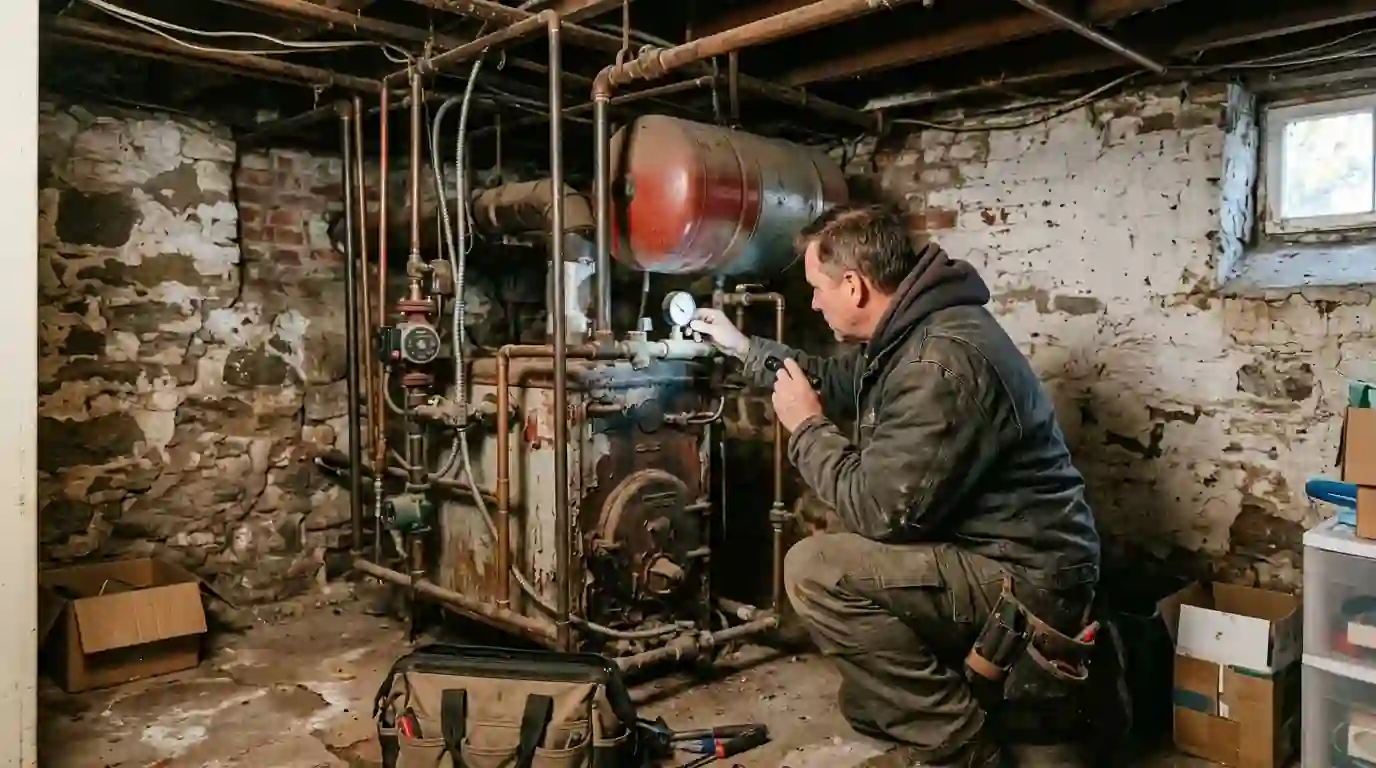
Hot-water boilers get a pressure and expansion check: cold fill pressure, the expansion tank's air charge, the relief valve and the circulator. Steam boilers get a look at the sight glass, the waterline, the low-water cutoff and the pressure control setting, with the cutoff flushed or its probe cleaned depending on the type. On both we clean the burner, test ignition and measure combustion. Condensing boilers add a heat exchanger inspection and a check of the condensate trap and neutralizer. Common follow-up work is on our boiler repair page.
Flue and carbon monoxide check
A gas appliance is only as safe as its venting. We check that the flue pipe is pitched, joined and supported, that the draft hood or vent connector is pulling exhaust up, and that nothing spills back into the basement. When a furnace or boiler shares a chimney with a water heater, we test both, since the pair has to draft together. A combustion analyzer reading shows how cleanly the burner runs and how much carbon monoxide is in the flue gas. We also check the air around the appliance and where your CO alarms sit.
Tune-ups for older Philadelphia heating systems
Many Philadelphia heating systems are a mix of decades: a newer boiler on original radiators, a furnace feeding ductwork squeezed into a rowhome after the fact, a chimney that may once have served coal. Those mixes are where a tune-up pays off. An old masonry chimney can lose its draft once a smaller modern appliance is connected to it, and old piping sheds sediment into a newer boiler. We look at the joints between old and new parts, not only at the appliance.
How a tune-up visit runs
Ask what you noticed last winter
Cold rooms, noises, short cycling or a smell, so the tech knows where to look.
Shut down and open up
Power and gas off while the burner, sensors and blower or boiler controls get cleaned.
Test the safeties
Every limit, pressure switch and cutoff gets tripped or tested, not just looked at.
Fire it and measure
Combustion, gas pressure, draft and carbon monoxide readings with the system at full heat.
Tell you what we found
What we fixed during the visit, and anything that needs a repair before winter.
What changes the price of a tune-up
You see the price before we start. What moves it:
- Furnace, hot-water boiler or steam boiler
- How long since the last cleaning, and how dirty the burner is
- Condensing equipment with a trap, drain and neutralizer to service
- Small parts swapped on the spot, like a flame sensor or filter
How long a tune-up takes and when to book it
A furnace in decent shape usually takes an hour or so. Boilers, especially steam boilers with a low-water cutoff to flush, take longer, and a system that has gone years without cleaning needs more time.
Book it in September or October, before the heat runs daily. Fall visits are easier to schedule than calls during the first cold snap, and a part that has to be ordered arrives before you need it.
Once a year, ideally in early fall. Systems that run hard, and older boilers with dirty water, gain the most from not skipping a year.
Yes. A dirty flame sensor or a weak igniter usually works fine until the coldest week, which is exactly when you do not want it to fail.
Yes. Some older homes have a boiler for the original floors and a furnace for an addition. We service both on the same visit.
Small wear parts like a flame sensor or filter, if you approve. Larger repairs get explained and priced first, and nothing is done without asking.
Yes. Check a standard furnace filter every month or two during heating season and change it once it looks gray. Thicker media filters last longer.