Water Heaters & Home Repairs · open 24/7
Chimney liners for gas water heaters and boilers in Philadelphia, PA
Old chimney still venting your gas water heater? We size a liner to the appliance, run it down the flue, connect and cap it, then test draft and spillage before we leave.
- Phones answered 24/7
- Water heaters, boilers and furnaces
Updated October 2026
- Common jobs
- Orphaned water heaters, oil to gas switches, cracked clay tile flues
- Tested before we leave
- Draft, spillage and carbon monoxide at the appliance
- Answers
- 24 hours, 7 days a week
Short answer
Chimney liner installation in Philadelphia, PA means fitting a correctly sized metal flue inside an old masonry chimney so a gas water heater, boiler or furnace vents safely. Liner size comes from the appliance input and chimney height, and we test draft and spillage once it is connected.
Why an old masonry chimney struggles with modern gas appliances
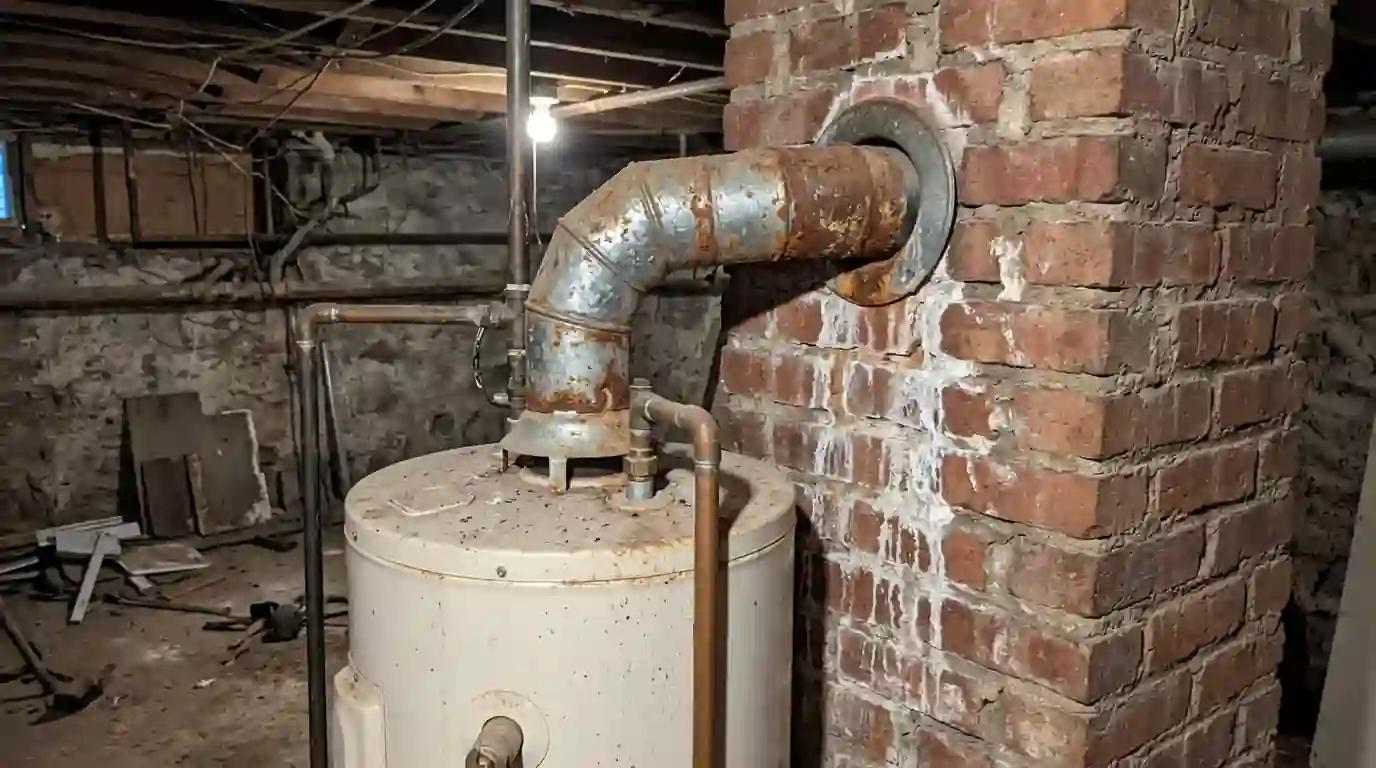
Burning natural gas produces a lot of water vapor. In a tall, wide brick flue the exhaust cools before it reaches the top, condenses on the walls and turns slightly acidic. That moisture slowly eats mortar joints and clay tile, and a cold flue drafts poorly, so exhaust can spill back into the house.
A liner gives the exhaust a smaller, smooth metal passage that warms up fast and drafts reliably. Sizing matters more than anything else: too big and it behaves like the old chimney, too small and it cannot carry the exhaust.
What sets the price of a chimney liner
You see the price before we start. What moves it:
- Chimney height and how many offsets the liner has to pass
- Liner diameter, set by the appliances it will serve
- Whether the flue needs cleaning or loose tile removed first
- Roof access: a flat rowhome roof versus a steep or tall stack
Three liner jobs we see
Water heater left alone in an old chimney
This happens when a furnace or boiler is swapped for a high-efficiency unit vented out the side wall. The gas water heater stays behind, alone in a chimney sized for two. Its small exhaust cannot warm that flue, so it condenses, drafts weakly and can spill at the draft hood. We test draft and spillage, then line the flue to suit the water heater alone. If the heater is near the end of its life, a power-vent water heater skips the chimney altogether.
Stainless liners for gas appliances
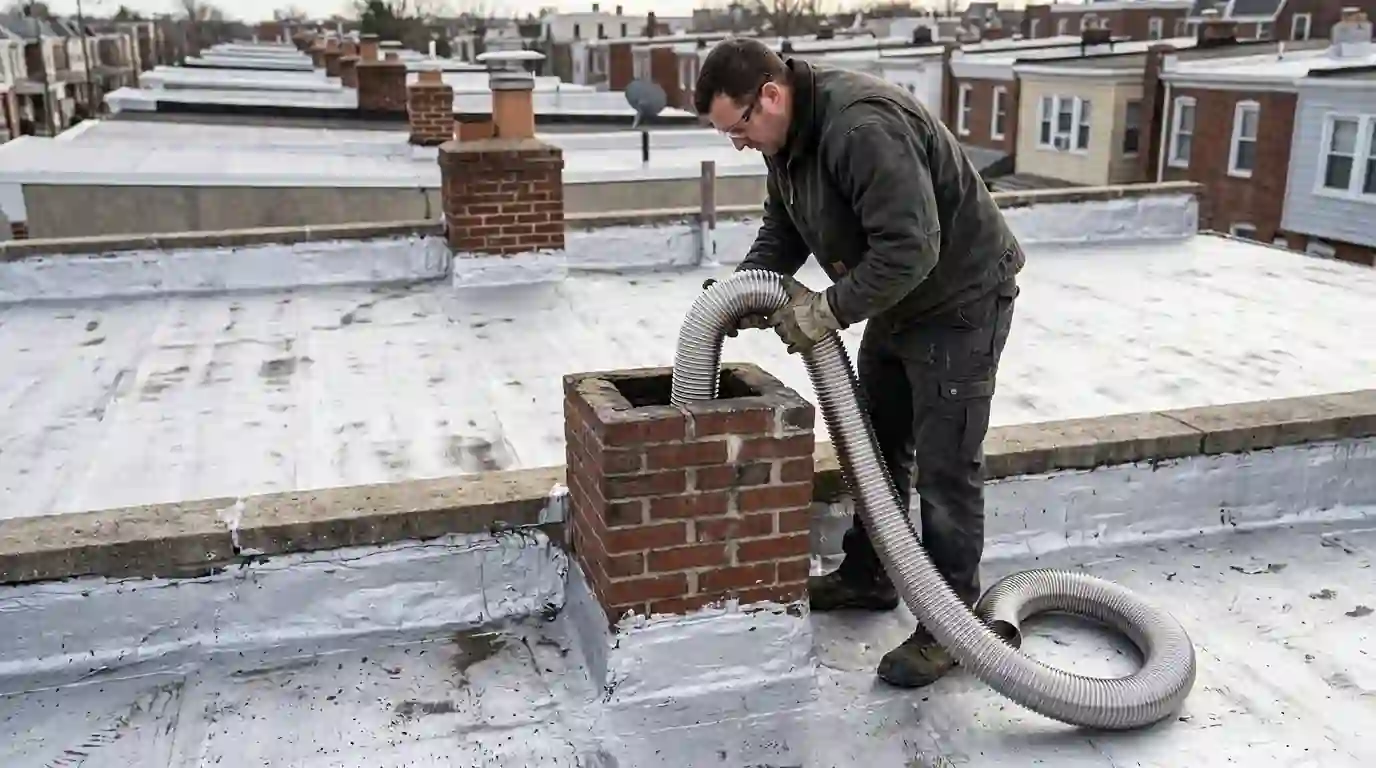
If a sweep found cracked clay tiles or no tile at all, we line the flue in stainless steel. Most liners are flexible, because chimneys in older homes rarely run straight to the roof. We feed it down from the top, connect it to the appliance's vent pipe with a tee or adapter, seal the top plate and fit a rain cap. On an outside wall or a very tall stack, an insulation wrap keeps exhaust warm enough to draft. Size comes from the appliance input rating and the venting tables, never from the old flue.
Liners after an oil to gas switch
Switching a boiler or furnace from oil to gas changes what the chimney has to handle. Oil leaves soot and scale in the flue, and the wetter gas exhaust can loosen it until it drops and blocks the base. The new gas appliance is also often smaller than the old oil burner, so the flue ends up oversized. The chimney gets cleaned and inspected first, then lined to the new appliance's size. If the new unit vents through the wall, the liner may only serve the water heater. More on oil to gas conversion.
Which liner fits your chimney and appliance
The right choice depends on the chimney's path and what will vent into it.
| Option | Fits when | Trade-off |
|---|---|---|
| Flexible stainless liner | The flue has bends or offsets, common in party-wall chimneys | Costs more than aluminum, but stands up to condensation far longer |
| Rigid stainless sections | The chimney runs straight from the appliance to the roof | Cannot pass offsets, and each joint has to be sealed |
| Vent the appliance out the wall instead | The chimney is failing and the appliance is due for replacement anyway | Needs an outside wall spot, electricity and, on some models, a condensate drain |
From draft test to capped chimney
Test the appliance as it is
Draft, spillage and CO readings at the appliance before anything changes.
Look inside the flue
Roof and basement views of the chimney for blockages, offsets and loose tile.
Size the liner
Diameter comes from each appliance's input, the flue height and the length of the connector.
Install and connect
Feed the liner down, attach the tee at the base, seal the top and fit the cap.
Retest under fire
With the appliance running, we repeat draft and spillage tests before calling the job done.
Rowhome chimneys were never built for today's gas appliances
Across Philadelphia, rowhome chimneys often run up inside a shared party wall, jog sideways on the way to the roof, and were built for a very different kind of heat than today's gas appliances. Many have clay tile that has cracked, and some have no lining at all. Because the chimney is shared masonry, a failing flue can let moisture and exhaust work into the wall between two homes.
Warning signs
What a failing chimney flue looks like from the basement
Crumbs of tile or mortar at the base
Grit in the cleanout or on the water heater means the flue is breaking down.
Damp, stained chimney brick
Exhaust condensing in a cold, oversized flue soaks the masonry and leaves white crust.
Exhaust spilling at the draft hood
Spillage that continues minutes after the burner lights means the chimney is not drawing.
Rust on the vent pipe and burner area
Flaking vent pipe and rust scale under the burner point to condensation running back down.
A flue built of sound clay tile, sized to the appliance, can work. Unlined brick, cracked tile or a flue far too big for the appliance should be lined.
Often, yes. Two chimney-vented appliances can share a liner sized for their combined input, joined with a proper connector. If the flue is wide enough, separate liners are another option.
Not a standard one. Condensing furnaces and boilers vent through plastic pipe, usually out a side wall. What matters is any appliance still venting into the flue.
Most go in during one visit once the flue is clear. Chimneys needing cleaning, tile removal or roof work first take longer, and we say so up front.
It can mean exhaust is spilling instead of going up the chimney. Make sure a working CO alarm is nearby and call to have draft and spillage tested.