Heating · open 24/7
Hot-water boiler repair in Philadelphia, PA
Radiators cold, boiler leaking, or a lockout light on? We repair hot-water boilers and the pumps, valves and tanks around them, from cast iron units in old basements to wall-hung condensing boilers. Answering 24/7.
- Phones answered 24/7
- Cast iron and condensing boilers
Updated October 2026
- Common fixes
- Circulators, expansion tanks, relief valves, ignition, low-water and pressure faults
- Steam systems
- See steam heat repair
- Answers
- 24 hours, 7 days a week
Short answer
A hot-water boiler in Philadelphia, PA that leaves radiators cold or keeps tripping its relief valve usually has a failed circulator pump, a waterlogged expansion tank, air in the system, or an ignition or pressure lockout. We test each one, repair what failed, and set the fill pressure correctly before we leave.
Warning signs
When a hot-water boiler needs a technician
Some radiators hot, others cold
Uneven heat often means air in the loop or a circulator that is not moving enough water.
Water from the relief valve
A relief valve that drips or discharges points to high pressure, often from a failed expansion tank.
Pressure gauge climbing
Pressure that rises well past normal as the boiler heats is a tank or fill valve problem.
Lockout or error light
Modern boilers lock out on ignition, flame or low-water faults and need the cause fixed, not just a reset.
How a hot-water boiler repair starts
A hot-water system is a closed loop: the boiler heats water, a circulator pushes it through radiators or baseboard, and an expansion tank and relief valve keep pressure in range. Most failures sit in one of those parts, or in the burner and controls.
We start with the pressure gauge, the error code if there is one, and the feel of the piping, which shows quickly whether water is moving. If your house has steam instead, with a sight glass on the boiler, see steam heat repair.
Common hot-water repairs
Circulator pump failures
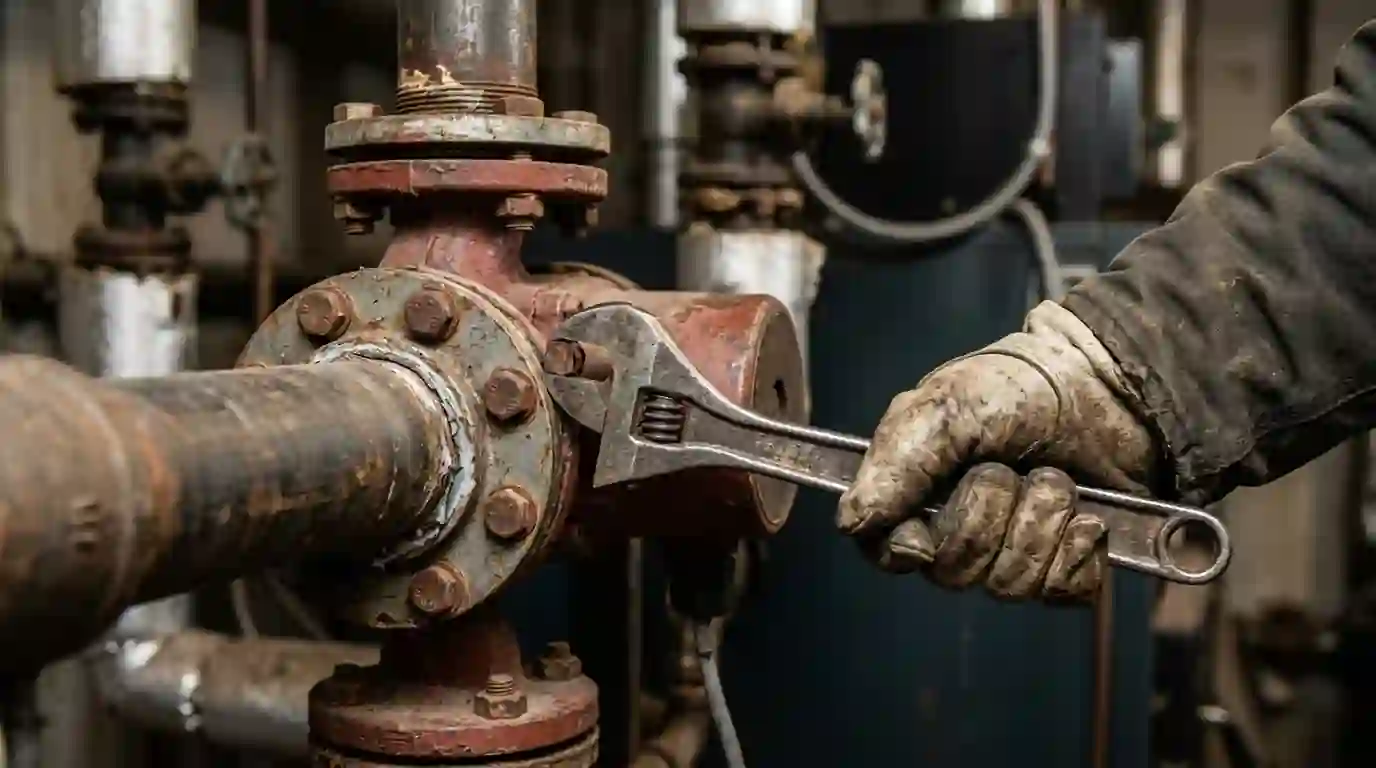
The circulator is the small pump that moves hot water from the boiler to the radiators and back. When it fails, the boiler heats its own water, hits its limit and shuts off while the rooms stay cold. Older cast iron pumps fail at the bearing assembly or coupler, which often hum or rattle first; newer wet-rotor pumps seize or stop drawing current. We confirm the pump is the problem by checking power, flow and the temperature difference across the piping, then replace the cartridge, the bearing assembly or the whole pump, whichever fits the system.
Expansion tank and relief valve
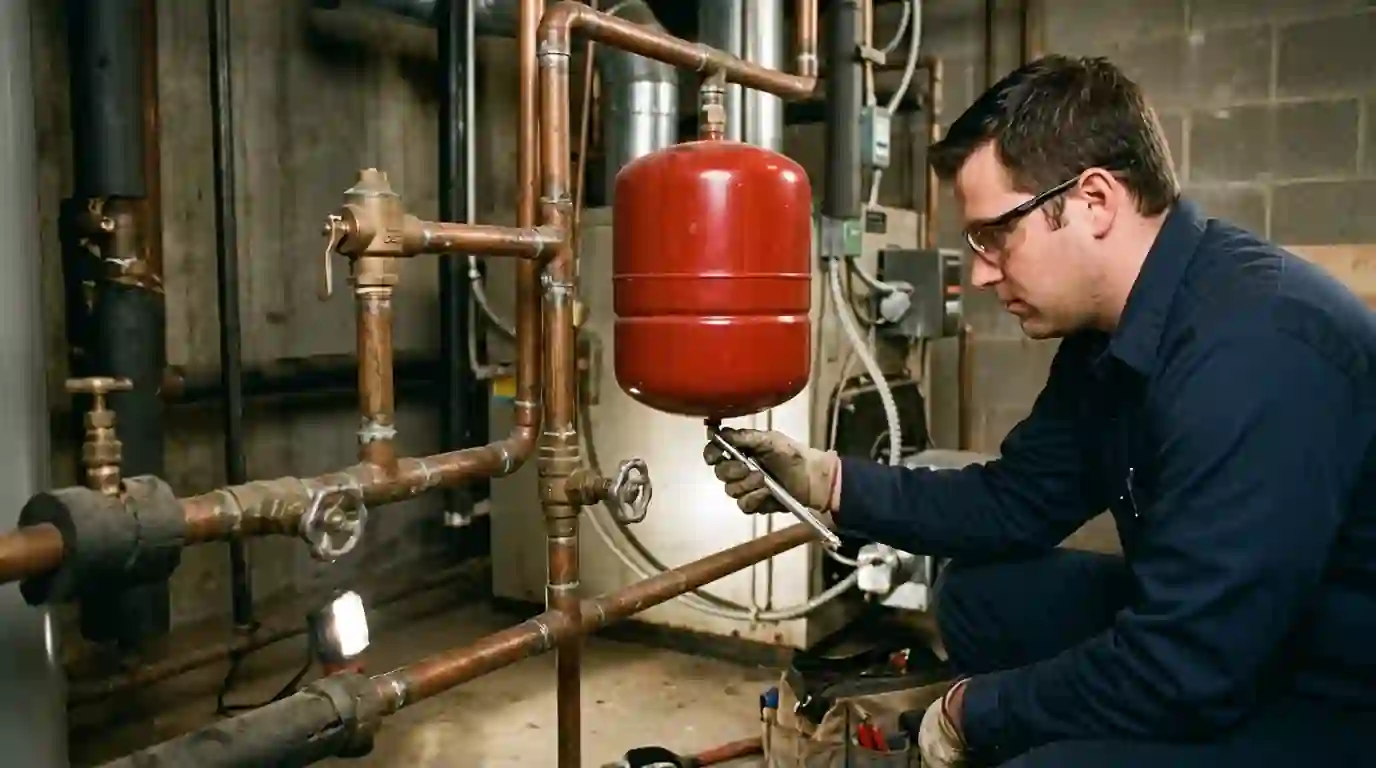
Water expands as it heats, and the expansion tank gives it somewhere to go. When the tank's air cushion is gone, from a failed diaphragm in a modern tank or a waterlogged steel tank in an older system, pressure spikes every heating cycle and the relief valve opens to protect the boiler. That is the water on the floor. Replacing the relief valve alone does not fix it. We check the tank's air charge, replace it or drain and recharge it, check the fill valve, and set the cold fill pressure for the height of the house.
Boiler lockout and ignition faults
Gas boilers lock out when they fail to light or prove flame, when water pressure is low, or when the venting or a safety switch trips. Older units with standing pilots fail at the thermocouple or pilot assembly; newer ones use hot surface or spark ignition with a flame rod, much like a furnace. Condensing boilers add a condensate trap, a fan and a pressure switch, any of which can stop the sequence. We read the code, test the sequence and fix the failed part, then check combustion and venting before we leave.
Boilers in a city of older houses
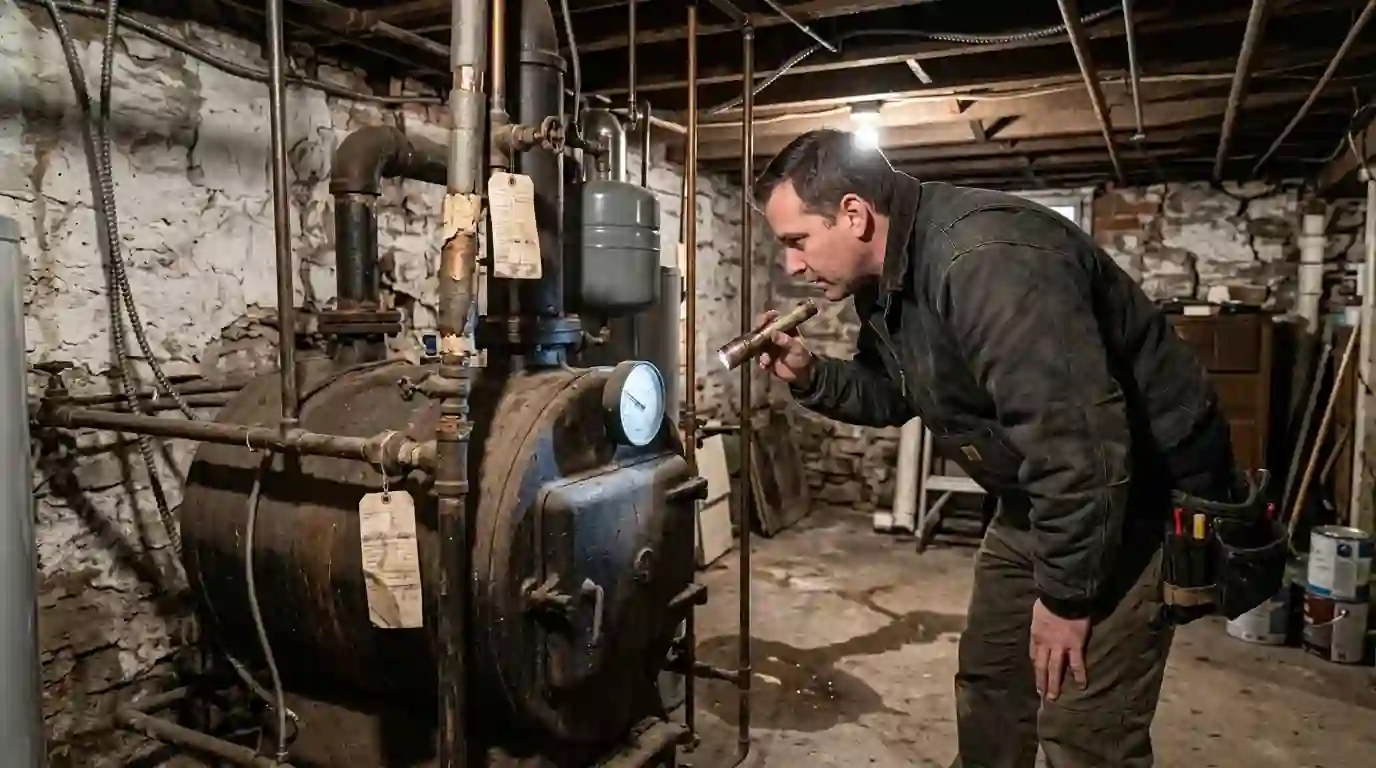
Census figures reported by The Philadelphia Inquirer put most Philadelphia homes before 1950, and older houses here often still have their cast iron radiators. Radiators usually outlast several boilers, so a repair often means working with piping, valves and tanks from different decades. We look at how the near-boiler piping was laid out when the last boiler went in, because a poor setup there is behind many repeat no-heat calls.
What a boiler repair visit looks like
Read the gauges and codes
Pressure, temperature and any error code tell us where to look first.
Check the loop
We confirm water is moving: circulator power, flow, and the temperature drop across the piping.
Test the burner side
Ignition, flame proof, venting and the low-water safety, depending on the fault.
Repair and refill
We replace the failed part, refill and purge air, and set the cold fill pressure.
Heat every zone
The boiler runs until each zone heats, and we check for leaks at anything we touched.
What to check on a boiler, and what to leave alone
A couple of checks are safe and useful for you to do. Most boiler work is not.
| Safe for you to check | Leave for the tech |
|---|---|
| The thermostat and the boiler emergency switch | Opening the burner or control compartment |
| The pressure gauge reading, so you can tell us | Draining, refilling or recharging the expansion tank |
| Bleeding a radiator with a key, slowly, over a cup | Replacing a relief valve or adjusting the fill valve |
| Shutting the boiler off if water is discharging | Anything to do with gas piping or venting |
What decides the cost of a boiler repair
You see the price before we start. What moves it:
- The failed part, and whether we carry it or need to order it for your boiler
- Whether the system has to be drained for the repair
- Age and condition of the boiler and near-boiler piping
- Whether a condensing boiler needs its trap, fan or heat exchanger serviced too
- Carrier
- Trane
- Lennox
- Rheem
- Goodman
- York
- Bryant
- American Standard
- Mitsubishi Electric
- Daikin
- Fujitsu
- Weil-McLain
- Burnham
We repair boilers from Weil-McLain, Burnham, Navien and other major makers, including cast iron units that have been in the basement for decades.
That is the relief valve, opening on high pressure, most often because the expansion tank failed. Shut the boiler off and call; a new valve alone rarely fixes it.
It depends on the boiler and the height of the house, so tell us the number when you call instead of adjusting it yourself.
Usually air at the high points, a weak circulator, or a zone valve stuck closed. If bleeding the upstairs radiators does not help, the pump or valve needs testing.
Often, since the pumps, valves and controls around it are standard parts. A cracked section or leaking heat exchanger is different, and we tell you which you have.
Yes, including the plate heat exchanger and flow sensor that handle the hot water side.