Ducts & Indoor Air · open 24/7
Duct sealing and repair in Philadelphia, PA
Barely any air reaching the far rooms? We find the joints, boots and runs that leak, reconnect what has come apart, seal it with mastic and insulate ducts that cross attics or crawl spaces.
- Phones answered 24/7
- Supply and return leaks
Updated October 2026
- Common fixes
- Disconnected runs, open seams, leaky boots, bare attic ducts
- Method
- Mastic and foil tape made for ducts, never cloth duct tape
- Covers
- Philadelphia and South Jersey
Short answer
Duct sealing in Philadelphia, PA means finding where heated or cooled air escapes before it reaches the rooms: disconnected runs, open seams, leaky boots and panned returns. We reconnect and support loose runs, seal joints with mastic or foil tape made for ducts, and insulate ducts that pass through attics, crawl spaces or unheated porches.
Where duct leaks hide in a typical house
Leaks are rarely in the middle of a straight run. They sit at the joints: where the plenum meets the furnace, where branches tap off the trunk, at the boots behind registers, and along the seams of old panned returns. Supply leaks waste air you already paid to heat or cool.
Return leaks are the sneaky ones. A leaking return pulls air from wherever it can, often a damp basement or a hot attic, and feeds it into the system. That shows up as musty smells, extra dust and higher humidity upstairs.
What affects the price of duct sealing
You see the price before we start. What moves it:
- How many joints, boots and runs are reachable
- Whether runs need reconnecting or replacing, not just sealing
- Insulation needed on attic, crawl space or porch runs
- Finished ceilings that limit access to the trunks
Leaks we find and fix
Disconnected runs
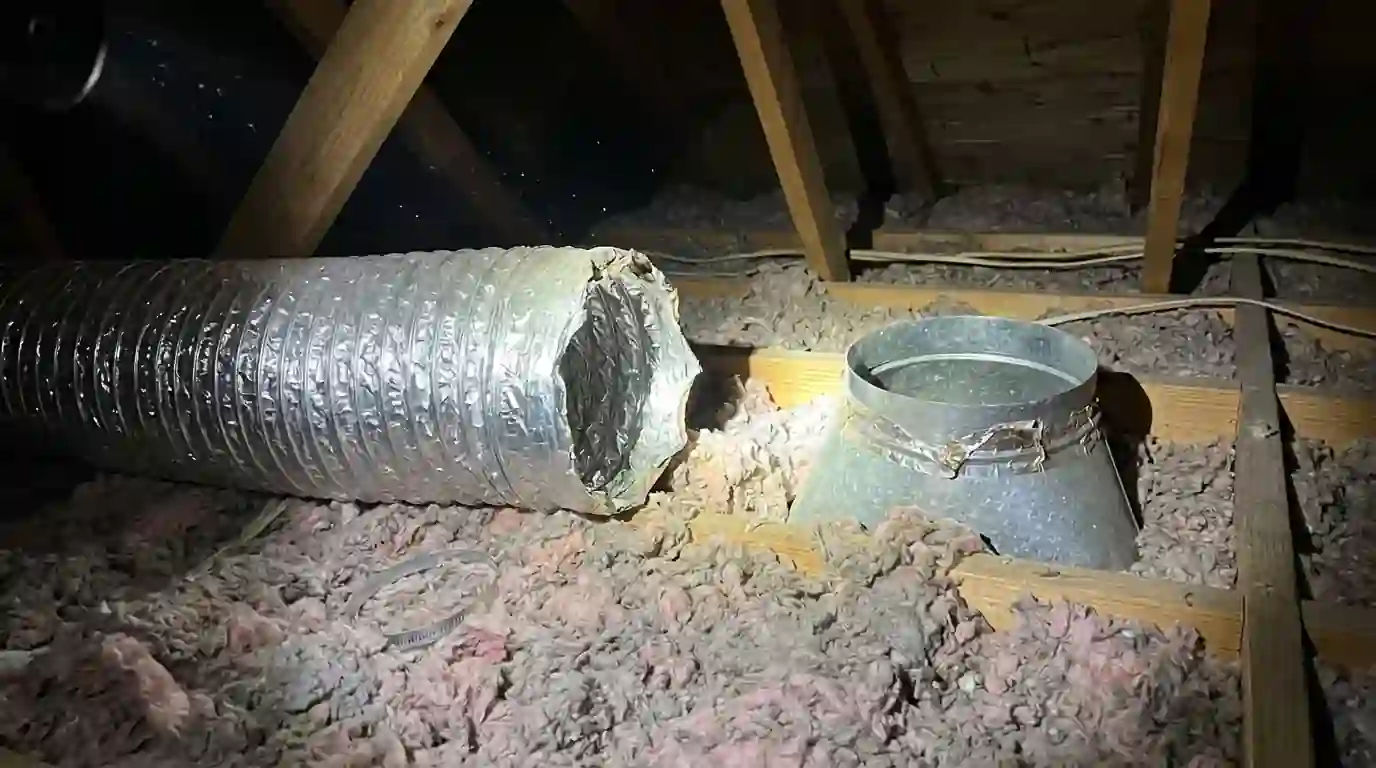
A run that has come completely apart is the biggest single leak a system can have, and it happens more often than people think. Flex ducts slip off their collars when the strap or tape gives out, and sheet metal joints separate after someone reroutes pipes or wiring in the basement. The room on that run gets almost nothing while the attic or ceiling space gets the rest. We reattach the run with a proper collar and strap, seal it, support it so it can't pull loose again, and check the other runs in the same space.
Mastic sealing of joints
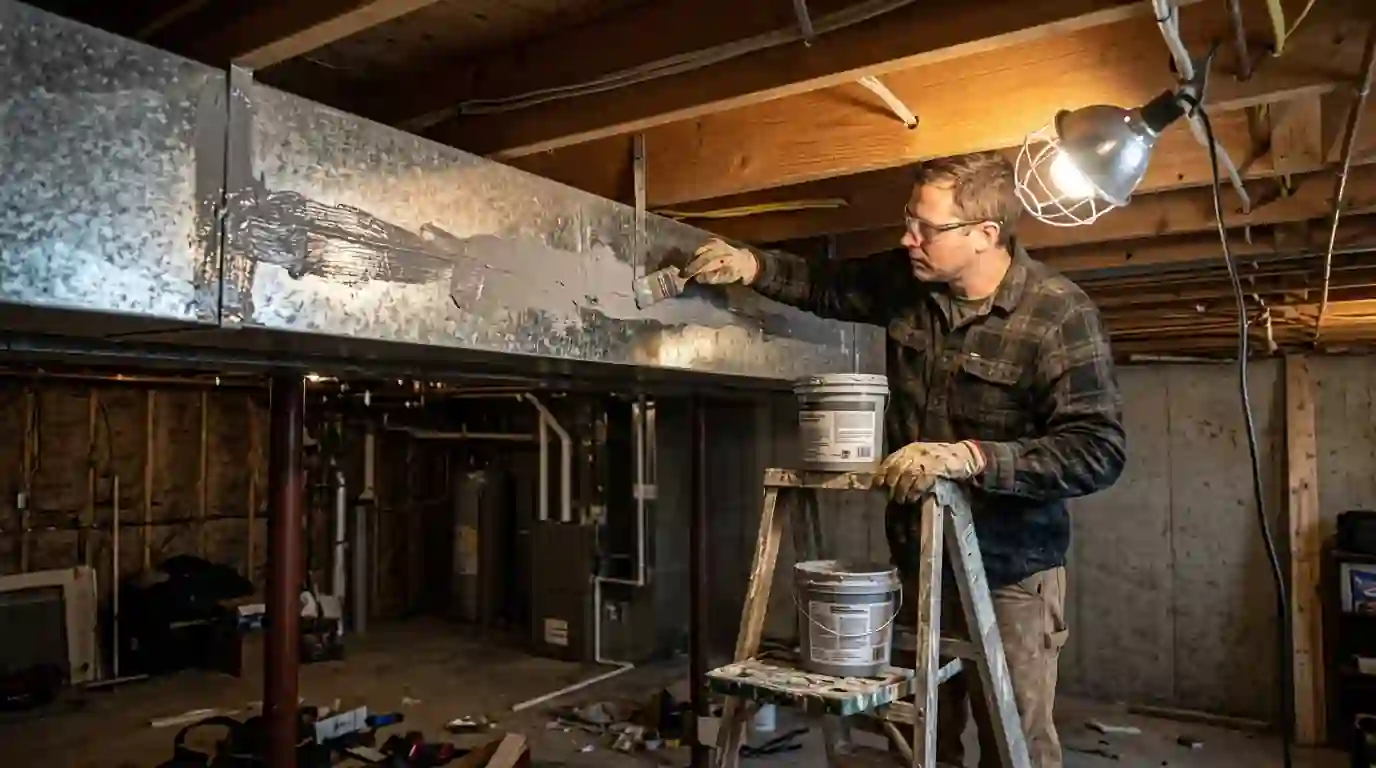
Mastic is a thick paste brushed over joints and seams. Unlike cloth duct tape, it stays flexible and stuck for many years. We seal the plenum connections, every takeoff from the trunk, the seams along the trunk and the boots behind the registers. Gaps wider than a pencil get fiberglass mesh or foil tape first, with mastic over it. In a basement where the ducts stay visible, we keep the work neat. Leaks big enough to starve rooms often show up first as AC complaints about one floor never cooling.
Insulating attic ducts
Ducts in an attic or above a top-floor ceiling sit in the hottest air in the house all summer. Bare metal runs pick up heat before the air reaches the room, then lose it in winter. Cold supply ducts also sweat in humid weather and can drip onto the ceiling below. We seal the joints first, then wrap each run in foil-faced duct insulation and tape its seams so the vapor barrier is continuous. Runs buried under loose fill get checked too. The work pairs well with attic insulation.
How we track down and seal duct leaks
Check the far rooms
Airflow at the registers shows which runs come up short before anything is opened.
Trace the runs
We follow trunks and branches through the basement and attic, looking for gaps and separations.
Reconnect and support
Loose runs reattached with collars and straps, and sagging sections hung straight.
Seal and insulate
Mastic on every joint we can reach, then insulation on runs outside conditioned space.
Measure again
Register airflow rechecked so you can see what the sealing changed.
What a duct sealing visit covers
We check the whole duct system, not just one leak:
- A walk-through of every reachable trunk, branch, boot and return
- Loose runs reconnected with collars, straps and proper support
- Mastic on plenum joints, takeoffs, trunk seams and register boots
- Mesh or foil tape under the mastic on wider gaps
- Panned returns lined or sealed so they stop pulling basement or wall air
- Foil-faced insulation on runs in attics, crawl spaces and porches
- Airflow checked at the registers once everything is sealed
Leaky ducts in older Philadelphia houses
In older Philadelphia homes, ducts were often added long after the house was built, sometimes in stages by different installers. That history leaves odd transitions, returns built from the space between joists, and runs passing through unheated rear additions and porches. Rowhomes with flat roofs often hide supply ducts in a shallow space above the top-floor ceiling, where summer heat is fierce. Sealing those runs and the return path does more for top-floor comfort than turning the thermostat lower.
Warning signs
Signs your ducts are leaking
Weak airflow in far rooms
Rooms at the end of long runs get little air while the basement stays oddly warm or cool.
Dust that comes back fast
A leaking return draws dust from basements, wall cavities and attics straight into the airstream.
Musty smell when the air runs
Returns pulling from a damp basement or crawl space carry its odor through the house.
Cloth tape peeling off joints
Old cloth duct tape dries out and lets go, leaving the seams open behind it.
Cloth duct tape dries out and lets go after a few seasons, which is why so many old joints are open. Mastic and foil tape made for ducts hold far longer.
It usually helps, especially with ducts in an attic or crawl space. How much depends on how leaky they were, so we show you what we sealed instead of promising a number.
We seal everything reachable from the basement, the attic and the register openings, boots included. Runs fully inside finished walls can't be reached by hand, so we seal the joints at each end.
Often a leaking return in the basement drawing damp air into the system. Sealing the return and lowering basement humidity usually clears it up.
More air may reach the registers, so you might hear it. If static pressure climbs too high, we adjust the blower speed or open up the return.