Heat Pumps & Ductless · open 24/7
Ductless mini-split installation in Philadelphia, PA
One room that never cools or heats right? A ductless mini-split puts heating and cooling right where you need it, with no ductwork and one small hole through the wall.
- Phones answered 24/7
- Single-zone and multi-zone systems
Updated October 2026
- Fits
- Top floors, additions, basements and homes without ducts
- Sized by
- Each room's heat gain and loss, not floor area alone
- Planned
- Head spot, line set route, drain and outdoor unit location
Short answer
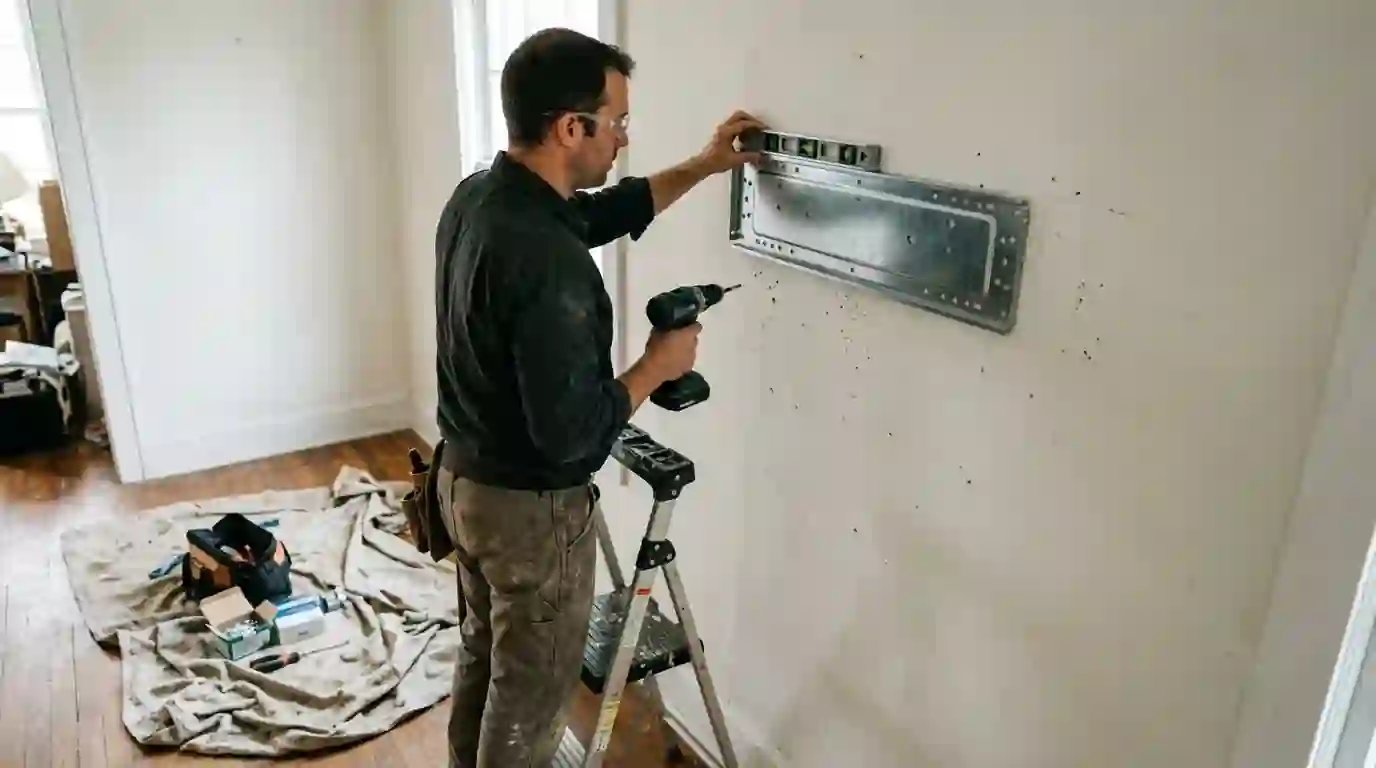
Ductless mini-split installation in Philadelphia, PA works well in homes with radiators and no ductwork. We size each indoor head to its room, mount it where air can reach the whole space, and run the refrigerant lines, power and condensate drain through one small hole to an outdoor unit on the roof, a wall bracket or the ground.
Where a mini-split makes the most sense
Mini-splits shine where ducts are impractical: the third floor of a rowhome, a converted attic, a sunroom or a finished basement. Each indoor head has its own fan and its own control, so a hot bedroom can be cooled without chilling the whole house.
They are heat pumps, so the same system heats in winter. In homes with radiators, many owners keep the boiler for main heat and use the mini-split for cooling and mild-weather heat. We plan around how each room will actually be used.
What moves the price of a mini-split install
You see the price before we start. What moves it:
- Number of indoor heads and their style
- Single-zone versus multi-zone outdoor equipment
- Line set length and how it reaches the outdoor unit
- Roof, wall or ground mounting and electrical work
Typical mini-split projects
Single-zone for a hot third floor
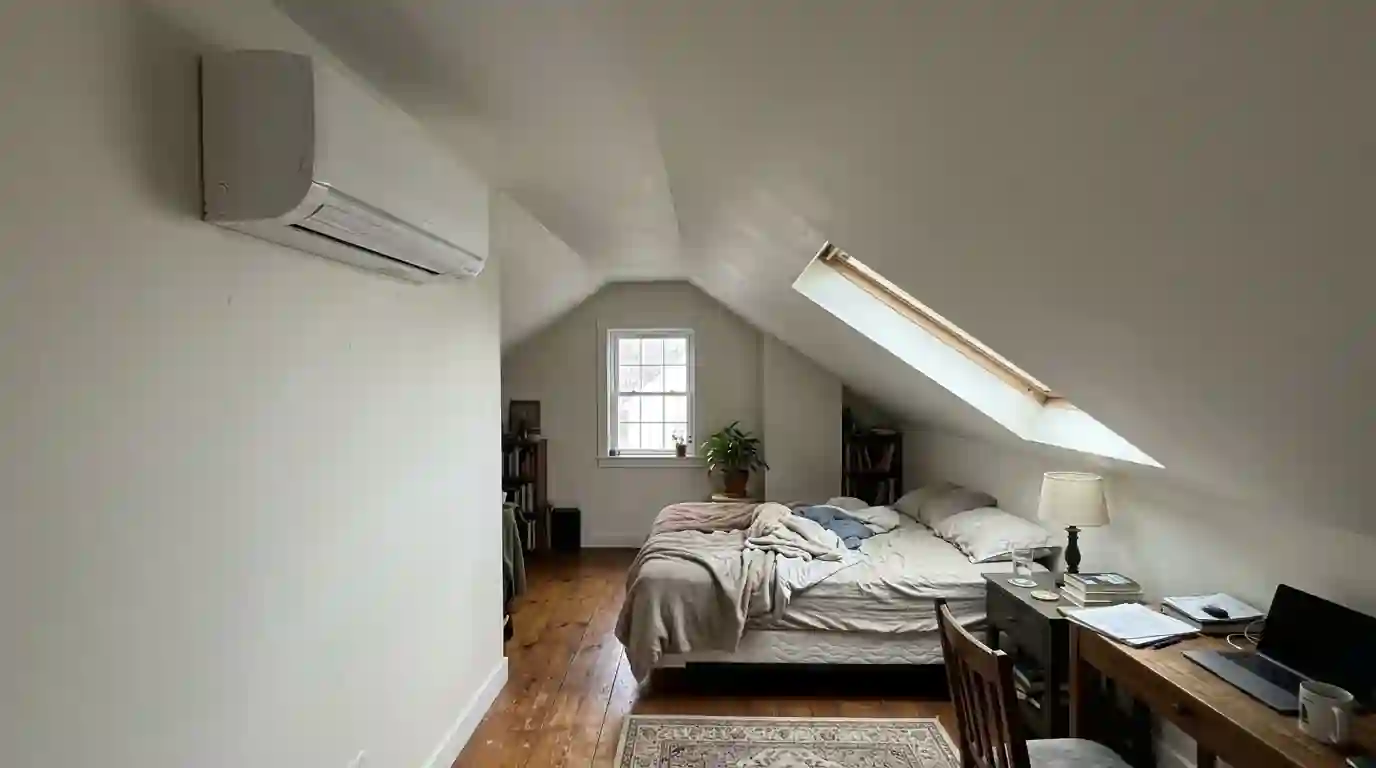
The third floor of a rowhome under a flat roof is often the hottest room in the house, and a window unit fights a losing battle up there. A single-zone mini-split pairs one indoor head with one outdoor unit. We size the head from the room's heat gain, which runs high under a poorly insulated roof, and mount it so air throws across the room rather than straight at the bed. The outdoor unit usually goes on a roof stand, with the line set dropping to the head along a short, clean path.
Multi-zone systems
A multi-zone system runs two or more indoor heads from one outdoor unit, which saves wall and roof space on a narrow lot. It suits homes where several rooms need help at once, like the bedrooms on the second and third floors. The trade-off is that one outdoor unit becomes a shared point of failure, and small heads on a large outdoor unit can cycle more than single-zone systems do. We compare multi-zone against separate single-zone systems for your layout, size every head on its own, and keep each line set run within the manufacturer's limits.
Additions and finished basements
Additions and finished basements are often left off the original heating and cooling, or stuck at the end of a long, weak duct run. A mini-split gives them their own heat and air without tying into a system that is already stretched. Basements bring their own concerns: the drain may need a condensate pump, and a floor-level or low-wall head may suit the room better than a high-wall unit. Cooling mode helps a damp basement feel drier, though a whole-house dehumidifier controls humidity far better when that is the main complaint.
Single-zone, multi-zone or a ducted mini-split?
Three ways to lay out a ductless system, depending on rooms and wall space.
| Option | Fits when | Trade-off |
|---|---|---|
| Single-zone | One room or open area needs heating and cooling | Simplest and most efficient, one outdoor unit per head |
| Multi-zone | Several rooms need help and outdoor space is tight | One outdoor unit serves every head, a shared point of failure |
| Ducted mini-split | A short duct run can serve a few rooms from a closet or attic | No visible wall heads, needs space for a slim air handler |
How a mini-split install comes together
Walk the rooms
Sun exposure, insulation, windows and wall construction checked in each room.
Plan the layout
Head sizes and spots, line set route, drain path and outdoor unit location set.
Mount and run lines
Heads hung, wall holes sealed, line sets and wiring run to the outdoor unit.
Test and evacuate
Nitrogen pressure test and a deep vacuum before the refrigerant valves are opened.
Start and explain
Each head tested in heat and cool, then a walk-through of remotes and filters.
What a mini-split install includes
Each install covers the full system, inside and out:
- A load calculation for each room, so heads are not oversized
- Head placement agreed with you before anything is mounted
- Wall sleeve and line set run, sealed against water and drafts
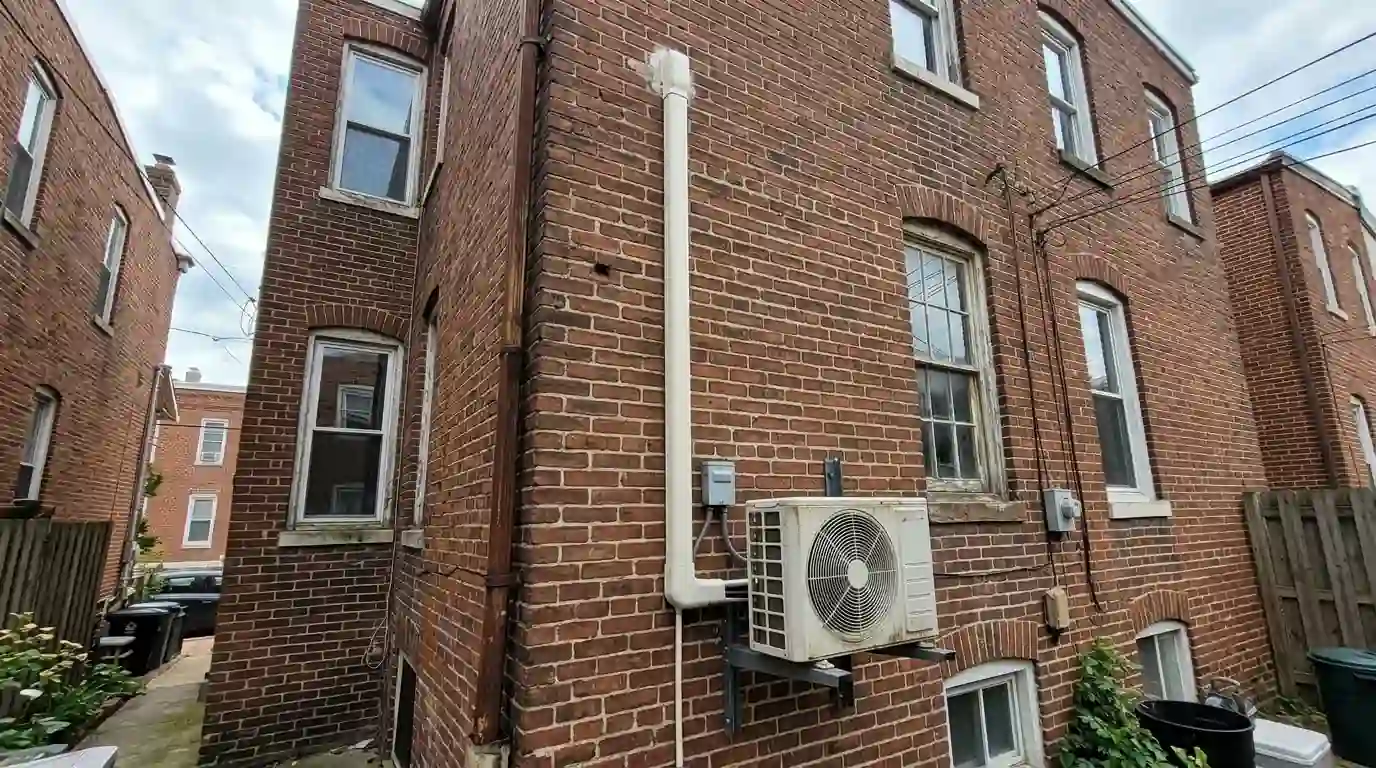
- A line set cover chosen to blend with the brick or siding
- Condensate drain by gravity or pump, routed so it cannot back up
- Outdoor unit on a roof stand, wall bracket or ground pad
- Pressure test, deep vacuum, startup and a walk-through of the remote
Girard Estates exteriors and summer heat
Girard Estate is a designated City of Philadelphia historic district, so on homes in Girard Estates we plan where the outdoor unit and line set cover will sit before anything goes on a wall, and we check whether the exterior work needs approval first. Across the rest of Philadelphia, the push for mini-splits tends to arrive with the heat. Upper floors took the worst of it when the city's Heat Health Emergency ran from Sunday June 22 through Wednesday June 25, 2025.
- Carrier
- Trane
- Lennox
- Rheem
- Goodman
- York
- Bryant
- American Standard
- Mitsubishi Electric
- Daikin
- Fujitsu
- Weil-McLain
- Burnham
We install ductless systems from Mitsubishi Electric, Daikin, Fujitsu, Carrier and Lennox, sized room by room.
Usually one small hole through the wall per head, for the refrigerant lines, power cable and drain. It is sealed inside and out once the lines are in.
It can heat a room, but in many older homes the boiler stays for main heat. We size heads for winter if you want them to carry the heating.
Common spots are the flat roof, a rear wall bracket or the back yard. We choose for service access, drainage and the shortest clean line set run.
There are no ducts to clean, but the heads need regular filter rinsing and a periodic deep clean of the coil and blower wheel to stay fresh.
A single-zone install often takes about a day. Multi-zone systems and roof-mounted units take longer, and we tell you before work starts.