Ducts & Indoor Air · open 24/7
Air duct cleaning for Philadelphia, PA homes
Dust puffing out every time the system starts? We put the ducts under negative pressure, brush every run loose back to the trunk, and check the blower the dust passed through.
- Phones answered 24/7
- Supply and return runs
Updated October 2026
- Typical reasons
- Renovation dust, pet hair, debris in returns, droppings or water damage
- Covers
- Philadelphia and South Jersey
- Phone
- Answered around the clock, every day of the year
Short answer
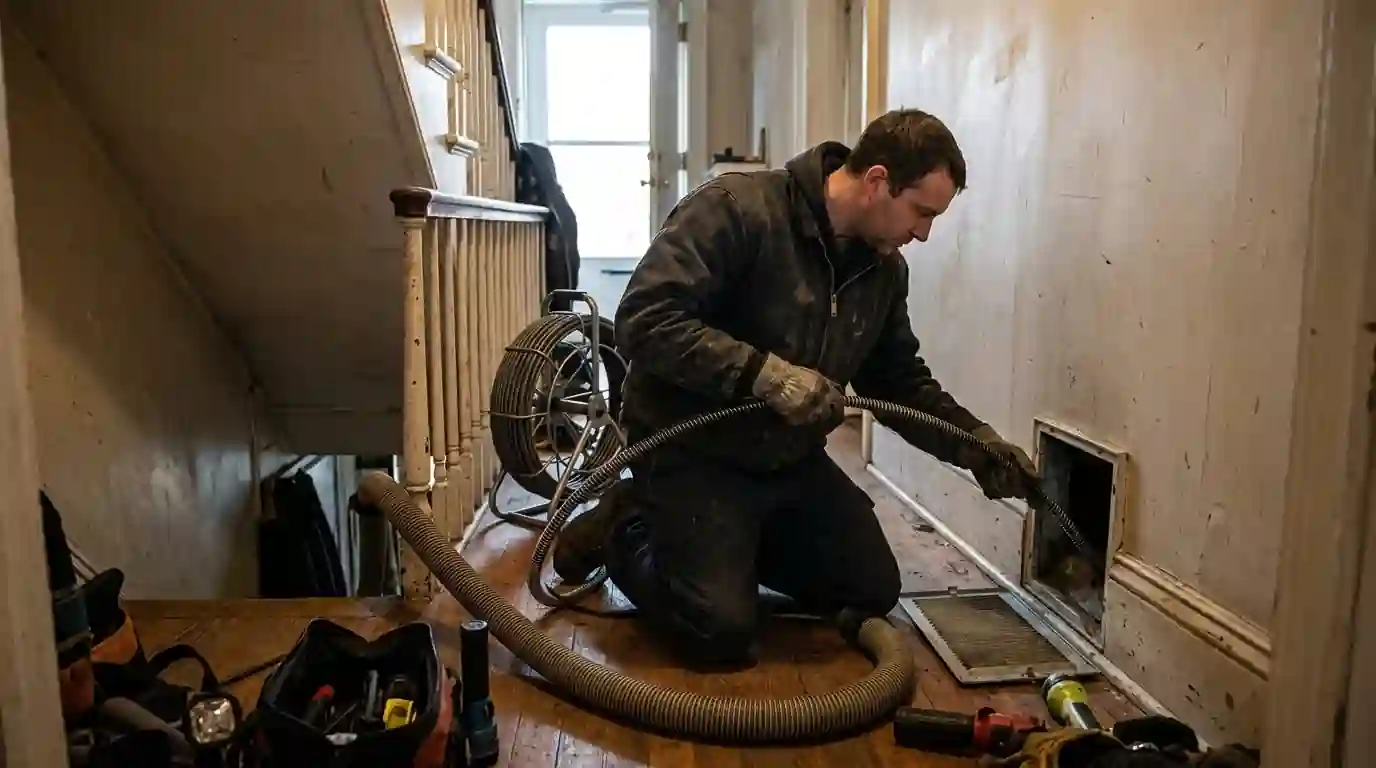
Air duct cleaning in Philadelphia, PA is worth doing after renovation work, after pests or water get into the ducts, or when you can see real debris in the runs. We hold the system under negative pressure, brush supply and return runs back to the trunk, and clean the blower, since dust left there blows straight back out.
When duct cleaning is worth it, and when it isn't
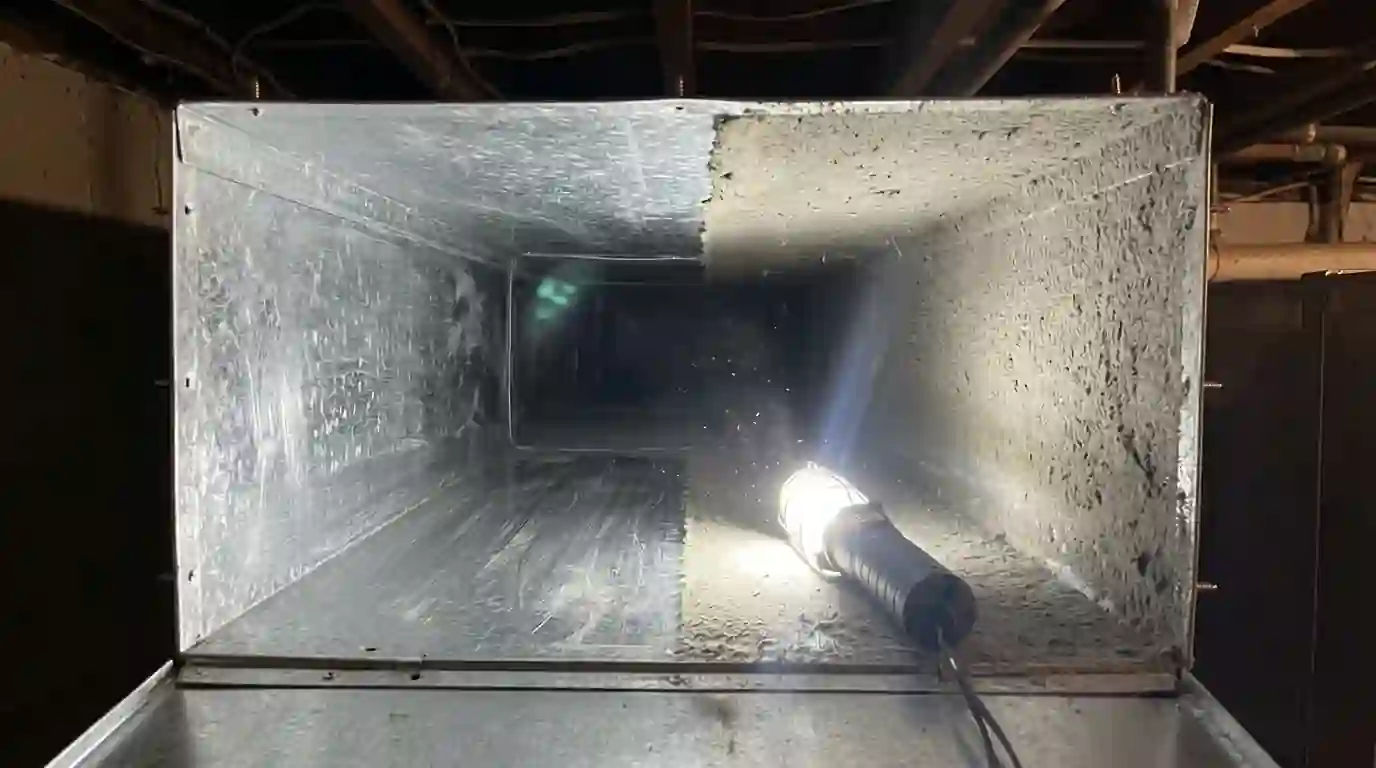
Most ducts never need cleaning. A thin film of dust inside a run does nothing to the air you breathe. Cleaning earns its cost when there is real debris: plaster and drywall dust from a renovation, a nest or droppings, water damage, or returns packed with pet hair.
We look inside before we price it. If the runs look fine and the real problem is a leaking return pulling basement air into the system, we tell you that instead, because cleaning won't fix it and the dust comes right back.
What a duct cleaning visit covers, register to blower
Each visit runs in the same order, every time:
- Floors covered along the path from the door to the equipment
- A light or camera look inside the main trunks before and after
- Negative pressure from a vacuum connected at the trunk
- Every supply and return run brushed back to the trunk
- Registers and grilles washed, boots vacuumed behind them
- Blower compartment cleaned and the coil face checked
- A new filter, plus a note on any leaks we found
Where duct dirt comes from
Renovation dust
Plaster and drywall dust is the most common reason we clean ducts in older homes. Sanding joint compound throws a fine powder that the return pulls straight into the system, where it packs the filter, coats the blower wheel and settles in every horizontal run. If the system ran during demolition, assume the dust is in there. Book the cleaning after the dusty work is done, and keep the system off with registers covered until then. Opened walls are also a good moment for duct sealing while everything is exposed.
Return duct cleaning
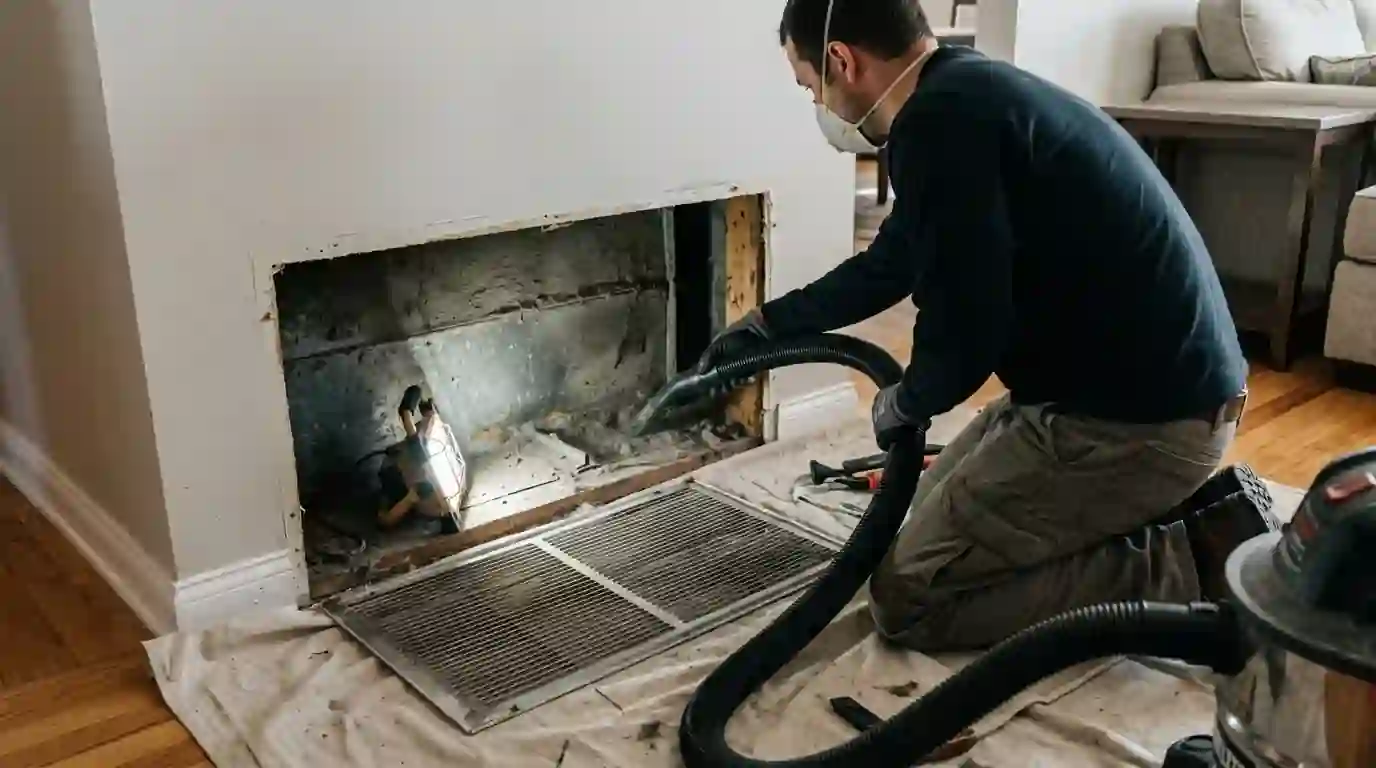
Returns collect far more debris than supply runs because they pull from grilles at floor and wall level. In many older Philadelphia houses the return is a panned joist bay or a wall cavity, with bare wood and plaster on three sides, and it catches pet hair, toys and basement dust. We open the grille, vacuum and brush the cavity back to the trunk, and look for gaps pulling basement air. When it is too leaky to clean well, new return ductwork is the better fix.
Registers and boots
Sometimes the dirt is only at the ends. The boot is the fitting behind each register where the duct turns up through the floor or out of the wall, and it catches whatever drops through the grille: crumbs, sand, pet food, the odd coin. Dark streaks on carpet around a register usually mean air leaks around the boot and the carpet edge is filtering it, not that the ducts are filthy. We vacuum the boots, wash the grilles and seal each boot to the floor or drywall.
Cleaning ducts that were added to old rowhomes
Many older Philadelphia rowhomes had forced air added long after they were built, so the ducts snake through closets, chases and dropped soffits, and returns borrow the space between floor joists. That layout shapes the cleaning. Long runs with tight elbows need a flexible brush cable rather than a stiff rod, and panned returns need sealing as much as cleaning. Trunks in a damp cellar that smell musty point to a humidity problem to solve first.
How a duct cleaning visit runs
Look inside first
A light or camera check of trunks and returns, so you see what is in there.
Protect the house
Drop cloths down, and registers covered so loosened dust can't blow into rooms.
Pull negative pressure
A vacuum at the trunk keeps dust moving away from the living space.
Clean every run
Supply and return lines brushed back to the trunk, grilles washed and boots vacuumed.
Finish at the equipment
Blower cleaned, coil face checked, new filter in, and airflow confirmed with the system running.
What changes the price of duct cleaning
You see the price before we start. What moves it:
- How many supply and return registers the house has
- How much debris is in the runs, from light dust to construction residue
- Access to the trunks: open basement ceilings versus finished ones
- Whether the blower, coil or boots need cleaning too
Warning signs
Signs your ducts actually need cleaning
Visible debris inside a register
Lift a grille. Clumps, construction dust or droppings mean cleaning helps; a thin gray film does not.
A puff of dust at startup
A burst of dust from the registers when the blower kicks on points to loose debris in the runs.
Water got into the ducts
Ducts under a flooded floor or below a plumbing leak can stay damp and grow mold.
Renovation with the system running
Sanding and demolition dust pulled in through the returns settles in every horizontal run.
What to check yourself before booking a cleaning
A few quick checks tell you whether cleaning will help at all.
| Safe for you to check | Leave for the tech |
|---|---|
| Lift a register and look in with a flashlight | Opening trunk lines or the blower compartment |
| Change the filter and note how fast it clogs | Cleaning the evaporator coil inside the system |
| Vacuum grilles and the first few inches of the boot | Running brushes or air whips deep into the runs |
| Switch the system off during dusty renovation work | Spraying sanitizers or coatings inside ductwork |
There is no fixed schedule. Clean them when there is visible debris, or after renovation dust, water damage or pests. A good filter changed on time does most of the work.
Sometimes, if the ducts held real debris or pet dander. For ongoing allergies, better filtration and controlled humidity usually help more than a one-time cleaning.
Not as a routine step. A sanitizer only makes sense after confirmed contamination like mold or droppings, and only once the ducts have been cleaned mechanically.
Gently. Flex duct tears under hard brushing, so we use soft tools on it. A crushed or badly torn flex run is better replaced than cleaned.
Not very. The system stays under negative pressure the whole time, so loosened dust moves toward the vacuum, and floors along the path are covered.