Water Heaters & Home Repairs · open 24/7
Bathroom exhaust fan installation in Philadelphia, PA
Steam hanging around long after the shower? We size the fan to the room, run the duct to the outside, and wire it so it actually gets used.
- Phones answered 24/7
- New fans and replacements
Updated October 2026
- What we install
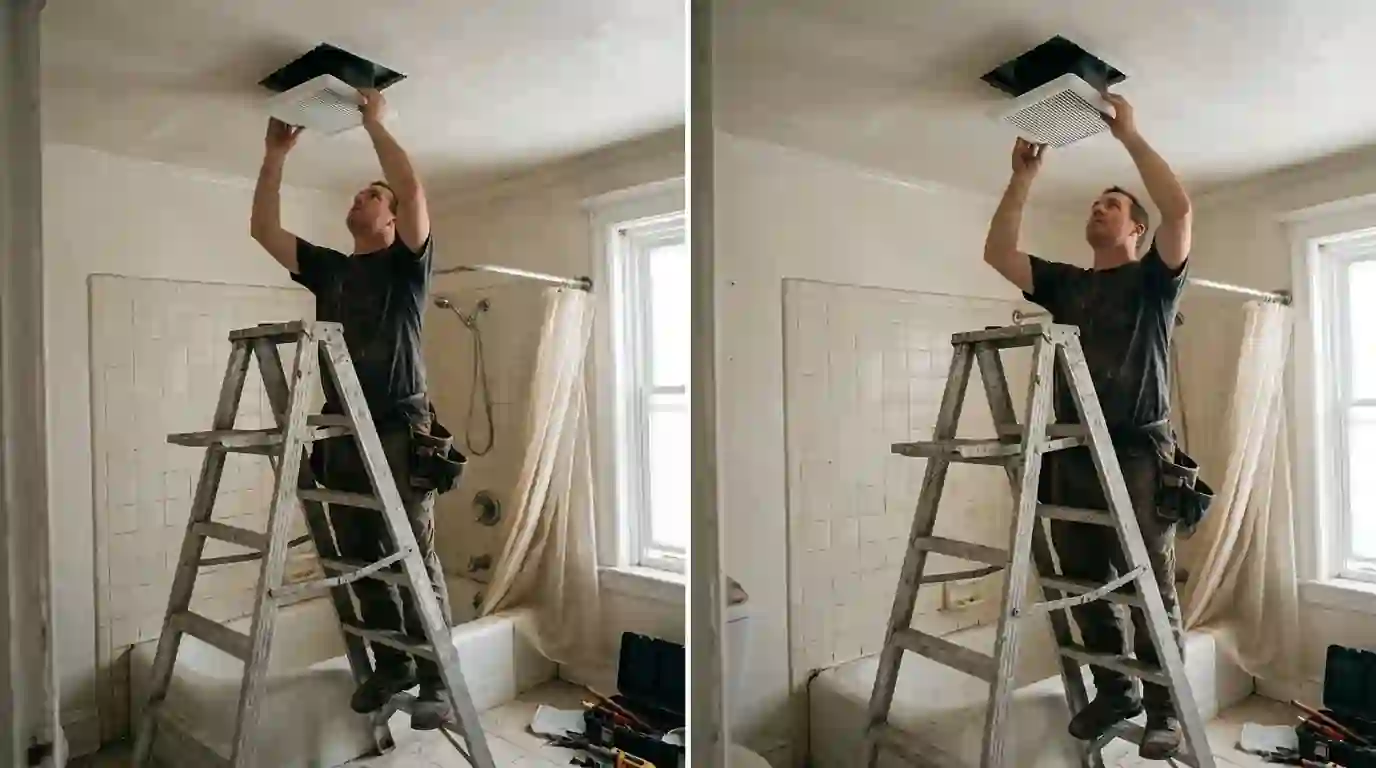
- Ceiling exhaust fans, fan-lights and humidity-sensing models
- Includes
- Sizing, duct to outside, exterior cap, switch or timer wiring
- Covers
- Philadelphia and South Jersey
Short answer
Bathroom exhaust fan installation in Philadelphia, PA comes down to two things: a fan with enough airflow for the room, and a duct that ends outside. For bathrooms up to about 100 square feet, a common guide is one CFM per square foot of floor. We run the duct to a roof, wall or soffit cap with a damper.
What a bathroom fan has to do in an older house
Many older city bathrooms were built with a window and no fan at all. Others got a fan later that is ducted into the attic, into a wall cavity, or nowhere. Either way the shower moisture stays in the room, and paint peels, grout darkens and mold spots the ceiling.
A fan only helps if it moves real air out of the house. That depends on the fan's rating, the duct size and length, and the cap at the end. We plan all three together, then wire the fan so it runs long enough to clear the room.
What decides the price of a bathroom fan install
You see the price before we start. What moves it:
- A new install, or replacing an existing fan
- Duct route: roof, wall or soffit, and its length
- Fan type: standard, fan-light or humidity-sensing
- New wiring or a switch, and ceiling repair around the opening
Fan jobs we do most
Venting to the outside
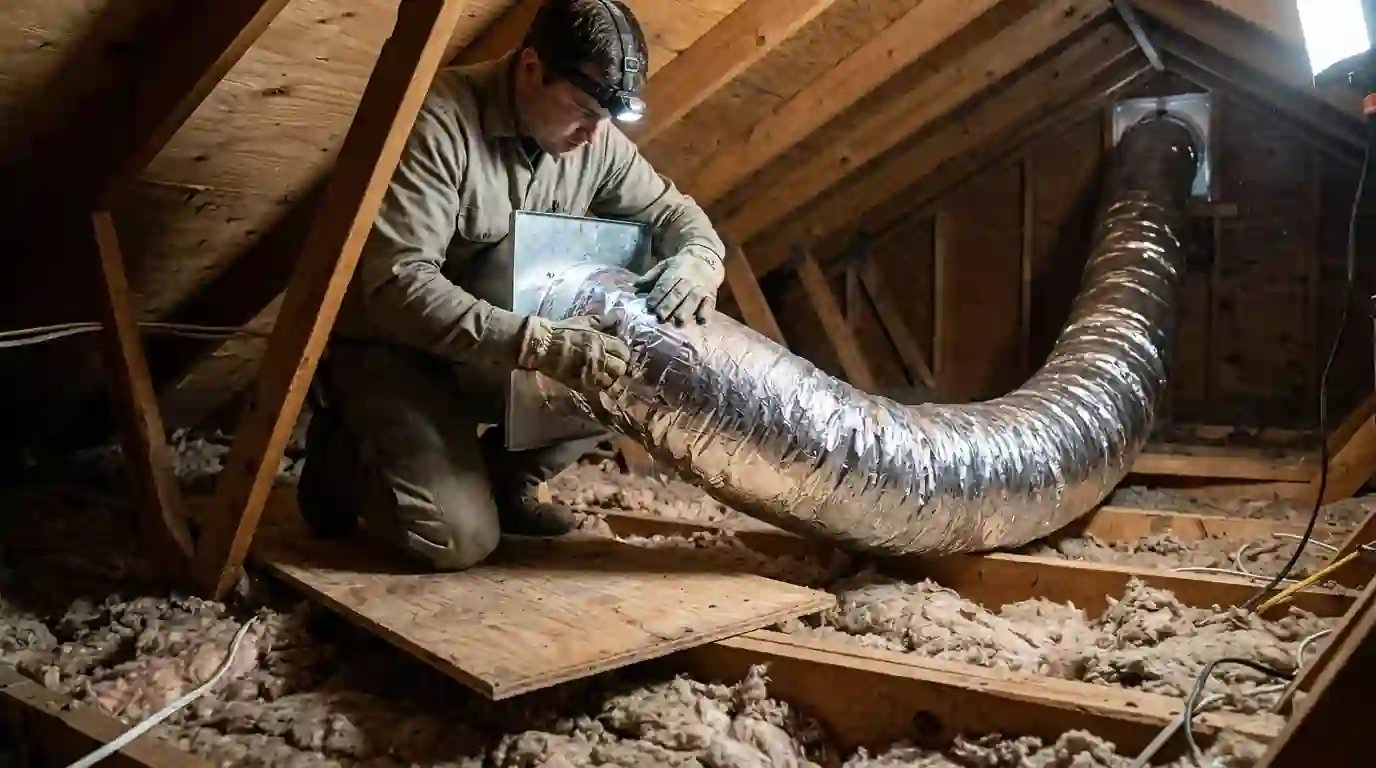
A fan that blows into the attic just moves the moisture somewhere else, where it condenses on cold roof boards and rots them. Code requires bathroom exhaust to end outside. In a row house with a flat roof, a top-floor bathroom usually gets a short duct to a roof cap, and lower floors can use a wall cap. We use insulated duct through cold spaces so condensation does not run back into the fan, keep the run short with few bends, seal the roof penetration, and restore any attic insulation we move.
Humidity-sensing fans
Most people switch the fan off as they leave the bathroom, which is exactly when it is needed. A humidity-sensing fan turns itself on when moisture rises and keeps running until the room is back to normal. That suits households with kids or tenants, and bathrooms with no window. Some models also run quietly at a low continuous speed and boost during showers. We set the sensitivity so the fan is not running all day through a humid Philadelphia summer, and wire it so a wall switch can still override it.
Replacing noisy fans
A loud, rattling fan usually has an old motor with worn bearings, a housing that has come loose from the joist, or a duct so restrictive that the fan strains against it. Swapping just the motor rarely helps for long. We replace the whole unit with a quieter model, rated in sones, check the duct size, and often find a crushed or undersized duct behind the old fan. Where the new housing is a different size, we fit it to the ceiling opening and patch the drywall around it.
How we install a bathroom exhaust fan
Measure the room
Floor area, ceiling height and shower location set the fan size and placement.
Plan the duct route
The shortest path to a roof, wall or soffit cap, with as few bends as possible.
Cut in and mount
Fasten the housing to framing, connect insulated duct and seal every joint.
Cap and wire
Install the exterior cap with a damper, then wire the switch, timer or sensor.
Test the draw
Run the fan and confirm the damper opens and air leaves the cap outside.
What a bathroom fan installation includes
A new fan install from us covers each of these:
- Sizing the fan to the room's floor area and ceiling height
- Mounting the housing securely to framing so it does not rattle
- Insulated or rigid duct sized to the fan's outlet and sealed at every joint
- An exterior roof, wall or soffit cap with a backdraft damper
- Wiring to a switch, timer or humidity sensor
- Removing the old fan and tracing where its duct actually went
- A test confirming air leaves the cap outside
Bathroom moisture in older Philadelphia homes
Older Philadelphia homes tend to have small bathrooms, plaster ceilings and a window nobody opens in January. Plaster holds moisture, and on a top floor under a flat roof the ceiling runs cold in winter, so steam condenses there first. That is where the gray spots and peeling paint appear. Many of these bathrooms sit right under the roof, which makes a short, straight duct to a roof cap possible. On middle floors we look for a wall route or a joist bay that reaches the outside.
Warning signs
Signs your bathroom needs a better fan
Mirror stays fogged well after a shower
Lingering steam means the fan moves too little air, or is not venting outside at all.
Peeling paint on the ceiling
Moisture collecting overhead lifts paint and blisters plaster, often right above the shower or tub.
Mold spots and dark grout
Spots that come back after cleaning mean the room stays damp for too long after each use.
Fan roars but hardly pulls
Hold a tissue to the grille. If it barely moves, the duct is blocked or the fan is worn.
No. Code requires the exhaust to end outside. Attic venting puts moisture on cold roof boards and insulation, which leads to mold and rot over time.
For bathrooms up to about 100 square feet, a common guide is one CFM per square foot. Larger rooms and long duct runs need more, and we size for both.
Long enough to clear the room, which is usually well after the mirror clears. A timer switch or humidity sensor handles it so nobody has to remember.
Yes. We find a duct route through the ceiling or an outside wall, cut in the housing, run power to it, and patch around the opening.
Usually an undersized or crushed duct, or a fan with a high sone rating. A lower sone number means a quieter fan. We check both before replacing anything.