Water Heaters & Home Repairs · open 24/7
Gas tankless water heater installation in Philadelphia, PA
Tired of running out of hot water? We check the gas supply and the vent route first, then install a tankless unit set up for easy descaling later.
- Phones answered 24/7
- Condensing and non-condensing units
Updated October 2026
- What we install
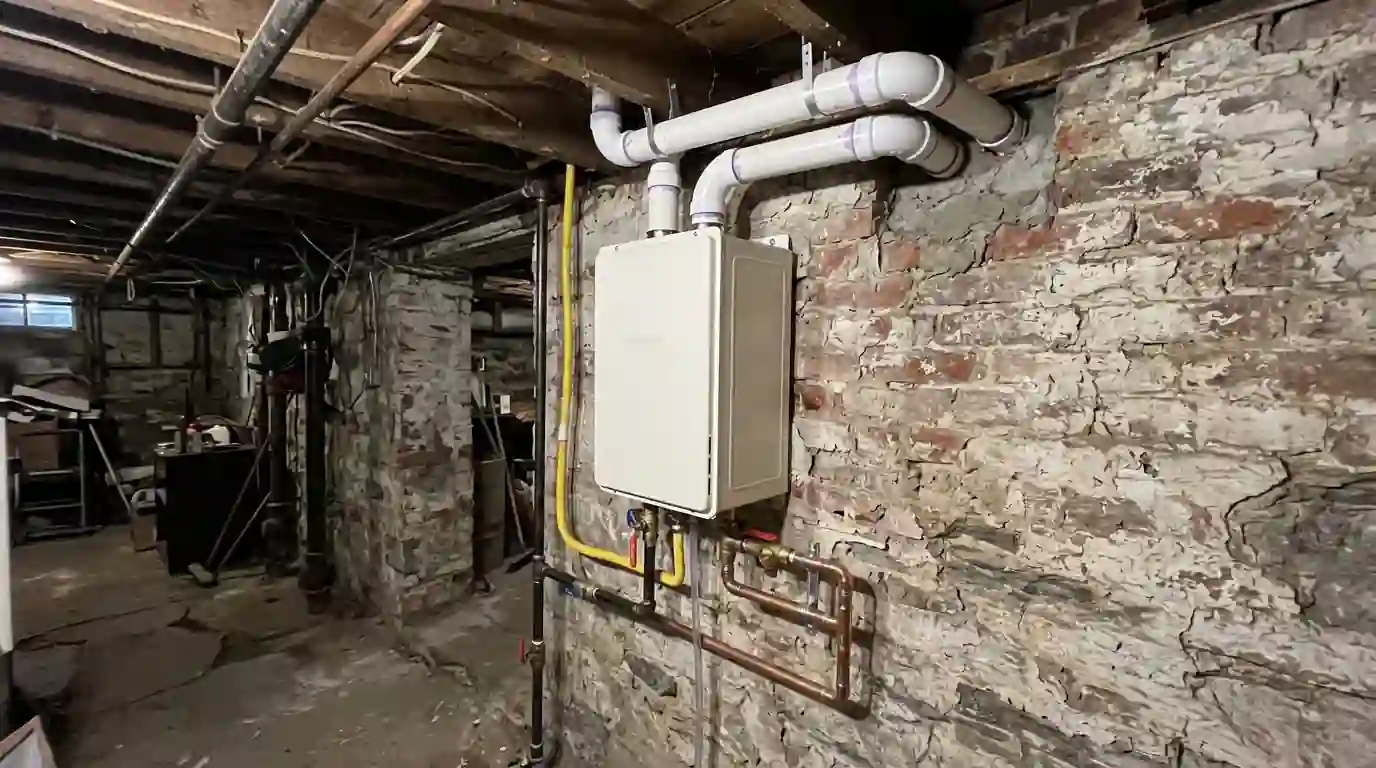
- Gas tankless units, condensing and non-condensing
- Includes
- Gas line sizing, venting, isolation valves, condensate drain
- Covers
- Philadelphia and South Jersey
Short answer
Installing a tankless water heater in Philadelphia, PA comes down to three things: a gas line big enough for a burner several times larger than a tank heater's, a vent route within the maker's limits, and water that will not scale up the heat exchanger quickly. We check all three before recommending a unit.
Is tankless the right move for an older house?
A tankless heater fires only when a hot tap opens, so no tank of water is kept hot all day, and back-to-back showers do not drain a supply. The catch is the burner. It is large, and it needs gas, venting and water conditions that a tank heater never asked for.
In older houses the gas line is often the deciding factor. If the supply cannot carry the load, the unit starves when the furnace and range run at the same time. We size the gas first, then the vent, then the unit.
What decides the price of a tankless install
You see the price before we start. What moves it:
- A gas line upgrade from the meter, and its length
- Vent material and route: PVC, polypropylene or stainless
- Condensing or non-condensing unit, and its capacity
- Where it mounts, plus any outlet or drain it needs
What the install depends on
Gas line sizing
A typical gas tank heater burns around 40,000 BTU an hour. Many whole-house tankless units fire at up to about 199,000. The half-inch line that fed the old tank usually cannot carry that, especially on a long run shared with the furnace and range. We add up every gas appliance, measure the run, and size the pipe from the code tables, which often means a new three-quarter-inch line. The meter has a limit too, and above it the gas utility has to weigh in. See gas line installation.
Venting a tankless unit
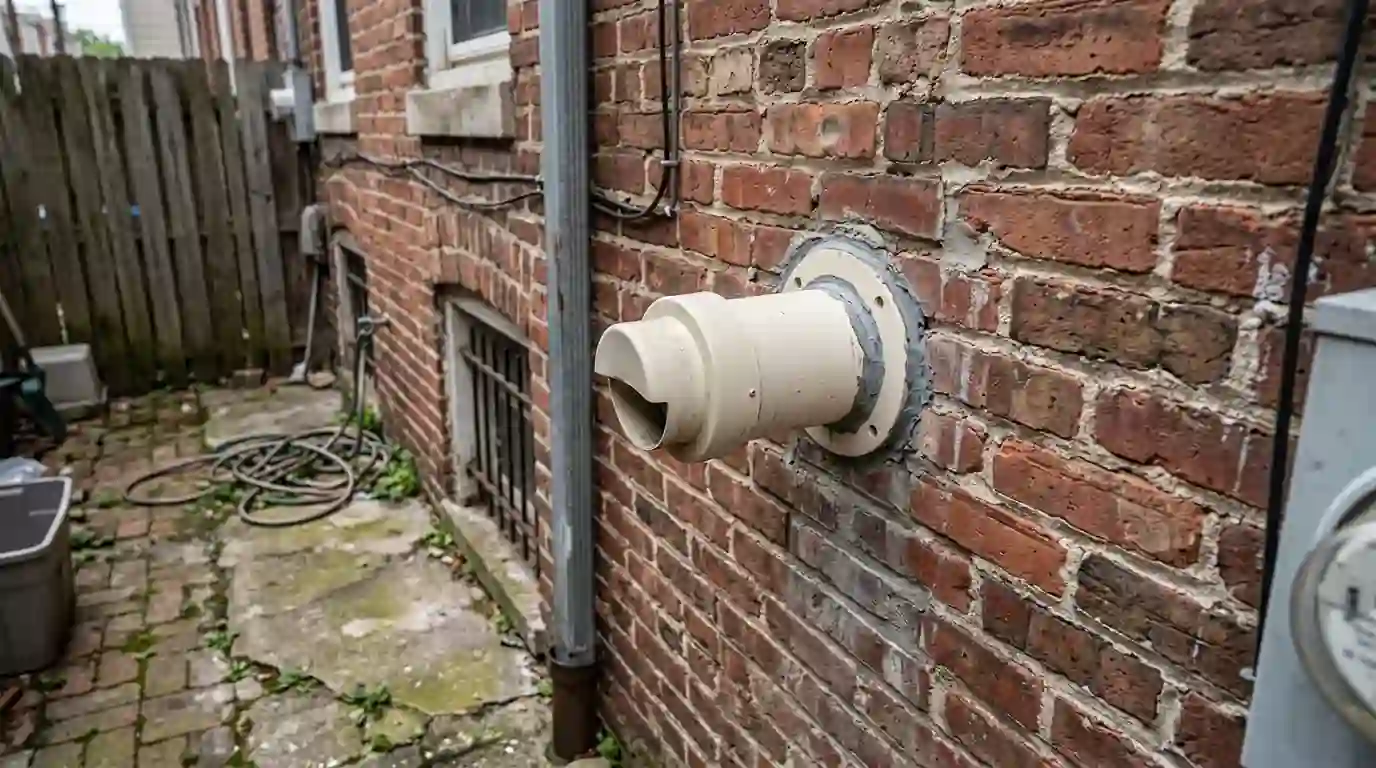
Tankless units do not vent into an unlined masonry chimney the way many tank heaters did. Non-condensing models need stainless vent pipe because their exhaust is hot and corrosive. Condensing models run cooler exhaust through PVC, CPVC or polypropylene, as the maker allows, and need a drain for acidic condensate, usually through a neutralizer. Every maker sets a maximum vent length, an elbow limit, and clearances from windows, doors and air intakes. In a row house the rear wall or roof is often the only route, so we plan it before choosing a model.
Descaling service
Minerals in the water leave scale inside a tankless heat exchanger, which cuts flow, raises exhaust temperature and eventually triggers error codes. That is why we fit isolation valves with service ports on every unit we install. Descaling means closing those valves, pumping a descaling solution through the heat exchanger, flushing it clean, and cleaning the inlet screen. How often depends on the water and hot water use, and the maker's manual gives a schedule. Where scale builds fast, a scale-reducing filter ahead of the unit helps.
Condensing, non-condensing, or staying with a tank
The choice turns on venting, gas supply and how the house uses hot water.
| Option | Fits when | Trade-off |
|---|---|---|
| Condensing tankless | A plastic vent route to an outside wall and a drain are both available | Higher efficiency and PVC venting, but it needs a condensate neutralizer |
| Non-condensing tankless | The vent route is short and stainless pipe can run it | Lower unit price, but stainless venting costs more and runs hot |
| Keep a tank heater | The gas line or meter cannot carry a tankless burner | Simpler install and venting, but stored hot water can run out |
How a tankless install is planned and done
Count the demand
Bathrooms, fixtures and how many run at once, to size the unit's flow rate.
Check gas and vent
Measure the gas run and total load, and walk the vent route to an outside wall.
Plan and permit
Choose the unit, pipe sizes and vent path, and check what permit the job needs.
Install
Remove the tank, mount the unit, and run gas, water, vent and condensate drain.
Test under load
Run several taps at once, check gas pressure, combustion and temperature, and show you the service valves.
What comes with a tankless installation
Every tankless install we do covers these parts of the job:
- A gas load calculation for every appliance on the line
- New gas piping sized from the code tables, with a shutoff and sediment trap
- Removing and hauling away the old tank
- Mounting the unit on the wall with the clearances the maker requires
- Vent pipe and termination run within the maker's length and clearance limits
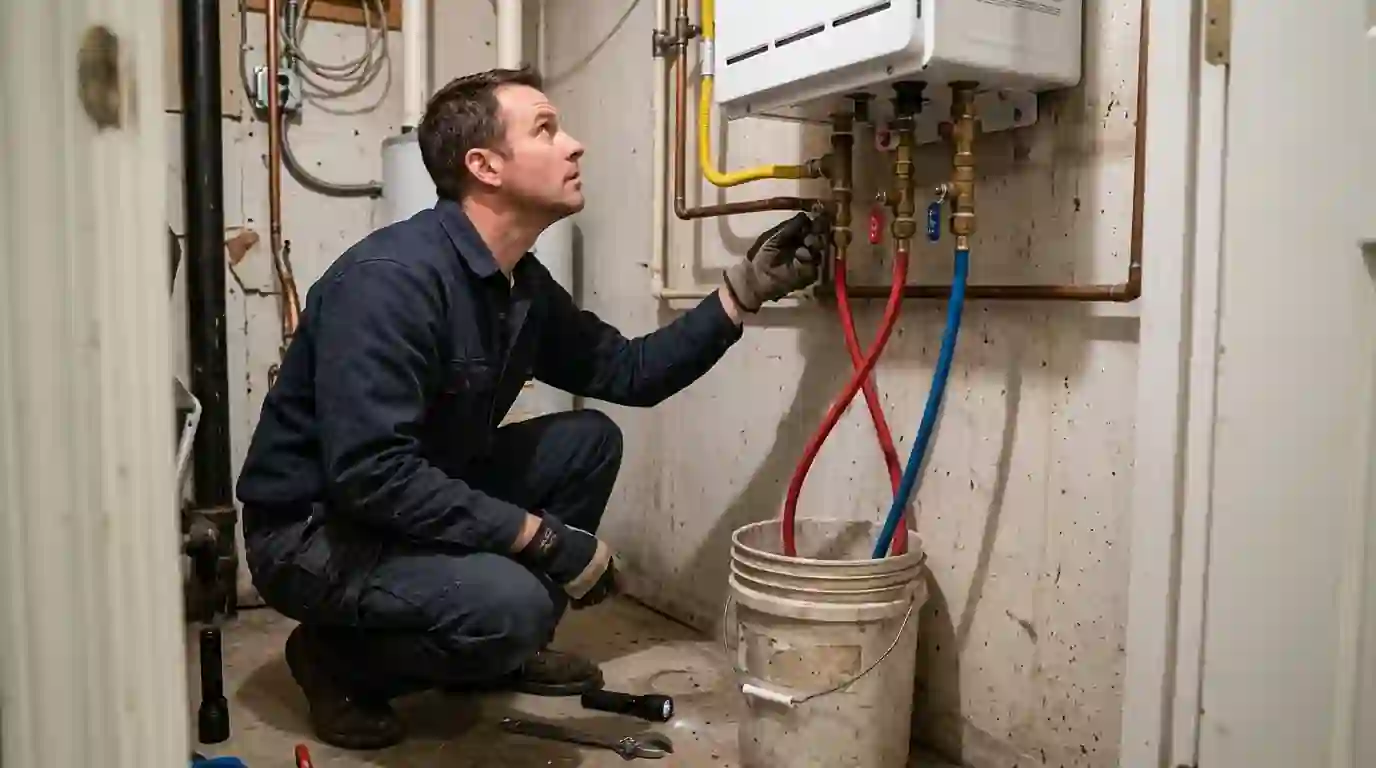
- Isolation valves with service ports for future descaling
- A condensate drain and neutralizer on condensing units, then a full flow and combustion test
Fitting a tankless unit into a Philadelphia row house
Philadelphia row houses put a tankless heater in a tight spot. The utility space is usually a basement between party walls, so the vent leaves through the front, the back, or up through the roof, and a front wall often faces a sidewalk where termination clearances matter. Gas piping in many older homes was run for a boiler, a range and a tank heater, not a large on-demand burner. We walk the vent route and trace the gas line from the meter before choosing a unit.
- Carrier
- Trane
- Lennox
- Rheem
- Goodman
- York
- Bryant
- American Standard
- Mitsubishi Electric
- Daikin
- Fujitsu
- Weil-McLain
- Burnham
We install tankless units from Navien, Rinnai, Rheem and A. O. Smith, matched to gas and venting.
It will not run out the way a tank does, but it has a flow limit. Open too many taps at once and the temperature drops, so we size to your peak use.
Rarely without changes. Most units burn far more gas than a tank heater. We calculate the load and size the line before recommending one.
Yes. It needs a standard outlet for its controls, fan and ignition, so it will not make hot water during a power outage without backup power.
It depends on the water and how much hot water you use. The maker's manual sets the schedule, and we can check the heat exchanger and flush it.
A closet often works with the right vent route. Attics in older houses are a poor spot because of freezing risk and access, so most go in basements.