HVAC Resources
Can a heat pump heat an older Philadelphia house all winter?
Modern heat pumps handle Philadelphia winters far better than the older ones did. Whether yours keeps up depends on the house, the sizing and what backs it up on the coldest nights.
By Lois Cavanaugh, HVAC Guides EditorUpdated October 2026
Short answer
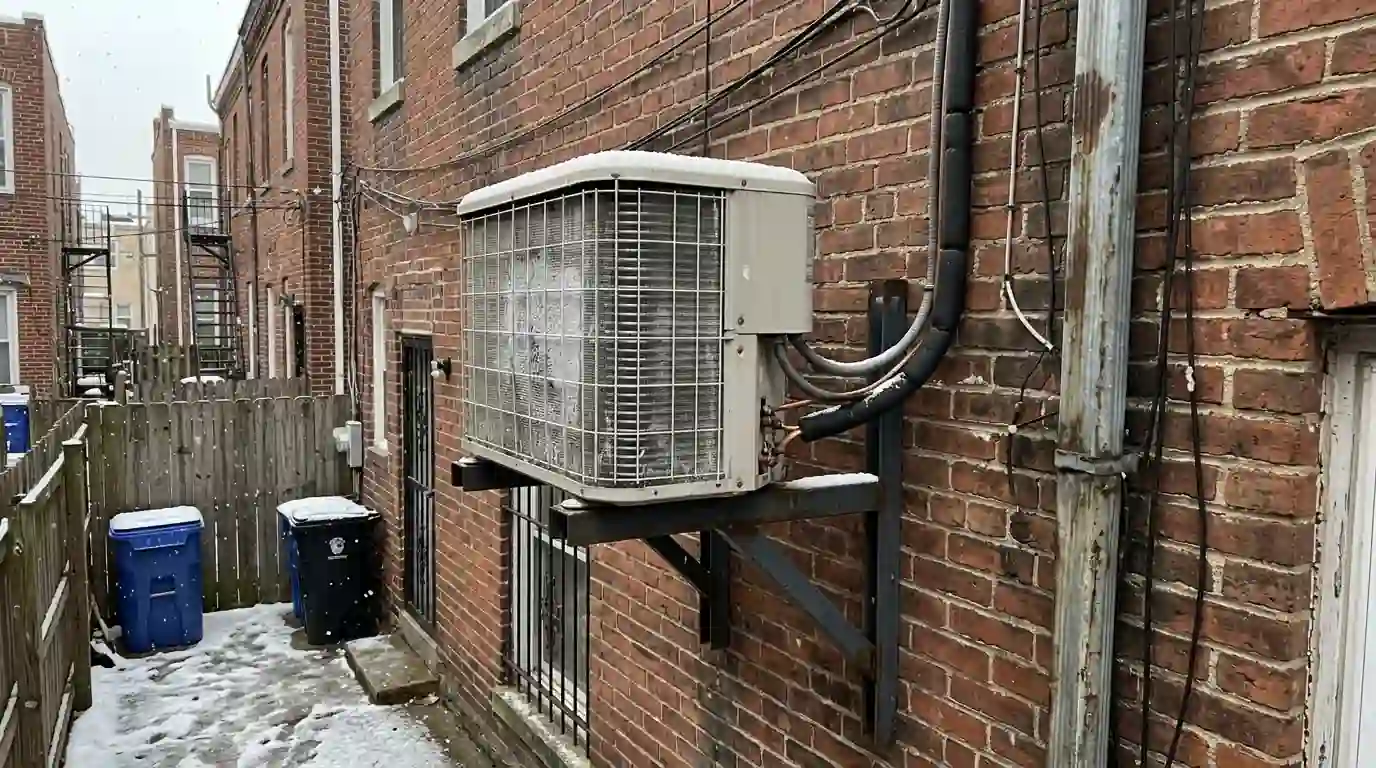
Yes, a properly sized cold-climate heat pump can carry most Philadelphia homes through winter, but older houses change the math. Air leaks, thin walls and radiator-era layouts raise the heat loss, so the system needs a room-by-room load calculation, a plan for the coldest nights, and an outdoor unit placed where snow and ice cannot bury it.
Why heat pumps got a reputation for weak winter heat
A heat pump moves heat rather than making it. In winter it pulls heat out of the outdoor air, even cold air, and pumps it inside. The colder it gets, the harder that job becomes, and older single-speed heat pumps lost capacity quickly as the temperature fell. Plenty of people remember lukewarm air from the vents and electric backup strips that seemed to run half the winter.
Current cold-climate models use variable-speed compressors that ramp up as the temperature drops, and they keep producing useful heat much deeper into the cold than the units that earned the old reputation. The air at the register still feels cooler than a gas furnace's blast, because a heat pump delivers heat longer and more gently. That is normal operation, not a fault.
Thermostat habits change too. Deep nighttime setbacks that suit a gas furnace can work against a heat pump, because pulling a cold house back up in the morning may call on the backup heat. Most owners do better holding a steadier temperature, or using a thermostat built for heat pumps that recovers gradually.
How an older Philadelphia house changes the sizing
WHYY profiled a Philadelphia rowhouse that has gone through more than 250 years of energy changes, from firewood to solar. Much of the city's housing carries a version of that history, with each new heating system layered into walls, chimneys and basements that were never built to hold heat tightly. A heat pump has to be sized for the house as it stands today, drafts and all.
That takes a load calculation, room by room, using this house's walls, windows, insulation and air leakage. Sizing by the old boiler's rating is a mistake, because many old boilers were oversized from the start. Sizing by square footage alone misses the gap between a sealed middle rowhome and an end unit with three exposed walls.
The electrical service gets checked at the same visit. A heat pump and its backup strips add a large electrical load, and some older panels have no open space for the circuits without upgrades.
- End units and twins lose more heat than middle rowhomes
- Top floors under a flat roof lose heat fast if the roof has little insulation
- Original windows and open chimneys add air leakage
- An unheated basement makes the first floor run colder
Keep the radiators, add backup, or go all electric?
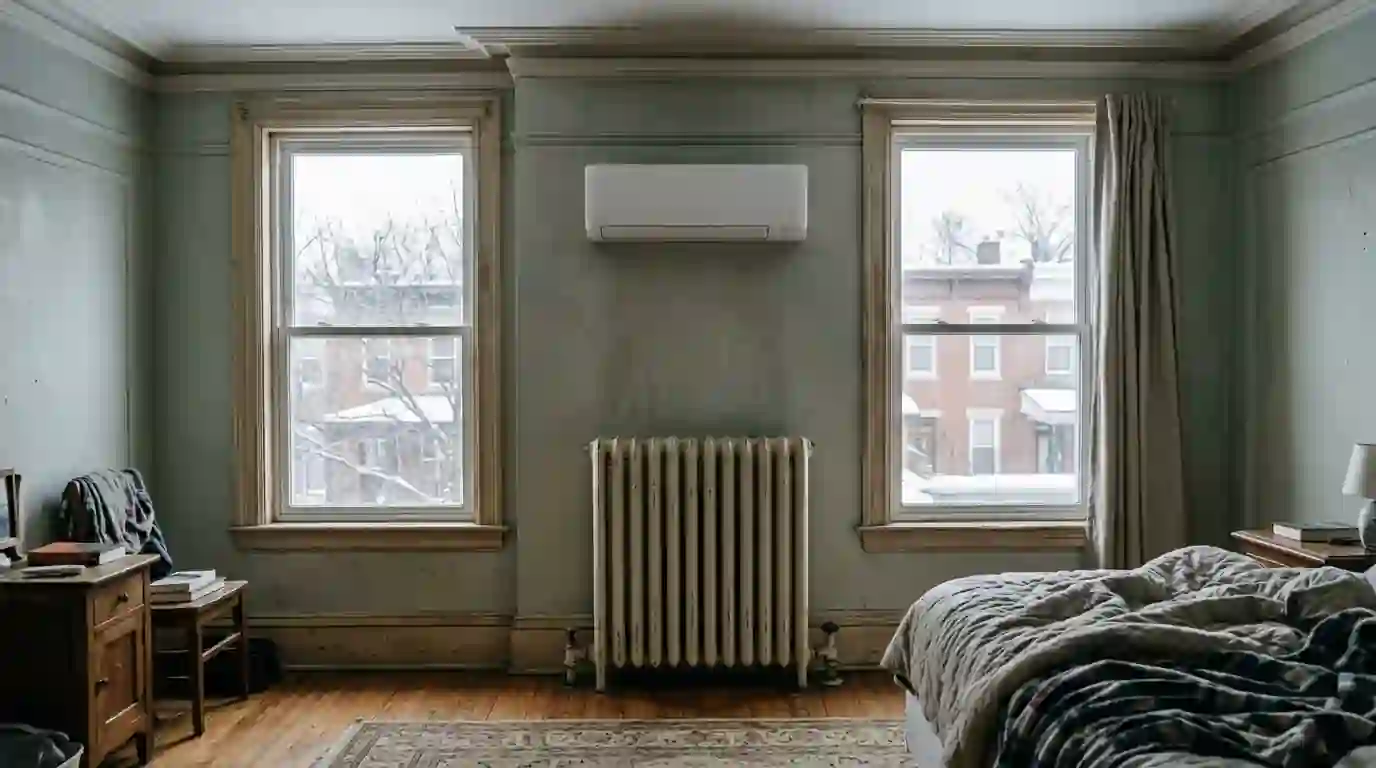
Many homeowners do not have to pick one heat source. In a house with steam or hot water radiators, a ductless mini-split can handle cooling and the milder heating months, while the boiler stays for the deepest cold. The radiators keep working as they always have. A forced-air house can pair a heat pump with a gas furnace in what is called a dual-fuel setup, where the thermostat hands off to the furnace once the heat pump is no longer the sensible source.
Going fully electric works too, but then the system needs enough capacity for the coldest stretch of the year, or backup electric heat strips sized to cover it. Strips work; they just cost more to run, so the goal is a heat pump that rarely calls on them. Which route fits depends on the house, the existing equipment and how much life that equipment has left.
Heat pump blowing cold air tonight? Call (267) 392-1418 any hour; a person answers.
Call (267) 392-1418Where the outdoor unit goes behind a rowhome
Placement matters more in winter than people expect. In heating mode the outdoor coil gets cold enough to frost over, and the unit runs a defrost cycle to clear it. That melt water has to drain away rather than refreeze into a block of ice under the unit. Snow drifting against the coil, or water dripping off a roof edge onto it, chokes the airflow.
Rowhomes rarely have a side yard, so outdoor units go on raised pads in the rear yard, on wall brackets or on the roof. Each spot has trade-offs. A wall bracket keeps the unit above drifts but can carry vibration into a party wall. A roof unit stays clear of snowbanks but faces more wind and needs a safe way up for service. The refrigerant line route and the drain path change with each choice.
Sound matters where a row of small rear yards sits close together. Variable-speed outdoor units are quiet for most of their run time, but one set right under a neighbor's bedroom window, or bolted to a wall that carries the hum, can still cause friction. We look at the spot from the neighbors' side too.
What normal winter operation looks and sounds like
Homeowners new to heat pumps often call about things that are working as designed. Knowing the difference saves a worried night.
If the outdoor unit is encased in ice, or the house keeps losing ground on a cold day, switch the thermostat to emergency heat if it has that setting, and call. Do not chip ice off the coil. The fins bend easily and the refrigerant tubing behind them is thin.
- Steam rising from the outdoor unit during defrost is normal
- A whoosh, then the outdoor fan pausing for a short while, is the defrost cycle
- Long run times on cold days are normal for a variable-speed unit
- Register air that feels warm rather than hot is expected
- A solid block of ice, a fan that will not turn or constant backup heat is not normal
Make the house easier to heat first
A heat pump has the easiest time in a house that is not leaking heat. In older homes, the work that usually helps most is unglamorous: sealing and insulating the attic or the cavity under a flat roof, closing chimney flues that no longer serve any appliance, and sealing duct joints that run through cold spaces. Our attic insulation and duct sealing pages cover both.
None of this is required before a heat pump goes in, but it changes the size of system the house needs. A tighter house can often use a smaller unit that runs more steadily, which is more comfortable and easier on the equipment.
Questions to ask before you commit
A sound heat pump proposal for an older Philadelphia house answers a handful of questions in writing. If yours does not, ask.
Our heat pump installation page explains how we size and set up a system, and heat pump repair covers the winter faults we see most often.
- What load calculation was done, and for which rooms?
- How will the house be heated on the coldest nights?
- Where will the outdoor unit sit, and where will defrost water go?
- Will the boiler or furnace stay, and how will the controls switch between them?
- Does the electrical panel have room for the new circuit?
A cold-climate model sized for the house keeps running through a typical cold snap. Whether it covers the whole load alone depends on the house, which is why every plan includes a backup.
Yes. Many radiator homes add ductless heads for cooling and mild-weather heat, then let the boiler handle the deepest cold. The two run on separate controls or a thermostat set up to switch between them.
That is the defrost cycle melting frost off the outdoor coil, and it is normal. A unit that stays encased in ice, or never seems to defrost, needs a service call.
Yes. Ductless systems put a head in each room or zone, connected by small refrigerant lines run through the wall, which suits rowhomes that heat with radiators and have no ductwork.
No. It is there for when the heat pump cannot keep up or has stopped. It costs more to run, so if it comes on often, have the heat pump checked.
Sources: WHYY
Keep reading
Related services and guides
Heat Pump Installation
Cold-climate and dual-fuel heat pumps for local winters.
Heat Pump Repair
Heat pumps stuck in defrost, blowing cool or running nonstop.
Ductless Mini-Split Installation
Wall units for hot third floors, additions and basements.
Ductless or High-Velocity AC for a House With No Ducts
How ductless mini-splits and high-velocity systems compare for older homes that heat with radiators.
Steam or Hot Water Heat: Which Does Your House Have?
How to tell steam heat from hot water by looking at the boiler, the radiators and the pipes.