HVAC Resources
Steam or hot water heat: how to tell which system your house has
Both use a boiler and both can heat cast-iron radiators, but they behave differently and need different care. A few minutes in the basement usually settles the question.
By Lois Cavanaugh, HVAC Guides EditorUpdated October 2026
Short answer
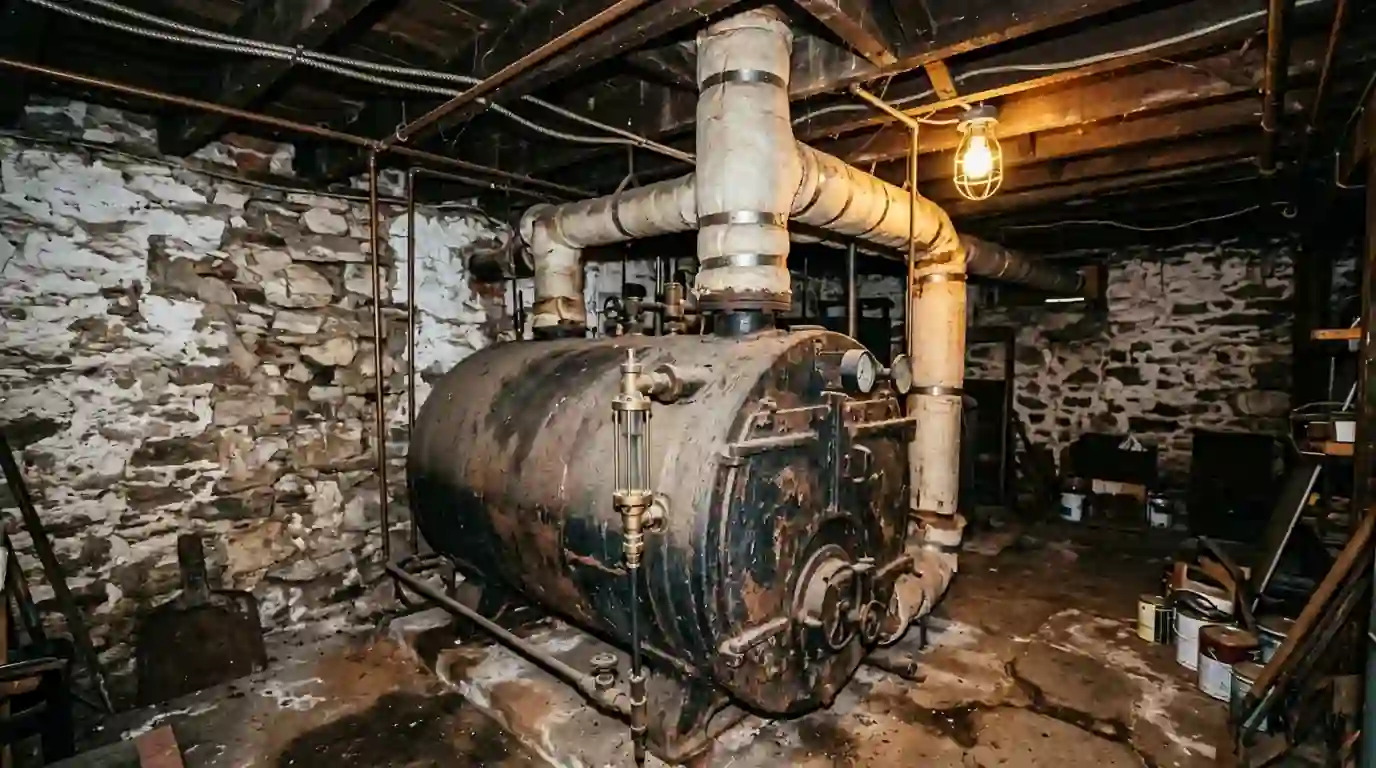
Look at the boiler first. A steam boiler has a glass sight tube showing a water level, a low-pressure gauge and no expansion tank. A hot-water boiler has a combined pressure and temperature gauge, a circulator pump and an expansion tank. Radiators confirm it: one-pipe steam radiators have a small air vent on the side, while hot-water radiators have a bleed valve near the top.
Start at the boiler: the clues are on the outside
You do not need to open anything to tell the two apart. Stand in front of the boiler with a flashlight and look for these parts.
A steam boiler is only partly full of water. It boils that water, and the steam pushes its own way through the pipes to the radiators. A hot-water boiler is completely full, and a pump circulates heated water through a closed loop. Everything else on this page follows from that one difference.
Some houses have been changed from one system to the other over the years, so a boiler room can carry leftovers of both. Capped pipes and old fittings that no longer connect to anything are common. If the clues at the boiler disagree, the radiators settle it.
- A glass tube on the side with water partway up is a sight glass, and it means steam.
- A gauge showing pressure and temperature together usually means hot water.
- A tank near the boiler or up in the ceiling is an expansion tank, which only hot-water systems need.
- A small pump on the piping is a circulator, which moves water through a hot-water loop.
- A float chamber or probe on the side of the boiler is a low-water cutoff, a steam safety.
Read the radiators: vents, valves and pipe connections
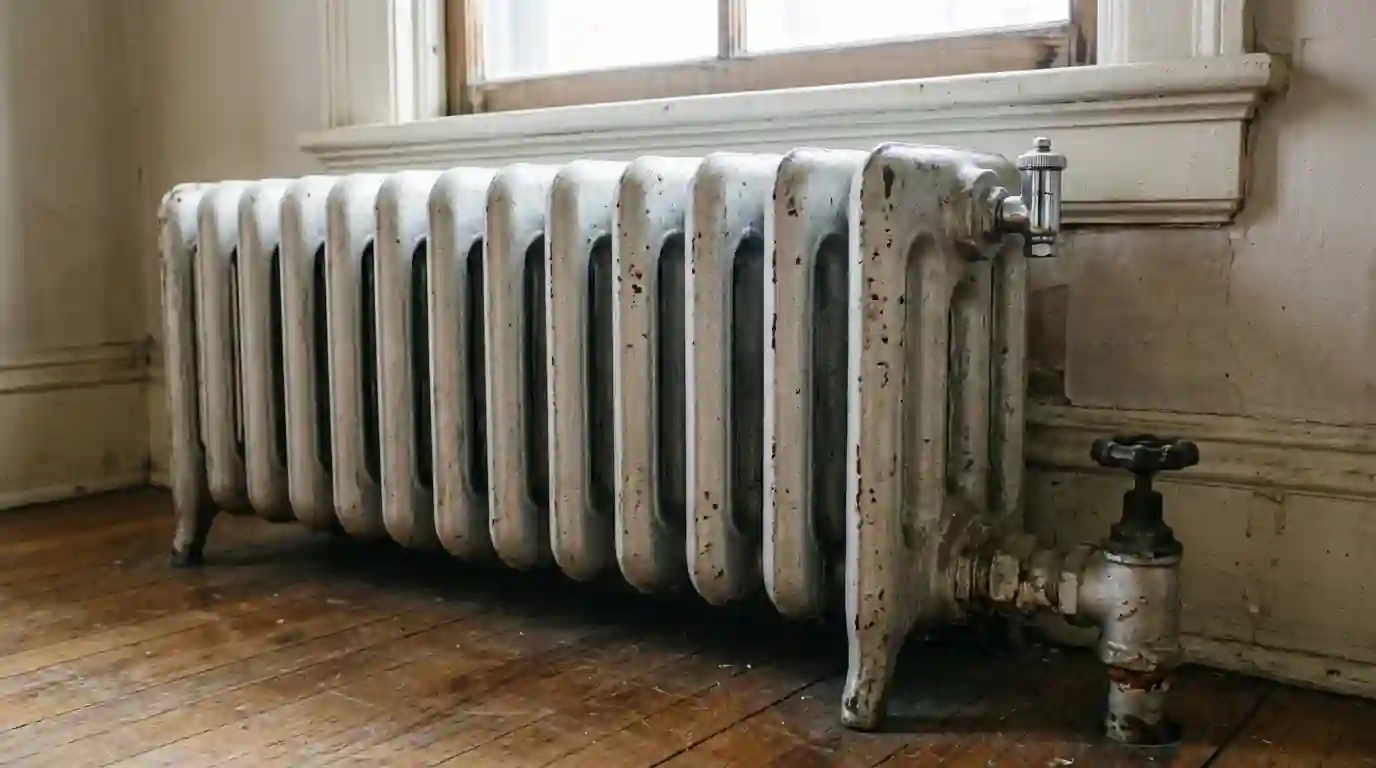
A one-pipe steam radiator has a single pipe connection with a fairly large valve at one end, and a small air vent, often chrome or brass, partway up the opposite end. When the heat comes on you may hear that vent hiss as air escapes ahead of the steam. This is the setup most people picture when they think of steam heat.
Two-pipe steam radiators have a connection at each end, with a trap on the return side instead of an air vent. Hot-water radiators also have two connections, usually lower down, plus a small bleed valve near the top that takes a radiator key. Baseboard fin-tube heaters running along the floor are almost always hot water.
Steam radiators get hot fast and cool off quickly. Hot-water radiators warm up more slowly and hold their heat longer. Banging and hissing point toward steam, while gurgling and trickling sounds point toward air trapped in a hot-water loop.
Why so many Philadelphia homes still heat with boilers
Most Philadelphia homes went up before 1950, according to Census figures reported by The Philadelphia Inquirer. Houses of that age were commonly heated by a boiler feeding cast-iron radiators, and plenty still run on that original piping today, even where the boiler itself has been replaced once or twice.
Heating in old houses changes in layers. One Philadelphia rowhouse profiled by WHYY has been through more than 250 years of energy changes, from firewood all the way to solar. Most homes have a shorter story, but the same layering shows up in basements across the city: a newer boiler on old pipes, a gravity system fitted with a pump, or a steam system with one section converted to something else.
Radiators cold or banging tonight? Call (267) 392-1418 any hour; a person answers.
Call (267) 392-1418Living with steam: what to watch and what to leave alone
Steam is simple in principle and fussy in practice. The water level matters most. During the heating season, glance at the sight glass now and then. Water should sit partway up the glass. If it is empty or nearly so, do not add water to a hot boiler. Turn it off, let it cool, and call.
One-pipe radiator valves should be fully open or fully closed. A half-closed valve traps condensed water in the radiator, which leads to banging and spitting at the vent. Radiators also need a slight tilt back toward the valve so water can drain, and one that has settled the wrong way will knock every time the heat comes on.
Banging pipes, radiators that stay cold while others are hot, and a boiler that keeps shutting off on low water are jobs for a tech who works on steam. They usually trace back to pipe pitch, failed main or radiator vents, or a dirty low-water cutoff, and a steam heat repair visit starts with exactly those.
Living with hot water: pressure, air and the expansion tank
A hot-water system is sealed and runs under pressure, so the gauge is the thing to watch. Note where the needle sits on a normal winter day. If it climbs noticeably higher every time the boiler fires, or water drips from the relief valve on the side of the boiler, the expansion tank has often lost its air charge. That calls for a tech, and the relief valve should never be capped or plugged.
Air in the loop shows up as gurgling and radiators that are warm at the bottom and cold at the top. Bleeding them with a radiator key at the start of the season, a towel in hand, often fixes it. If radiators need bleeding constantly, or the pressure keeps dropping, there may be a leak or a failing fill valve, and that is boiler repair rather than a homeowner job.
Newer hot-water systems are often split into zones, each with its own thermostat and either its own circulator or a zone valve. If one floor goes cold while the others are fine, the problem is usually in that zone's pump, valve or thermostat rather than the boiler.
Warning signs on either system that need a tech
Some symptoms look minor and are not. Whichever system you have, call rather than troubleshoot if you see any of these.
Leaking radiator valves and cold radiators can often be fixed without touching the boiler at all. Radiator repair deals with valves, vents and the radiators themselves.
- Water on the floor around the boiler or under a radiator valve
- A relief valve dripping or discharging
- A steam boiler that keeps shutting off, or an empty sight glass
- Soot, scorch marks or an exhaust smell near the boiler
- Any carbon monoxide alarm, which is a reason to get out before anything else
How knowing your system changes the repair
Telling us on the phone whether you have steam or hot water saves time on the visit. The parts differ, the safety controls differ, and so do the first questions a tech asks. Steam problems tend to be about water level, venting and pipe pitch. Hot-water problems tend to be about pressure, air and the pump.
It matters when you plan changes, too. Moving or removing a radiator during a renovation, replacing the boiler, or adding heat to a finished basement all work differently on steam than on hot water. On steam especially, a change in one room can throw off pipe pitch and venting across the house, so plan it with a tech before the contractor starts.
Thermostats care about the difference as well. A steam system keeps heating for a while after the thermostat is satisfied, because the radiators are already full of steam, so the thermostat should be set for fewer, longer cycles. One left on forced-air settings can make steam heat uneven and noisy.
Sometimes. It means checking whether the radiators and pipes can hold pressure, adding a pump and an expansion tank, and often replacing some piping. A tech should inspect the whole system before recommending it.
Steam runs hotter and can lose more heat through bare pipes and poor venting. A well-kept steam system with working vents and insulated mains can still heat a house evenly and reliably.
No. Steam radiators let air out on their own through the small vent on the side. If a vent is stuck shut or spitting water, it needs replacing, not bleeding with a key.
Usually a leak somewhere in the loop, a relief valve that has been discharging, or a fill valve that is not keeping up. Watch for damp spots and call so a tech can trace it.
Steam takes specific knowledge of venting, pipe pitch and water level controls. Ask whoever comes out whether they work on steam regularly. We repair both steam and hot-water systems.
Sources: The Philadelphia Inquirer, WHYY
Keep reading
Related services and guides
Steam Heat Repair
Banging pipes, cold radiators and steam boilers that cut out.
Boiler Repair
Hot-water boilers that lock out, leak or leave rooms cold.
Radiator & Baseboard Repair
Cold radiators, leaking valves and tired baseboard loops.
No Heat in Philadelphia: What to Check First
The safe checks to make when the heat stops, in order, and the point where you should call.
Do Heat Pumps Keep Up in Philadelphia Winters?
What decides whether a heat pump can heat an older Philadelphia house through winter, and what backs it up.