HVAC Resources
What the 2025 refrigerant change means for an older central AC
Your current air conditioner is not banned and does not have to come out. What changed is the equipment that replaces it, and that shapes repair decisions now.
By Lois Cavanaugh, HVAC Guides EditorUpdated October 2026
Short answer
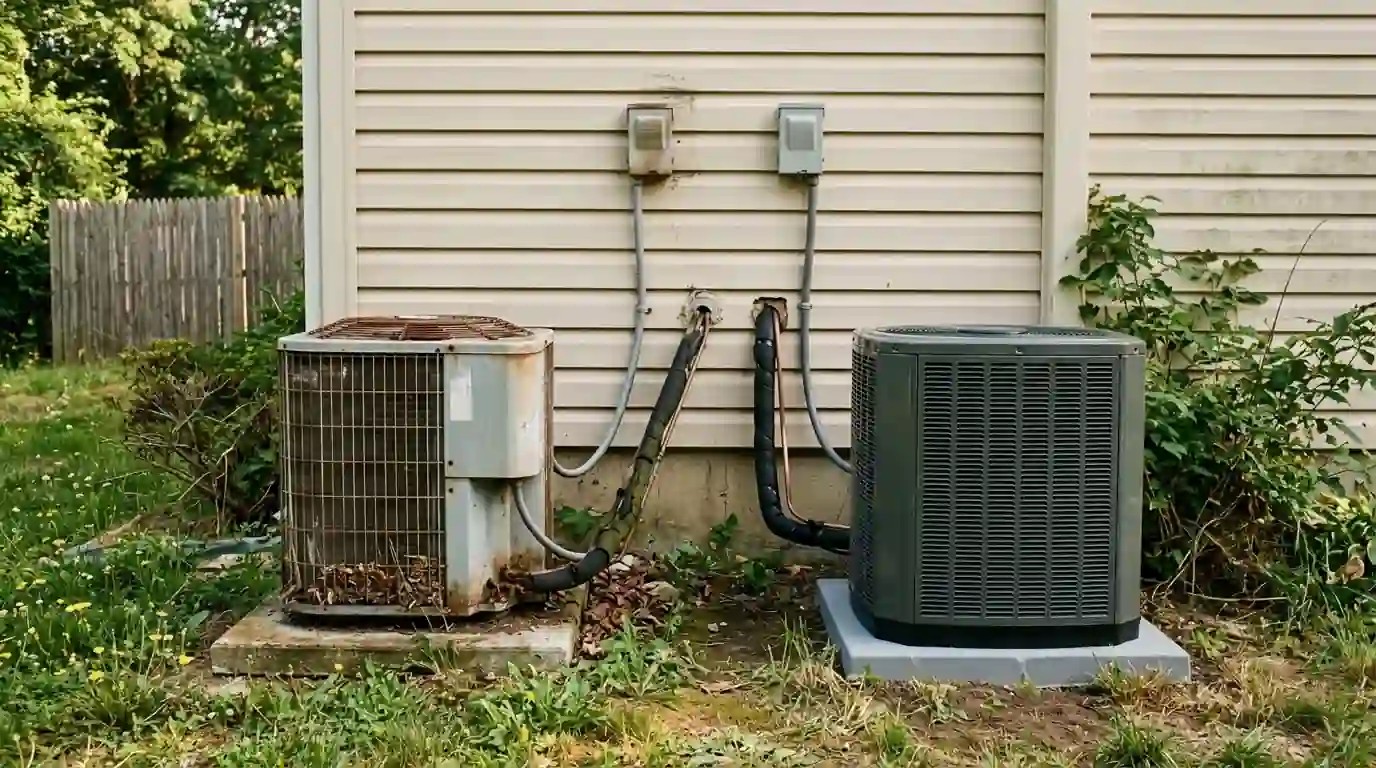
An EPA refrigerant mandate took effect in 2025 and changed what homeowners need to know about new air conditioners. An existing system can keep running and be serviced with the refrigerant it was built for. The change matters when a major part fails, because new systems use different refrigerants and cannot be mixed with old components.
What actually changed in 2025
The EPA mandate that took effect in 2025 is about refrigerant, and it changed what a homeowner needs to know before buying a new air conditioner. The short version: new central air and heat pump systems are built around newer refrigerants with a lower climate impact, replacing R-410A, which most systems installed in the years before the change were designed for.
Industry experts described 2025 as bringing big changes to air conditioning units, and for once the phrase fits. The new refrigerants, mainly R-454B and R-32, run at different pressures and are classed as mildly flammable, so the equipment, the coils, the installation practice and the tools that go with them all changed too.
What did not change: nobody has to remove a working system. An R-410A air conditioner can keep running and can still be repaired and recharged with R-410A.
Which refrigerant is in your system now?
The data plate on the outdoor unit lists the refrigerant type and the factory charge. Look for R-22, R-410A, or on new equipment R-454B or R-32. The same information is usually on a label on the indoor coil or the furnace cabinet. If the plate has faded, the model number tells a tech what you have.
Mixing is not an option. Topping off one refrigerant with another, or with a replacement blend the system was not designed for, can damage the compressor and makes every later service call harder. Each type puts you in a different position:
- R-22: no longer produced, so service relies on recovered and reclaimed supply
- R-410A: still serviceable, with supply expected to tighten as the phasedown continues
- R-454B or R-32: current equipment, built to the new rules
Why a refrigerant leak matters more than it used to
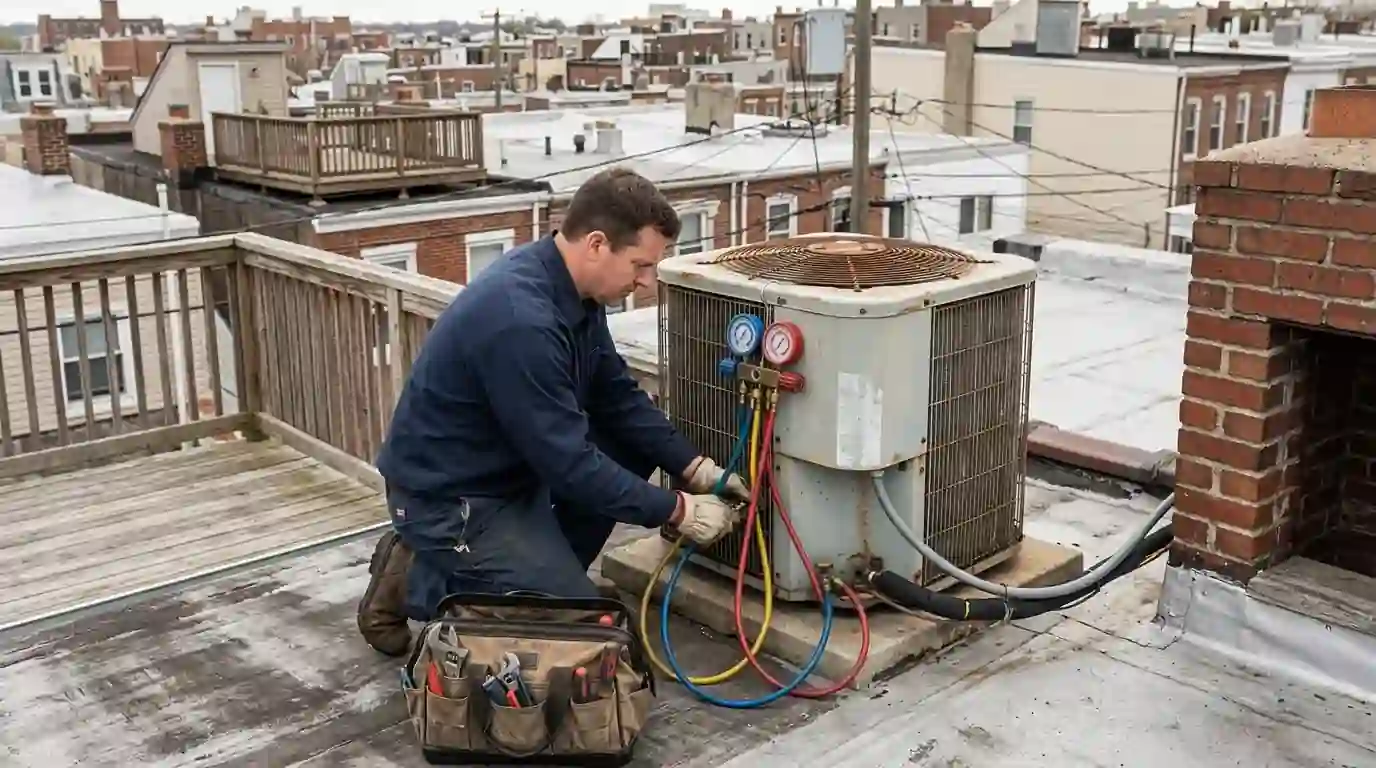
On an older system, a refrigerant leak used to mean a repair and a recharge. It still can, and on many systems finding and fixing the leak is the right call. A tech locates it with an electronic detector, bubble solution or a nitrogen pressure test, repairs it, pulls a deep vacuum and weighs in the correct charge. Adding refrigerant without finding the leak only delays the next call. Our refrigerant leak repair page walks through that process.
What has changed is the end of that road. When the leak is in a corroded evaporator coil or in the compressor itself, the replacement part has to match the old refrigerant. Parts for repairing existing R-410A systems can still be made, but the decision now carries a question it did not have before: whether to put a major new part into a system whose eventual replacement will be a different design.
Signs worth a call: the system runs longer than it used to without cooling the house, ice forms on the indoor coil or the copper line, or someone has already added refrigerant once.
AC low on refrigerant again this summer? Call (267) 392-1418 any hour; a person answers.
Call (267) 392-1418The coil and condenser trap
A central air system is a matched pair: the outdoor condenser and the indoor evaporator coil, joined by the line set. Both halves have to be designed for the same refrigerant. A condenser built for the newer refrigerants cannot be connected to an old R-410A coil, and a new-refrigerant coil does not belong on an old R-410A condenser.
That catches homeowners who replace one half after a failure. If the outdoor unit dies and the indoor coil is fairly new, it is tempting to replace only the condenser. Moving to a new-refrigerant outdoor unit means a new-refrigerant indoor coil as well, plus a check of whether the line set can be reused. The same thinking runs the other way, and evaporator coil replacement on an older system has to match the refrigerant already in it.
Repair the old system or plan the replacement?
There is no single answer, but the question gets clearer once you list what you know. On an R-410A system with a small, findable leak and a healthy compressor, repair usually makes sense. On an R-22 system with a leaking coil, the case for repair is weak, because every recharge draws on a shrinking supply. In between, the age of the system, how often it has needed service and the condition of the coil and compressor decide it. These are the questions we work through with you:
- Has the system been recharged before, and how often?
- Is the leak at a fitting or in the coil?
- Does the compressor test healthy?
- Does it keep the house comfortable on the hottest days?
- Is the furnace or air handler near the end of its life too?
- Does the house have rooms the old system never cooled well?
What installing new-refrigerant equipment involves
Installing current equipment is more than a box swap. Because the newer refrigerants are mildly flammable, many new indoor units include a refrigerant leak sensor that tells the system to run the blower and disperse any leak, and installers follow updated handling and brazing practice.
Technicians need recovery machines, gauges and leak detectors rated for the new refrigerants, so the tools in the truck matter as much as the equipment on the pad. The basics still decide whether it works well: a load calculation instead of copying the old size, a line set that is new or confirmed clean and correctly sized, a deep vacuum before charging, and a charge set by measurement rather than by feel. On Philadelphia rowhomes the condenser often sits on a flat roof or in a small rear yard, and the route for new refrigerant lines can drive the whole plan. Our AC installation page covers how we set it up.
What to do with your AC this season
If your system works, nothing has to happen today. Find the refrigerant type on the data plate, keep the outdoor coil clear of leaves and cottonwood fluff, change the filter, and get a tune-up so a small problem is caught early. If it is leaking or a major part is failing, get the repair and the replacement priced side by side, so the decision is made with both in front of you and not in the middle of a heat wave.
Timing is the part homeowners control. An older system that gets through the summer with a known slow leak is a good candidate for a replacement planned in the fall or early spring, when there is time to compare proposals and install without a hot house pushing the decision. A system that fails outright in July leaves fewer choices.
Keep the service records too. A note of when refrigerant was added, how much and what the tech found tells the next person far more than a guess, and it is the clearest evidence of whether a leak is getting worse.
No. Existing systems can keep running and can be repaired and recharged with the refrigerant they were built for. The change applies to new equipment, which matters once a major part fails.
Not to the new refrigerants. Some R-22 systems can be retrofitted to an alternative blend, but it depends on the equipment and is rarely worth it on an aging system with an active leak.
Production is being phased down, so supply is expected to tighten over time. Service will continue, but a system that leaks every season becomes harder to justify keeping.
They are classed as mildly flammable, so the equipment is designed around that, with leak sensors on many indoor units and updated installation practice. In normal operation the refrigerant stays sealed inside the system.
Only when both halves are designed for the same refrigerant. A new-refrigerant condenser needs a matching indoor coil, and the line set has to be checked before it is reused.
Keep reading
Related services and guides
AC Refrigerant Leak Repair
Finding the leak before anyone adds refrigerant.
Central AC Installation & Replacement
New central air systems matched to the ducts you have.
Evaporator Coil Replacement
Leaking or rotted indoor coils swapped and matched.
Repair or Replace an Older Central AC in Philadelphia
How to weigh a repair against replacement on an aging central air system, part by part.
Choosing an HVAC Contractor in Philadelphia
The questions that separate HVAC quotes in Philadelphia: permits, load calculations, written scope and who does the work.