HVAC Resources
Water heater warning signs to catch before the tank leaks
Most tank water heaters give some notice before they fail. Here is how to read the noises, the water and the base of the tank, and what to do when one shows up.
By Lois Cavanaugh, HVAC Guides EditorUpdated October 2026
Short answer
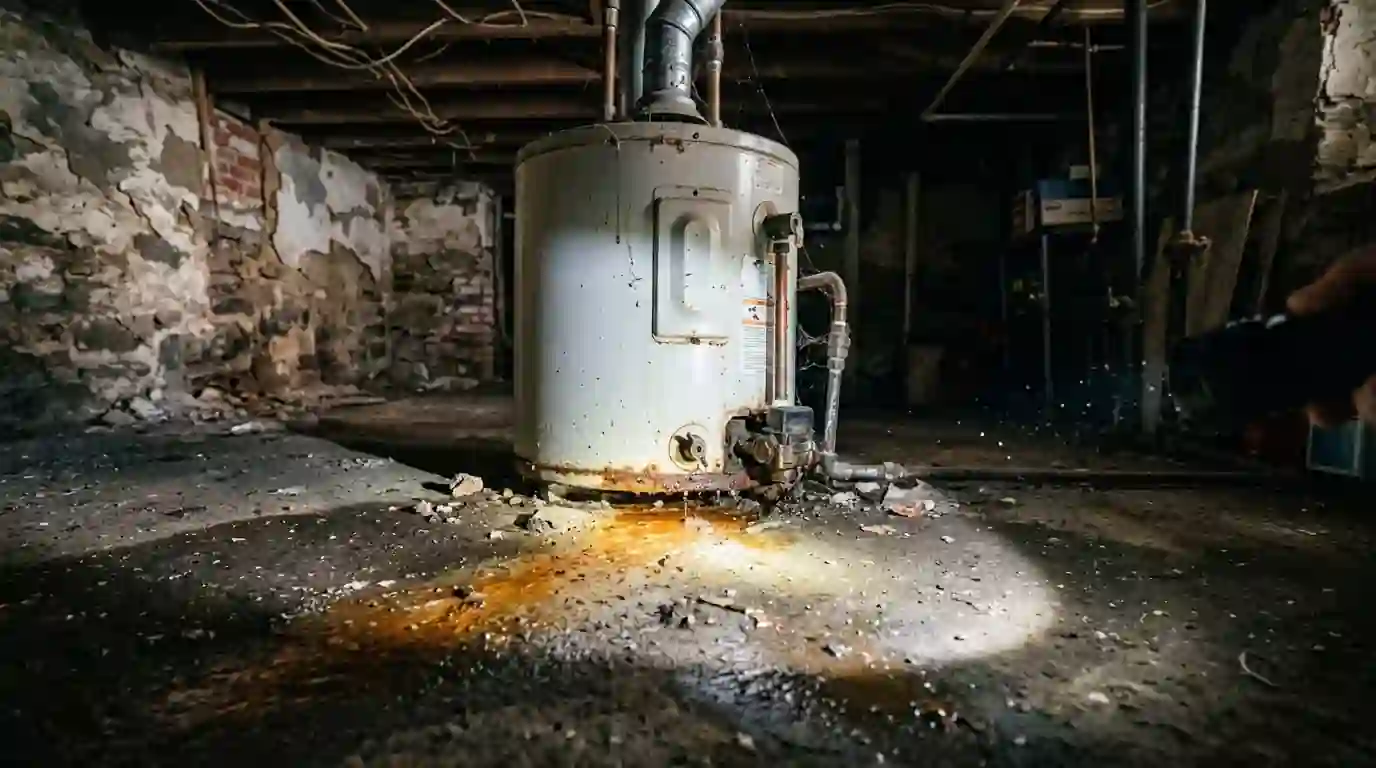
The early signs of a failing tank water heater are rust-colored hot water, rumbling or popping while it heats, moisture or rust at the base or fittings, and a relief valve that drips. A leak from the tank itself cannot be repaired. Fittings, valves and burner parts can, so find the source before deciding to replace.
Why tank water heaters wear out from the bottom up
A tank water heater is a steel tank lined with glass, kept full at house water pressure and heated from the bottom. Two slow processes wear it out. Minerals in the water settle on the bottom as sediment, so the burner or lower element has to heat through a growing layer of scale. And the glass lining is never perfect, so a sacrificial anode rod hangs inside to corrode in place of the steel. Once that rod is used up, the tank starts to rust from the inside.
Neither process shows from the outside for years. What you can notice are the side effects: noise, discolored water, slower recovery and moisture where there should be none. Each one points to a different part, and only some of them mean the tank is finished.
What rusty, smelly or cloudy hot water is telling you
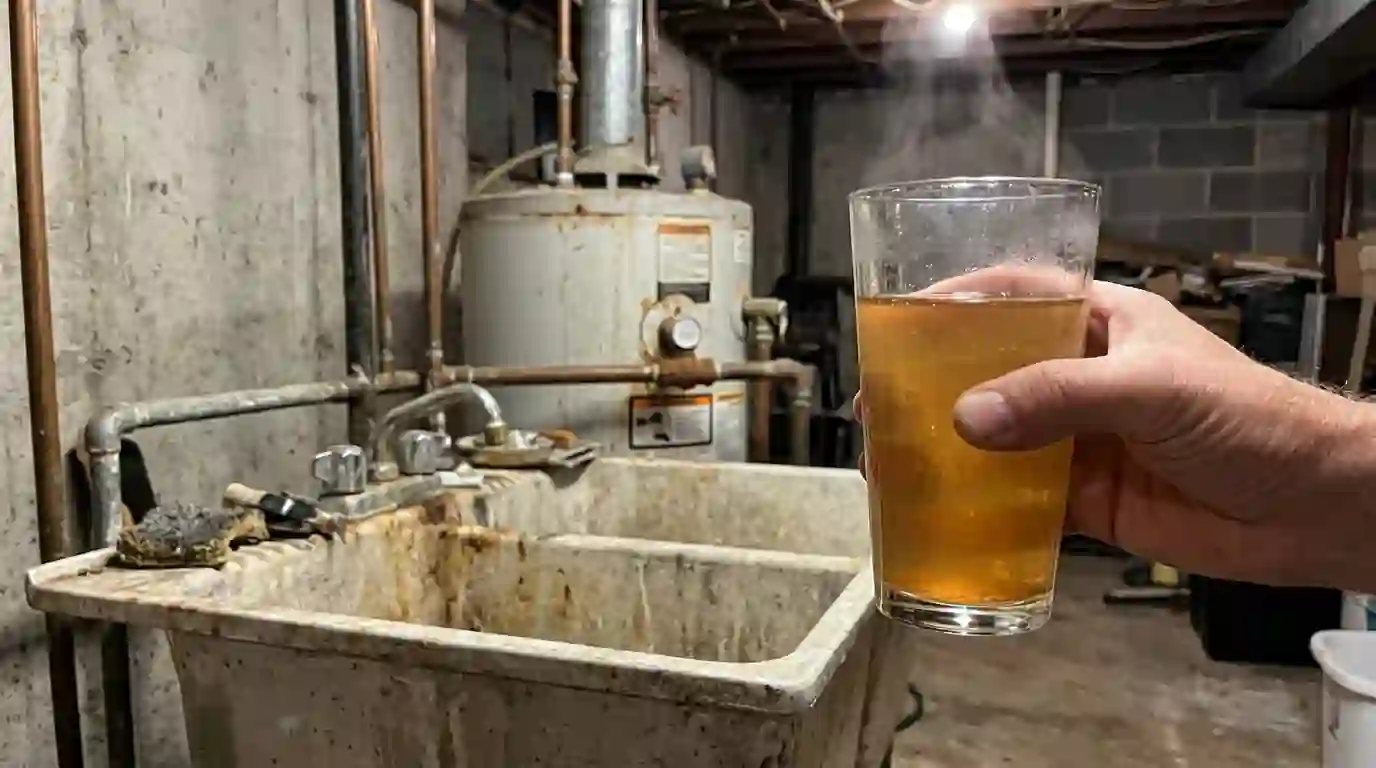
Run a hot tap by itself, then a cold one. If only the hot water comes out brown or orange, the color is coming from the water heater, either a spent anode or rust inside the tank. If both run discolored, the source is more likely the water main or old galvanized supply pipe, which turns up in many older Philadelphia houses and has nothing to do with the heater.
A rotten-egg smell in the hot water only usually comes from a reaction between the anode rod and bacteria in the water. It is unpleasant rather than dangerous, and a tech can swap the anode for a different alloy and disinfect the tank. A sulfur smell in the air near the heater is a different matter. Treat that as a possible gas leak.
Milky water that clears from the bottom of the glass up is just air. Gritty specks or white flakes that settle out point to loose sediment, or to a plastic dip tube breaking down inside the tank and sending pieces to the faucet screens.
Rumbling, popping and hissing from the tank
A gas heater that rumbles or pops while the burner runs is boiling small pockets of water trapped under sediment. The bubbles push up through the scale and collapse with a knock. It wastes fuel, overheats the bottom of the tank and shortens its life. Electric tanks show the same problem a different way: the lower element burns out sooner, and the hot water runs out faster than it used to.
Flushing helps when the sediment is still loose. On a tank that has rumbled for years, the scale can be hard enough that a flush stirs it up without clearing it, and an old plastic drain valve may not close tightly again. That is a call to make with a tech, not alone on a Saturday with a garden hose.
Hissing or sizzling on a gas unit usually means water is dripping onto the burner, from a leaking fitting above or from the tank itself. Find the source before anything else.
Water on the basement floor by the heater? Call (267) 392-1418 any hour; a person answers.
Call (267) 392-1418Water at the base: find the source before you panic
Not every puddle near a water heater means the tank has failed. Dry the floor and the outside of the tank, then work from the top down. Feel the cold inlet and hot outlet connections, the relief valve and its discharge pipe, the drain valve near the bottom and, on a gas unit, the area around the burner access. In summer, a cold supply pipe or a nearby air conditioning drain can drip condensation that looks like a leak.
Leaks at fittings, the drain valve and the relief valve are repairs. Water seeping from under the outer jacket, or a rust streak running down from the bottom seam, almost always means the tank itself has rusted through. That kind of leak never seals itself, and a slow weep can open up without warning, which matters most when the heater sits above a finished room or in a closet on an upper level of a South Jersey split-level.
- Relief valve pipe dripping: pressure or temperature too high, or a worn valve
- Damp top fittings: a loose connection or a corroded nipple
- Wet drain valve: a worn valve, or one not fully closed
- Water from under the jacket: the tank has failed
Signs on a gas heater that mean stop and call
Some warnings are about safety, not age. Scorch marks or blistered paint around the burner access door can mean flames are rolling out because the flue is blocked or the burner is dirty. A pilot that keeps going out, a lazy yellow flame instead of a steady blue one, or soot around the top of the heater all point to a combustion or venting problem. In many rowhomes the water heater shares a chimney with the boiler or furnace, so a blocked or crumbling flue affects both.
If you smell gas, leave the house and call the gas utility or 911 from outside. If a carbon monoxide alarm sounds, get everyone out first. For scorch marks or soot with no alarm, turn the gas control to off and call. Before relighting anything, we test the draft and check for exhaust spilling at the draft hood.
What you can check yourself, and what to leave alone
A few checks are safe for anyone and need only a flashlight. The rating label on the side of the tank lists the model and serial number, and the serial usually encodes when the heater was built; the manufacturer can decode it if the format is not obvious. Look at the floor and the fittings once a month, and keep boxes, paint cans and laundry away from a gas heater.
- Safe: reading the label and checking the floor, fittings and clearance
- Safe: turning the temperature dial down if the water comes out scalding
- Safe: closing the cold supply valve if the tank is leaking
- Leave for a tech: testing or replacing the relief valve on an older heater
- Leave for a tech: the burner compartment, gas valve, flue and elements
- Leave for a tech: draining a heavily scaled tank with an old plastic valve
Repair the heater or replace the tank?
Thermostats, elements, gas valves, thermocouples, flame sensors, relief valves and drain valves can all be replaced, and on a heater that is still sound those repairs are usually worth doing. Our water heater repair page covers how we test them. A leaking tank, heavy rust in the hot water or a string of failures is a different conversation, and water heater replacement explains how we plan the swap, including venting and the expansion tank.
If the household runs out of hot water often, or the basement is short on space, replacement is also the time to ask whether a tankless unit fits. It usually needs a larger gas supply and different venting, so it is not a direct swap, but in a tight rowhome basement the floor space it frees can matter. See tankless installation for what the change involves.
It depends on water quality, how hard the heater works and whether it was ever maintained. The age on the label matters less than the warning signs, so judge it by rust, noise and moisture.
It means the valve is opening because pressure or temperature is high, or because the valve is worn. Never cap or plug the discharge pipe. Have the pressure, thermostat and expansion tank checked.
Regular flushing helps a tank that has been flushed since it was new. On an older tank that never has been, ask a tech first, because hard scale and a brittle drain valve can turn a flush into a leak.
Close the cold water valve at the top of the heater, turn a gas unit's control to off or switch off an electric unit's breaker, and call. A person answers 24/7.
Often, if the sediment is still loose and the tank is dry. A flush and an anode check can quiet it. A tank that has rumbled loudly for years may be past that point.
Keep reading
Related services and guides
Water Heater Repair
No hot water, a pilot that will not stay lit or a leak.
Water Heater Replacement
Gas, electric and power-vent tanks swapped and hauled away.
Tankless Water Heater Installation
Tankless units with the gas line and venting done right.
No Heat in Philadelphia: What to Check First
The safe checks to make when the heat stops, in order, and the point where you should call.
Why Rowhome Dryer Vents Clog and How to Tell
Why long rowhome dryer vent runs clog, the warning signs, and what to clean yourself versus call about.